Celestún Biosphere Reserve
🇲🇽 Mexico
🐊 Flamingo and Crocodile EstuaryCelestún is an estuary where fresh water meets the Gulf under a roof of mangrove, and the whole visit happens from a boat. Caribbean flamingos feed in the shallows on about half of all trips, and Morelet's crocodiles are seen on nearly eight in ten.
20.623° N 90.416° W
Wildlife
⭐ Iconic Species
 ★
★ American Flamingo
Phoenicopterus ruber
 ★
★ Magnificent Frigatebird
Fregata magnificens
 ★
★ Belize Crocodile
Crocodylus moreletii
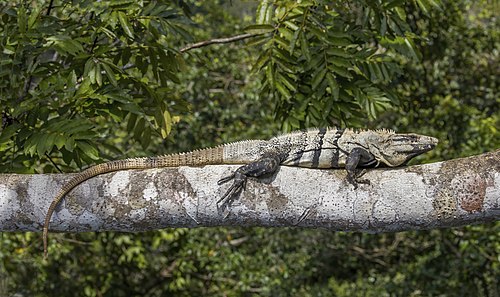 ★
★ Black Spiny-tailed Iguana
Ctenosaura similis
📊 Most Spotted

Common Raccoon
Procyon lotor

Laughing Gull
Leucophaeus atricilla

Tropical Mockingbird
Mimus gilvus
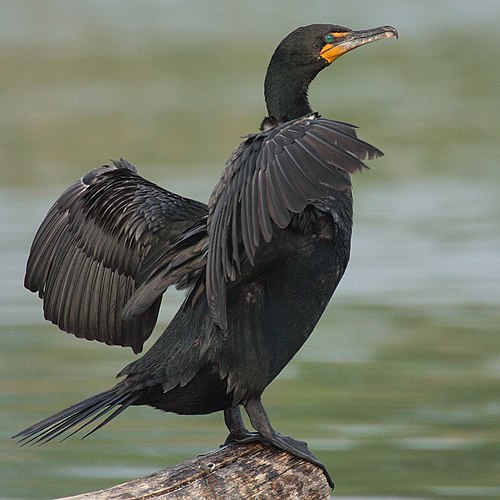
Double-crested Cormorant
Phalacrocorax auritus

Brown Pelican
Pelecanus occidentalis

Yellow Warbler
Setophaga petechia

Mangrove Vireo
Vireo pallens

Great Egret
Ardea alba

Snowy Egret
Egretta thula

Great-tailed Grackle
Quiscalus mexicanus

Olive-throated Parakeet
Aratinga nana

Tropical Kingbird
Tyrannus melancholicus
📊 Most Spotted
Common Raccoon
Procyon lotor

Greater Sac-winged Bat
Saccopteryx bilineata

White-nosed Coati
Nasua narica

Gray Fox
Urocyon cinereoargenteus

Bottlenose Dolphin
Tursiops truncatus

Mexican Black Howler Monkey
Alouatta pigra

Central American Agouti
Dasyprocta punctata

Central American Spider Monkey
Ateles geoffroyi

Ocelot
Leopardus pardalis

Margay
Leopardus wiedii

Greater Bulldog Bat
Noctilio leporinus

Mexican Greater Funnel-eared Bat
Natalus mexicanus
⭐ Iconic Species
★ American Flamingo
Phoenicopterus ruber
★ Magnificent Frigatebird
Fregata magnificens
📊 Most Spotted
Laughing Gull
Leucophaeus atricilla
Tropical Mockingbird
Mimus gilvus
Double-crested Cormorant
Phalacrocorax auritus
Brown Pelican
Pelecanus occidentalis
Yellow Warbler
Setophaga petechia
Mangrove Vireo
Vireo pallens
Great Egret
Ardea alba
Snowy Egret
Egretta thula
Great-tailed Grackle
Quiscalus mexicanus
Olive-throated Parakeet
Aratinga nana
Tropical Kingbird
Tyrannus melancholicus

White Ibis
Eudocimus albus
⭐ Iconic Species
★ Belize Crocodile
Crocodylus moreletii
★ Black Spiny-tailed Iguana
Ctenosaura similis
📊 Most Spotted

Central American Boa
Boa imperator

Cozumel Spiny Lizard
Sceloporus cozumelae

Common House Gecko
Hemidactylus frenatus

Brown Anole
Anolis sagrei

Yucatán Whiptail
Aspidoscelis angusticeps
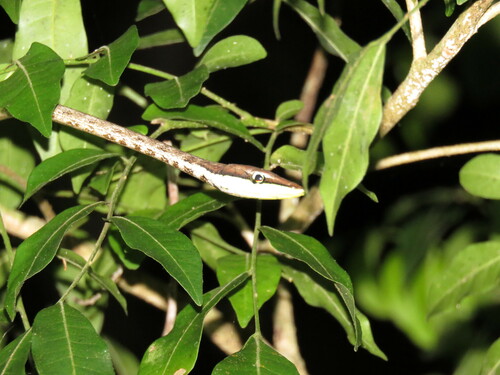
Gulf Coast Vine Snake
Oxybelis potosiensis

Rainforest Cat-eyed Snake
Leptodeira frenata

Mexican Parrot Snake
Leptophis mexicanus

Rodriguez's Anole
Anolis rodriguezii

Yellow-spotted Spiny Lizard
Sceloporus chrysostictus

Road Guarder
Conophis lineatus

Speckled Racer
Drymobius margaritiferus


Animal Events
Flamingo Congregations
Thousands of American flamingos gather to feed in the shallow pink-tinged lagoon of the ría.
Hawksbill Turtle Nesting
Hawksbill turtles come ashore at night to nest on the reserve's Gulf beaches.

Waterbird Migration
White pelicans and blue-winged teal crowd the ría alongside the flamingos during the northern winter.


Sighting Calendar
Chance of spotting each species, month by month
Sighting Zones
Warm areas are where all species together are recorded most, so they track where people go as much as where animals are. For one species, see the map on its own page.
Where Wildlife Score
How good is this park for seeing wildlife?Biodiversity
Very goodHow rich is the wildlife?
Sighting
Very goodHow likely to see animals?
Quick answers
What animals can you see in Celestún Biosphere Reserve?
The most likely sightings are Magnificent Frigatebird (seen by 70–80% of wildlife watchers), Common Raccoon (seen by 70–80% of wildlife watchers), American Flamingo (seen by 60–70% of wildlife watchers), Laughing Gull (seen by 60–70% of wildlife watchers), Tropical Mockingbird (seen by 60–70% of wildlife watchers) — among 685 recorded vertebrate species, based on citizen-science data from GBIF.
When is the best time to visit Celestún Biosphere Reserve for wildlife?
January has the highest combined sighting rate for the park's top species in our month-by-month GBIF data. The full sighting calendar on this page shows each species' best months.
Can you see American Flamingo in Celestún Biosphere Reserve?
Yes — about 69% of wildlife watchers report a American Flamingo sighting in Celestún Biosphere Reserve, based on 1,051 days of visitor records from GBIF citizen-science data.
Can you see Magnificent Frigatebird in Celestún Biosphere Reserve?
Yes — about 72% of wildlife watchers report a Magnificent Frigatebird sighting in Celestún Biosphere Reserve, based on 1,092 days of visitor records from GBIF citizen-science data.
Can you see Belize Crocodile in Celestún Biosphere Reserve?
Yes — about 49% of wildlife watchers report a Belize Crocodile sighting in Celestún Biosphere Reserve, based on 51 days of visitor records from GBIF citizen-science data.
Can you see Black Spiny-tailed Iguana in Celestún Biosphere Reserve?
Yes — about 53% of wildlife watchers report a Black Spiny-tailed Iguana sighting in Celestún Biosphere Reserve, based on 60 days of visitor records from GBIF citizen-science data.