El Impenetrable National Park
🇦🇷 Argentina
🐆 Jaguar Trails in the Dry ChacoEl Impenetrable National Park is a tropical savanna in the Gran Chaco of Argentina, a mosaic of dense dry forest, palm‑groves and seasonally flooded lowlands. The landscape supports a mix of towering quebracho trees and open grass patches that give way to water‑filled depressions where the broad‑snouted caiman basks.
-24.998° S 61.119° W
Wildlife
⭐ Iconic Species
 ★
★ South American Tapir
Tapirus terrestris
 ★
★ Jaguar
Panthera onca
 ★
★ Giant Anteater
Myrmecophaga tridactyla
 ★
★ Broad-snouted Caiman
Caiman latirostris
📊 Most Spotted

Brazilian Cardinal
Paroaria coronata

Chaco Chachalaca
Ortalis canicollis

Monk Parakeet
Myiopsitta monachus

Blue-gray Saltator
Saltator coerulescens

Pearly-vented Tody-Tyrant
Hemitriccus margaritaceiventer

Narrow-billed Woodcreeper
Lepidocolaptes angustirostris

Picazuro Pigeon
Patagioenas picazuro

White-tipped Dove
Leptotila verreauxi

Golden-billed Saltator
Saltator aurantiirostris

Great Kiskadee
Pitangus sulphuratus

Great Antshrike
Taraba major

Blue-and-yellow Tanager
Rauenia bonariensis
⭐ Iconic Species
★ South American Tapir
Tapirus terrestris
★ Jaguar
Panthera onca
★ Giant Anteater
Myrmecophaga tridactyla
📊 Most Spotted

Chacoan Mara
Dolichotis salinicola

Southern Three-banded Armadillo
Tolypeutes matacus

White-lipped Peccary
Tayassu pecari

Black Howler
Alouatta caraya

Capybara
Hydrochoerus hydrochaeris

Collared Peccary
Pecari tajacu

Tapeti
Sylvilagus brasiliensis

Crab-eating Fox
Cerdocyon thous

Mountain Lion
Puma concolor

Common Yellow-toothed Cavy
Galea musteloides

Southern Tamandua
Tamandua tetradactyla

Six-banded Armadillo
Euphractus sexcinctus
📊 Most Spotted
Brazilian Cardinal
Paroaria coronata
Chaco Chachalaca
Ortalis canicollis
Monk Parakeet
Myiopsitta monachus
Blue-gray Saltator
Saltator coerulescens
Pearly-vented Tody-Tyrant
Hemitriccus margaritaceiventer
Narrow-billed Woodcreeper
Lepidocolaptes angustirostris
Picazuro Pigeon
Patagioenas picazuro
White-tipped Dove
Leptotila verreauxi
Golden-billed Saltator
Saltator aurantiirostris
Great Kiskadee
Pitangus sulphuratus
Great Antshrike
Taraba major
Blue-and-yellow Tanager
Rauenia bonariensis
⭐ Iconic Species
📊 Most Spotted

Painted Lancehead
Bothrops diporus

Amazon Racerunner
Ameiva ameiva

Four-toed Tegu
Teius teyou

Cope's Mabuya
Notomabuya frenata
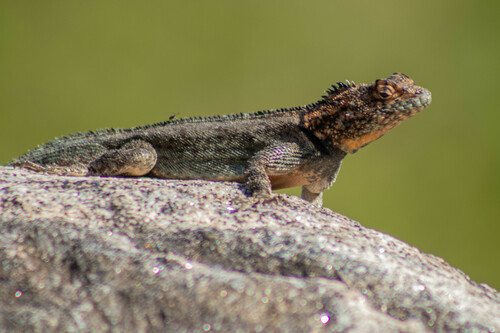
Spiny Lava Lizard
Tropidurus spinulosus

Scorpion Mud Turtle
Kinosternon scorpioides

Chilean Tortoise
Chelonoidis chilensis

Etheridge's Lava Lizard
Tropidurus etheridgei

Red Tegu
Salvator rufescens

Red-Footed Tortoise
Chelonoidis carbonarius

Banded Hognose Snake
Xenodon pulcher

Argentinian Rainbow Boa
Epicrates alvarezi
📊 Most Spotted

Vizcacheras' White-lipped Frog
Leptodactylus bufonius

Mato Grosso Snouted Tree Frog
Scinax acuminatus

Cururu Toad
Rhinella diptycha

Miranda's White-lipped Frog
Leptodactylus macrosternum

Chaco Tree Frog
Boana raniceps

Sapito De Haro
Elachistocleis haroi

Lesser Snouted Tree Frog
Scinax nasicus

Muller's Termite Frog
Dermatonotus muelleri
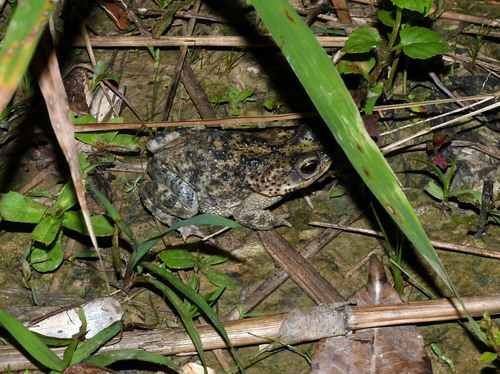
Chaco Granulated Toad
Rhinella major
Cei's Escuerzo
Odontophrynus lavillai

Budgett's Frog
Lepidobatrachus laevis

Chacoan Horned Frog
Ceratophrys cranwelli
Animal Events
Caiman Lagoon Congregation
Broad-snouted caimans congregate and bask at shrinking dry-season lagoons along the Bermejo and Bermejito rivers, the phenomenon that names the Pozo del Yacaré trail.
Dry-Season Waterhole Gatherings
In the Chaco dry season, tapirs and giant anteaters concentrate at the remaining lagoons and waterholes, watched from the park's viewing blinds on the Pozo del Yacaré trail.
Waterbird Breeding
Austral spring breeding season for the Chaco wetlands' large birds — jabiru storks and turquoise-fronted amazons nest and are at their most active along the Bermejo floodplain.


Sighting Calendar
Chance of spotting each species, month by month
Sighting Zones
Warm areas are where all species together are recorded most, so they track where people go as much as where animals are. For one species, see the map on its own page.
Where Wildlife Score
How good is this park for seeing wildlife?Biodiversity
GoodHow rich is the wildlife?
Sighting
ExcellentHow likely to see animals?
Quick answers
What animals can you see in El Impenetrable National Park?
The most likely sightings are Brazilian Cardinal (seen by 80–90% of wildlife watchers), Chaco Chachalaca (seen by 80–90% of wildlife watchers), Monk Parakeet (seen by 70–80% of wildlife watchers), Blue-gray Saltator (seen by 70–80% of wildlife watchers), Pearly-vented Tody-Tyrant (seen by 70–80% of wildlife watchers) — among 614 recorded vertebrate species, based on citizen-science data from GBIF.
When is the best time to visit El Impenetrable National Park for wildlife?
October has the highest combined sighting rate for the park's top species in our month-by-month GBIF data. The full sighting calendar on this page shows each species' best months.
Can you see South American Tapir in El Impenetrable National Park?
Yes — about 62% of wildlife watchers report a South American Tapir sighting in El Impenetrable National Park, based on 28 days of visitor records from GBIF citizen-science data.
Can you see Jaguar in El Impenetrable National Park?
Yes — about 28% of wildlife watchers report a Jaguar sighting in El Impenetrable National Park, based on 5 days of visitor records from GBIF citizen-science data.
Can you see Giant Anteater in El Impenetrable National Park?
Yes — about 33% of wildlife watchers report a Giant Anteater sighting in El Impenetrable National Park, based on 6 days of visitor records from GBIF citizen-science data.
Can you see Broad-snouted Caiman in El Impenetrable National Park?
Yes — about 69% of wildlife watchers report a Broad-snouted Caiman sighting in El Impenetrable National Park, based on 37 days of visitor records from GBIF citizen-science data.


_male_Vicente_Lopez.jpg?width=1920)