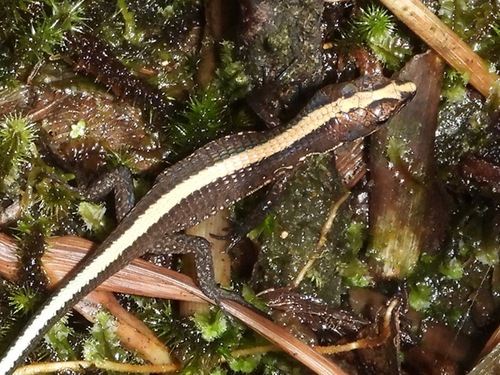
Pholidobolus celsiae
Pholidobolus celsiae
- KingdomAnimalia (Animals)
- PhylumChordata (Cordats)
- ClassSquamata
- FamilyGymnophthalmidae (Spectacled Lizards)
- GenusPholidobolus
- SpeciesPholidobolus celsiae (Pholidobolus celsiae)
Pholidobolus celsiae is a species of lizard in the family Gymnophthalmidae. It was formally described in 2023 and is named after the Celsia Foundation, which restores cloud and dry forests in the tropical Andes. It is endemic to Colombia, being known from three localities in the municipalities of Mistrató and Pereira within the department of Risaralda. It is found in open areas with secondary vegetation, at the edge of a cloud forest. These frogs have brown dorsums, cream-colored or white vertebral stripes, and brown sides. The throat is cream to pale brown in males and pink in females. Wikipedia →
10–20% of wildlife watchers report a Pholidobolus celsiae sighting in Farallones de Cali National Natural Park, based on 13 days of visitor records from GBIF citizen-science data.
Closest Relatives at Farallones de Cali National Natural Park


📅 Monthly Probability
☀️ When They're Spotted
Most active during daytime hours (6am–6pm) · across all parks (global)
Global Distribution
Where this species is recorded worldwide. Restricted to human observations from 2019 onwards — the same kind of record and the same period the probabilities on this page are built from, so collar-tracking studies, camera-trap arrays and museum specimens are excluded. Around Santa Rosa that removes 5,924 GPS fixes from a handful of tagged jaguars.
where this species is recorded (GBIF density — it tracks where observers go, not how likely a sighting is) · parks where it occurs — tap a pin for the sighting probability there
Parks Where Found
| # | Park | Country | Probability |
|---|---|---|---|
| 1 | Farallones de Cali National Natural Park | 🇨🇴 Colombia | |
| 2 | Los Nevados National Natural Park | 🇨🇴 Colombia |
Quick answers
What are the chances of seeing a Pholidobolus celsiae in Farallones de Cali National Natural Park?
About 17% of wildlife watchers report a Pholidobolus celsiae sighting in Farallones de Cali National Natural Park, based on 13 days of visitor records from GBIF citizen-science data.
When is the best time to see Pholidobolus celsiae in Farallones de Cali National Natural Park?
June has the highest sighting rate for Pholidobolus celsiae in Farallones de Cali National Natural Park in our monthly data.