Kinabalu Park
🇲🇾 Malaysia
🐍 Malcolm's Pitviper Thrives in MistKinabalu Park is a protected mountain sanctuary in Sabah, Malaysia, dominated by high-altitude grassland and steep montane vegetation. Visitors walk rugged trails through chilly slopes and misty ridges where ancient rock formations meet dense cloud forests. This dramatic elevation gradient creates distinct ecological zones that set the area apart from lowland rainforests.
6.183° N 116.679° E
Wildlife
⭐ Iconic Species
 ★
★ Malcolm’s Pitviper
Trimeresurus malcolmi
 ★
★ Kinabalu Slender Litter Frog
Leptobrachella arayai
 ★
★ Bornean Mountain Ground Squirrel
Sundasciurus everetti
📊 Most Spotted

Bornean Treepie
Dendrocitta cinerascens

Indigo Flycatcher
Eumyias indigo

Yellow-breasted Warbler
Seicercus montis

Black-capped White-eye
Zosterops atricapilla

Golden-naped Barbet
Psilopogon pulcherrimus

Temminck's Sunbird
Aethopyga temminckii

Mountain Leaf Warbler
Phylloscopus trivirgatus

Bornean Whistler
Pachycephala hypoxantha

Chestnut-crested Yuhina
Staphida everetti

Bornean Whistling-Thrush
Myophonus borneensis

White-throated Fantail
Rhipidura albicollis

Black-sided Flowerpecker
Dicaeum monticolum
⭐ Iconic Species
📊 Most Spotted

Borneo Black-banded Squirrel
Callosciurus orestes

Jentink's Squirrel
Sundasciurus jentinki

Tufted Pygmy Squirrel
Exilisciurus whiteheadi

Least Pygmy Squirrel
Exilisciurus exilis

Mountain Treeshrew
Tupaia montana

Prevost's Squirrel
Callosciurus prevostii

Pale Giant Squirrel
Ratufa affinis

Kinabalu Squirrel
Callosciurus baluensis

Small-toothed Palm Civet
Arctogalidia trivirgata

Maroon Leaf Monkey
Presbytis rubicunda

Lesser Treeshrew
Tupaia minor

Proboscis Monkey
Nasalis larvatus
📊 Most Spotted
Bornean Treepie
Dendrocitta cinerascens
Indigo Flycatcher
Eumyias indigo
Yellow-breasted Warbler
Seicercus montis
Black-capped White-eye
Zosterops atricapilla
Golden-naped Barbet
Psilopogon pulcherrimus
Temminck's Sunbird
Aethopyga temminckii
Mountain Leaf Warbler
Phylloscopus trivirgatus
Bornean Whistler
Pachycephala hypoxantha
Chestnut-crested Yuhina
Staphida everetti
Bornean Whistling-Thrush
Myophonus borneensis
White-throated Fantail
Rhipidura albicollis
Black-sided Flowerpecker
Dicaeum monticolum
⭐ Iconic Species
📊 Most Spotted

Borneo Forest Dragon
Gonocephalus bornensis

North Philippine Temple Pitviper
Tropidolaemus subannulatus

Green Crested Lizard
Bronchocela cristatella

Sabah Bamboo Pitviper
Trimeresurus sabahi

Schmidt's Reed Snake
Calamaria schmidti

Balu Bow-fingered Gecko
Cyrtodactylus baluensis

Malayan Crested Lizard
Gonocephalus grandis

Flat-tailed House Gecko
Hemidactylus platyurus

Blunthead Slug Snake
Aplopeltura boa

Borneo Skink
Dasia vittata

Spotted House Gecko
Gekko monarchus
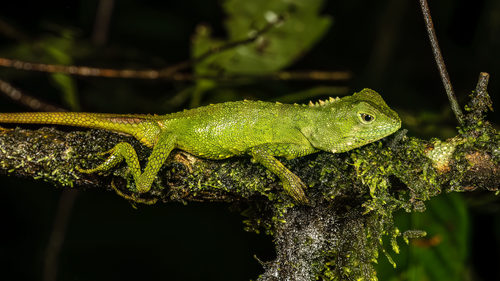
Mocquard's Eyebrow Lizard
Pelturagonia cephalum
⭐ Iconic Species
📊 Most Spotted
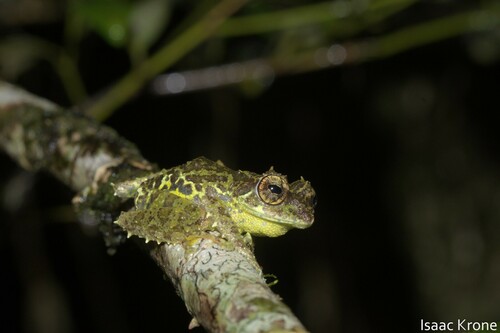
Mossy Bush Frog
Philautus macroscelis

Horned Toad
Megophrys nasuta
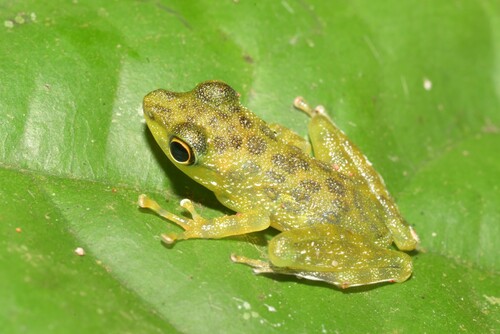
Black-spotted Rock Skipper
Staurois guttatus

Montane Large-eyed Litter Frog
Leptobrachium montanum

Peter's Tree Frog
Nyctixalus pictus

File-eared Tree Frog
Polypedates otilophus

Kinabalu Sticky Frog
Kalophrynus baluensis

Kiau Borneo Frog
Meristogenys kinabaluensis

Green-spotted Foot-flagging Frog
Staurois tuberilinguis

Kinabalu Slender Toad
Ansonia hanitschi

Green Bush Frog
Philautus bunitus

Yellow-spotted Narrow-mouthed Frog
Chaperina fusca
Animal Events
Frog Chorusing Season
Male frogs of multiple species, including the Black-spotted Rock Frog and Borneo Splash Frog, gather in streams to call for mates during the monsoon season.
Pit Viper Hunting Season
The Kinabalu Green Pit Viper and Sabah Bamboo Pitviper become more active, hunting at night in the lower montane forests as temperatures drop.
Squirrel Foraging Boom
Endemic squirrels like Sundasciurus everetti and Callosciurus orestes engage in synchronized seed dispersal, caching nuts in tree hollows before the dry season.
Sighting Calendar
Chance of spotting each species, month by month
Sighting Zones
Warm areas are where all species together are recorded most, so they track where people go as much as where animals are. For one species, see the map on its own page.
Where Wildlife Score
How good is this park for seeing wildlife?Biodiversity
ExcellentHow rich is the wildlife?
Sighting
Very goodHow likely to see animals?
Quick answers
What animals can you see in Kinabalu Park?
The most likely sightings are Bornean Treepie (seen by 70–80% of wildlife watchers), Indigo Flycatcher (seen by 60–70% of wildlife watchers), Yellow-breasted Warbler (seen by 60–70% of wildlife watchers), Black-capped White-eye (seen by 60–70% of wildlife watchers), Golden-naped Barbet (seen by 60–70% of wildlife watchers) — among 1181 recorded vertebrate species, based on citizen-science data from GBIF.
When is the best time to visit Kinabalu Park for wildlife?
March has the highest combined sighting rate for the park's top species in our month-by-month GBIF data. The full sighting calendar on this page shows each species' best months.
Can you see Malcolm’s Pitviper in Kinabalu Park?
Yes — about 30% of wildlife watchers report a Malcolm’s Pitviper sighting in Kinabalu Park, based on 38 days of visitor records from GBIF citizen-science data.
Can you see Kinabalu Slender Litter Frog in Kinabalu Park?
Yes — about 29% of wildlife watchers report a Kinabalu Slender Litter Frog sighting in Kinabalu Park, based on 37 days of visitor records from GBIF citizen-science data.
Can you see Bornean Mountain Ground Squirrel in Kinabalu Park?
Yes — about 46% of wildlife watchers report a Bornean Mountain Ground Squirrel sighting in Kinabalu Park, based on 83 days of visitor records from GBIF citizen-science data.
Explore Other Parks
 📍 178 km 🦧 Bornean Orangutan Stronghold Along Wild Rivers
 Kinabatangan Wildlife Sanctuary
 📍 178 km 🐸 Wallace's Flying Frog Gliding Overhead
 Danum Valley Conservation Area
 📍 1193 km 🐒 Gibbon Song at First Light
 Cat Tien National Park
 📍 1609 km 🦌 Javan Rusa in Dry Monsoon Forest