San Lorenzo Protected Forest
🇵🇦 Panama
🐦 Keel-billed Toucans in the Coastal ForestSan Lorenzo Protected Forest guards 9,653 hectares of Caribbean lowland rainforest at the mouth of the Chagres River where it meets the Panama Canal. Each October, the skies above the forest fill with millions of migrating raptors — one of the greatest raptor migration spectacles on Earth.
9.239° N 79.976° W
Wildlife
⭐ Iconic Species
 ★
★ Keel-billed Toucan
Ramphastos sulfuratus
 ★
★ Mantled Howler Monkey
Alouatta palliata
 ★
★ White-nosed Coati
Nasua narica
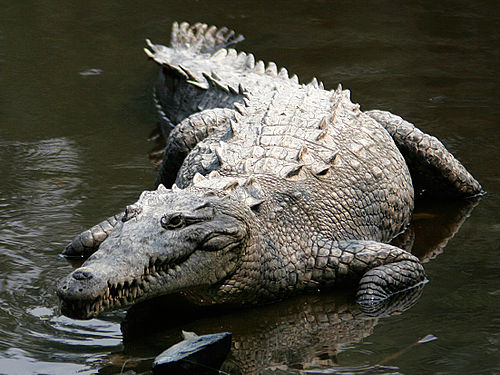 ★
★ American Crocodile
Crocodylus acutus
📊 Most Spotted

Cocoa Woodcreeper
Xiphorhynchus susurrans

Black Vulture
Coragyps atratus

Orange-chinned Parakeet
Brotogeris jugularis

Black-mandibled Toucan
Ramphastos ambiguus

Turkey Vulture
Cathartes aura

Southern House Wren
Troglodytes musculus

Red-crowned Woodpecker
Melanerpes rubricapillus

Lesser Greenlet
Hylophilus decurtatus

Squirrel Cuckoo
Piaya cayana
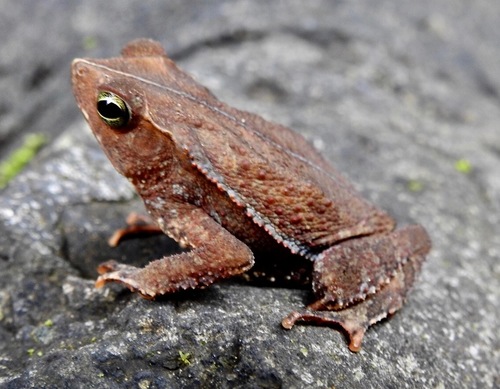
Forest Toad
Rhinella alata

Cattle Egret
Bubulcus ibis

Great Kiskadee
Pitangus sulphuratus
⭐ Iconic Species
📊 Most Spotted

Geoffroy’s Tamarin
Saguinus geoffroyi

Collared Peccary
Pecari tajacu
Amber Fruit-eating Bat
Artibeus ravus

Central American White-faced Capuchin
Cebus imitator

Proboscis Bat
Rhynchonycteris naso

Derby's Woolly Opossum
Caluromys derbianus

Central American Spider Monkey
Ateles geoffroyi

Variegated Squirrel
Sciurus variegatoides

Brown-throated Sloth
Bradypus variegatus

Hoffmann's Two-toed Sloth
Choloepus hoffmanni
⭐ Iconic Species
📊 Most Spotted
Cocoa Woodcreeper
Xiphorhynchus susurrans
Black Vulture
Coragyps atratus
Orange-chinned Parakeet
Brotogeris jugularis
Black-mandibled Toucan
Ramphastos ambiguus
Turkey Vulture
Cathartes aura
Southern House Wren
Troglodytes musculus
Red-crowned Woodpecker
Melanerpes rubricapillus
Lesser Greenlet
Hylophilus decurtatus
Squirrel Cuckoo
Piaya cayana
Cattle Egret
Bubulcus ibis
Great Kiskadee
Pitangus sulphuratus

Clay-colored Thrush
Turdus grayi
⭐ Iconic Species
📊 Most Spotted

Green Iguana
Iguana iguana

Humble Anole
Anolis humilis
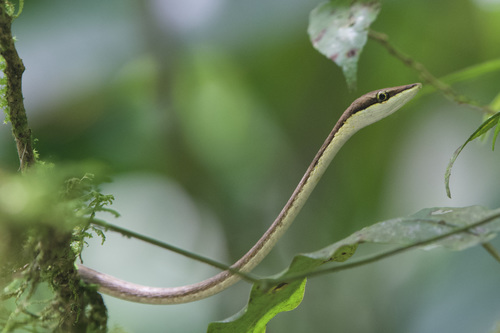
Striped Vine Snake
Oxybelis vittatus

White-throated Gecko
Gonatodes albogularis

Dusky Giant Ameiva
Ameiva praesignis

Fer-de-lance
Bothrops asper

Lichen Anole
Anolis pentaprion

Turniptail Gecko
Thecadactylus rapicauda

Middle American Ameiva
Holcosus festivus

Black-necked Centipede Snake
Tantilla armillata

Common Caiman
Caiman crocodilus

Green Turtle
Chelonia mydas


Animal Events
Howler Monkey Breeding Season
During the dry-season breeding peak, Mantled Howler troops become impossible to miss, their thunderous dawn choruses rolling through the canopy for over a kilometer. Females carry clinging infants as tight-knit family groups move through the trees.
Autumn Raptor Migration Spectacle
Rivers of Turkey Vultures and Broad-winged Hawks pour along the Caribbean side of the canal, spiraling into vast swirling kettles that darken the sky, with slender Plumbeous Kites cutting through the stream. It is one of the planet's greatest raptor migrations, funneled right overhead.


Neotropical Migrant Songbird Season
Warblers and tanagers that nested far to the north flood into the Canal-zone forests to overwinter, with jewel-toned Chestnut-sided and Bay-breasted Warblers and flame-red Summer Tanagers foraging alongside resident species. Their arrival swells the park's already exceptional bird diversity.


Sighting Calendar
Chance of spotting each species, month by month
Sighting Zones
Warm areas are where all species together are recorded most, so they track where people go as much as where animals are. For one species, see the map on its own page.
Where Wildlife Score
How good is this park for seeing wildlife?Biodiversity
Very goodHow rich is the wildlife?
Sighting
ExcellentHow likely to see animals?
Quick answers
What animals can you see in San Lorenzo Protected Forest?
The most likely sightings are Keel-billed Toucan (seen by 70–80% of wildlife watchers), Cocoa Woodcreeper (seen by 70–80% of wildlife watchers), Black Vulture (seen by 70–80% of wildlife watchers), Orange-chinned Parakeet (seen by 60–70% of wildlife watchers), Black-mandibled Toucan (seen by 60–70% of wildlife watchers) — among 1048 recorded vertebrate species, based on citizen-science data from GBIF.
When is the best time to visit San Lorenzo Protected Forest for wildlife?
November has the highest combined sighting rate for the park's top species in our month-by-month GBIF data. The full sighting calendar on this page shows each species' best months.
Can you see Keel-billed Toucan in San Lorenzo Protected Forest?
Yes — about 76% of wildlife watchers report a Keel-billed Toucan sighting in San Lorenzo Protected Forest, based on 80 days of visitor records from GBIF citizen-science data.
Can you see Mantled Howler Monkey in San Lorenzo Protected Forest?
Yes — about 29% of wildlife watchers report a Mantled Howler Monkey sighting in San Lorenzo Protected Forest, based on 9 days of visitor records from GBIF citizen-science data.
Can you see White-nosed Coati in San Lorenzo Protected Forest?
Yes — about 18% of wildlife watchers report a White-nosed Coati sighting in San Lorenzo Protected Forest, based on 1 days of visitor records from GBIF citizen-science data.
Can you see American Crocodile in San Lorenzo Protected Forest?
Yes — about 21% of wildlife watchers report a American Crocodile sighting in San Lorenzo Protected Forest, based on 5 days of visitor records from GBIF citizen-science data.
_2.jpg?width=1920)


