

Naked Mole Rat
Heterocephalus glaber
- KingdomAnimalia (Animals)
- PhylumChordata (Cordats)
- ClassMammalia (Mamífers)
- OrderRodentia (Rosegadors)
- FamilyBathyergidae (African Molerats)
- GenusHeterocephalus
- SpeciesHeterocephalus glaber (Naked Mole Rat)
The naked mole-rat (Heterocephalus glaber), also known as the sand puppy, is a burrowing rodent native to the Horn of Africa and parts of Kenya, notably in Somali regions. It is the only species in the genus Heterocephalus. The naked mole-rat exhibits a highly unusual set of physiological and behavioural traits that allow it to thrive in a harsh underground environment, most notably its being the only mammalian thermoconformer with an almost entirely ectothermic (cold-blooded) form of body temperature regulation, as well as exhibiting eusociality, a complex social structure including a reproductive division of labour, separation of reproductive and non-reproductive castes, and cooperative care of young. The closely related Damaraland mole-rat (Fukomys damarensis) is the only other known eusocial mammal. Naked mole-rats lack pain sensitivity in their skin, and have very low metabolic and respiratory rates. The animal is also remarkable for its longevity and resistance to cancer and oxygen deprivation. Wikipedia →
Closest Relatives at Tsavo East National Park

Unstriped Ground Squirrel
Xerus rutilus

Ochre Bush Squirrel
Paraxerus ochraceus

Red Bush Squirrel
Paraxerus palliatus
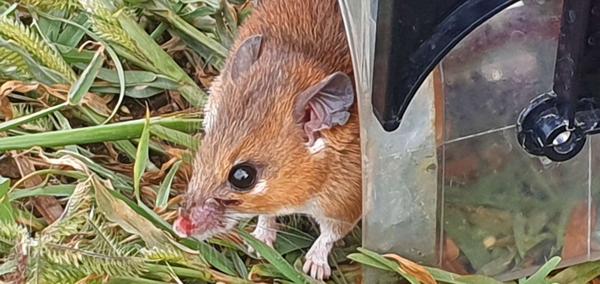
Wilson's Spiny Mouse
Acomys wilsoni

Crested Porcupine
Hystrix cristata

Zanj Sun Squirrel
Heliosciurus undulatus
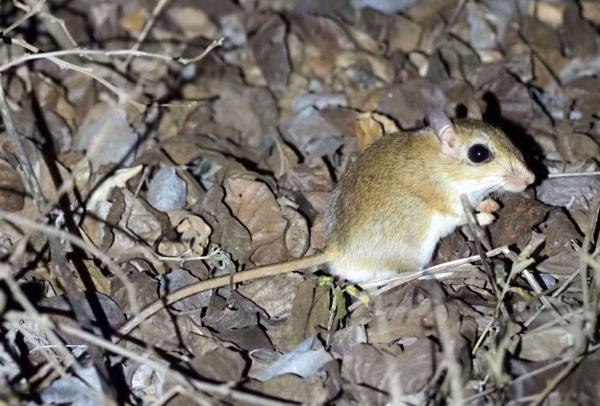
East African Gerbil
Gerbilliscus vicinus

Nairobi Grass Rat
Arvicanthis nairobae

Woodland Dormouse
Graphiurus murinus

Kellen's Dormouse
Graphiurus kelleni

Harrington's Gerbil
Taterillus emini
📅 Monthly Probability
Fewer than 5 records of Naked Mole Rat at Tsavo East National Park — not enough to chart months honestly.
☀️ When They're Spotted
Most active during daytime hours (6am–6pm) · across all parks (global)
Global Distribution
Where this species is recorded worldwide. Restricted to human observations from 2019 onwards — the same kind of record and the same period the probabilities on this page are built from, so collar-tracking studies, camera-trap arrays and museum specimens are excluded. Around Santa Rosa that removes 5,924 GPS fixes from a handful of tagged jaguars.
where this species is recorded (GBIF density — it tracks where observers go, not how likely a sighting is) · parks where it occurs — tap a pin for the sighting probability there
Parks Where Found
| # | Park | Country | Probability |
|---|---|---|---|
| 1 | Meru National Park | 🇰🇪 Kenya | |
| 2 | Tsavo East National Park | 🇰🇪 Kenya |