Arusha National Park
🇹🇿 Tanzania
🐒 Blue Monkey Encounters in ArushaArusha National Park is a protected area in northeastern Tanzania, featuring lush montane forests, open grasslands, and tranquil crater lakes. This compact reserve stands apart from larger parks through its steep volcanic terrain and dense wooded canopies, where hikers traverse emerald trails beneath towering ash cones.
-3.250° S 36.773° E
Wildlife
⭐ Iconic Species
 ★
★ Mount Kilimanjaro Guereza
Colobus caudatus
 ★
★ Blue Monkey
Cercopithecus mitis
 ★
★ East African Giraffe
Giraffa tippelskirchi
 ★
★ Kilimanjaro two-horned chamaeleon
Kinyongia tavetana
📊 Most Spotted

Olive Baboon
Papio anubis

Common Bulbul
Pycnonotus barbatus

Waterbuck
Kobus ellipsiprymnus

Common Warthog
Phacochoerus africanus

Northern Bushbuck
Tragelaphus scriptus

Tropical Boubou
Laniarius major

Little Bee-eater
Merops pusillus

Northern Fiscal
Lanius humeralis

Hadada
Bostrychia hagedash

Little Grebe
Tachybaptus ruficollis

Egyptian Goose
Alopochen aegyptiaca

Variable Sunbird
Cinnyris venustus
⭐ Iconic Species
★ Mount Kilimanjaro Guereza
Colobus caudatus
★ Blue Monkey
Cercopithecus mitis
★ East African Giraffe
Giraffa tippelskirchi
📊 Most Spotted
Olive Baboon
Papio anubis
Waterbuck
Kobus ellipsiprymnus
Common Warthog
Phacochoerus africanus
Northern Bushbuck
Tragelaphus scriptus

African Buffalo
Syncerus caffer

Plains Zebra
Equus quagga

Natal Duiker
Cephalophus natalensis

Vervet Monkey
Chlorocebus pygerythrus

Ochre Bush Squirrel
Paraxerus ochraceus

Suni
Neotragus moschatus

African Bush Elephant
Loxodonta africana

Common Hippopotamus
Hippopotamus amphibius
📊 Most Spotted
Common Bulbul
Pycnonotus barbatus
Tropical Boubou
Laniarius major
Little Bee-eater
Merops pusillus
Northern Fiscal
Lanius humeralis
Hadada
Bostrychia hagedash
Little Grebe
Tachybaptus ruficollis
Egyptian Goose
Alopochen aegyptiaca
Variable Sunbird
Cinnyris venustus

Blacksmith Lapwing
Vanellus armatus

African Dusky Flycatcher
Muscicapa adusta

Black Sawwing
Psalidoprocne pristoptera

Green-backed Camaroptera
Camaroptera brachyura
⭐ Iconic Species
📊 Most Spotted

African Striped Skink
Trachylepis striata

Leopard Tortoise
Stigmochelys pardalis

Kenyan Rock Agama
Agama lionotus

Flap-necked Chameleon
Chamaeleo dilepis

Dodoma Rock Agama
Agama dodomae

Red-lipped Snake
Crotaphopeltis hotamboeia

Jackson's Chameleon
Trioceros jacksonii
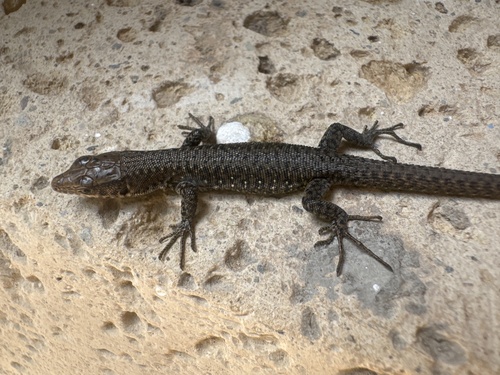
Jackson's Forest Lizard
Adolfus kibonotensis

Puff Adder
Bitis arietans

Battersby's Green Snake
Philothamnus battersbyi

African Rock Python
Python sebae
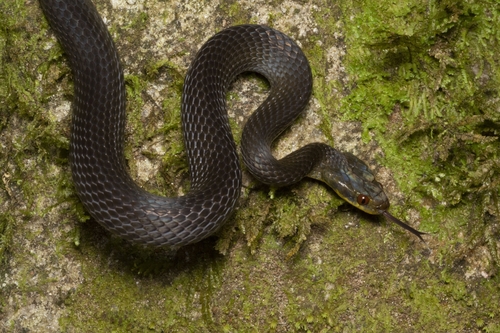
Werner's Water Snake
Crotaphopeltis tornieri
📊 Most Spotted

Common Reed Frog
Hyperolius viridiflavus
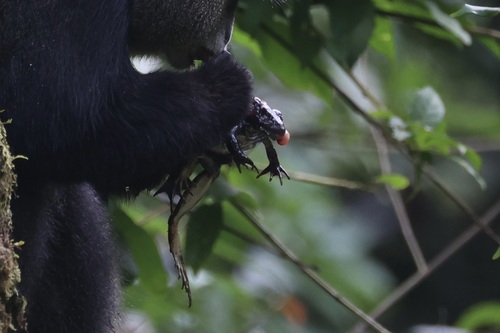
Nutt's River Frog
Amietia nutti

Marsabit Clawed Frog
Xenopus borealis

Senegal Kassina
Kassina senegalensis
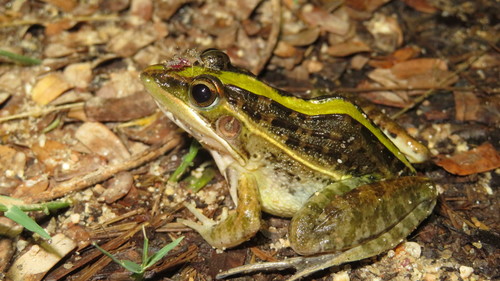
Nile Ridged Frog
Ptychadena nilotica

Mababe puddle frog
Phrynobatrachus mababiensis
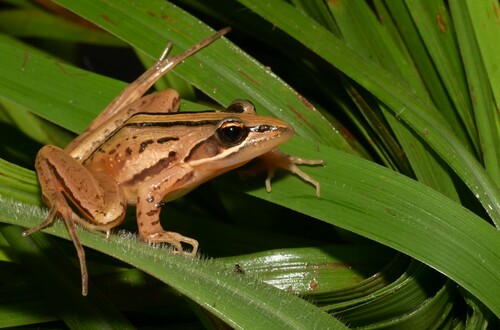
Mt. Meru Stream Frog
Strongylopus merumontanus

Natal Puddle Frog
Phrynobatrachus natalensis
Animal Events
Primate Foraging and Forest Canopy Peak
During these months, Blue Monkeys and Kilimanjaro Colobus experience heightened foraging activity in the fruiting trees, making troop dynamics and vocalizations much easier to observe.
Reptilian Reproductive and Thermoregulation Phase
Kilimanjaro two-horned chamaeleons and African Striped Skinks exhibit peak basking and territorial behaviors as temperature shifts prompt them to seek optimal sunlight on forest branches.
Wetland Breeding and Amphibian Chorus
Seasonal rains trigger intense breeding choruses from Common Reed Frogs around the Momella Lakes, filling the wetlands with distinct mating calls and aquatic activity.
Sighting Calendar
Chance of spotting each species, month by month
Sighting Zones
Warm areas are where all species together are recorded most, so they track where people go as much as where animals are. For one species, see the map on its own page.
Where Wildlife Score
How good is this park for seeing wildlife?Biodiversity
ExcellentHow rich is the wildlife?
Sighting
ExcellentHow likely to see animals?
Quick answers
What animals can you see in Arusha National Park?
The most likely sightings are Blue Monkey (seen by 80–90% of wildlife watchers), Olive Baboon (seen by 80–90% of wildlife watchers), Mount Kilimanjaro Guereza (seen by 70–80% of wildlife watchers), Common Bulbul (seen by 70–80% of wildlife watchers), Waterbuck (seen by 70–80% of wildlife watchers) — among 1282 recorded vertebrate species, based on citizen-science data from GBIF.
When is the best time to visit Arusha National Park for wildlife?
February has the highest combined sighting rate for the park's top species in our month-by-month GBIF data. The full sighting calendar on this page shows each species' best months.
Can you see Mount Kilimanjaro Guereza in Arusha National Park?
Yes — about 79% of wildlife watchers report a Mount Kilimanjaro Guereza sighting in Arusha National Park, based on 87 days of visitor records from GBIF citizen-science data.
Can you see Blue Monkey in Arusha National Park?
Yes — about 82% of wildlife watchers report a Blue Monkey sighting in Arusha National Park, based on 104 days of visitor records from GBIF citizen-science data.
Can you see East African Giraffe in Arusha National Park?
Yes — about 73% of wildlife watchers report a East African Giraffe sighting in Arusha National Park, based on 68 days of visitor records from GBIF citizen-science data.
Can you see Kilimanjaro two-horned chamaeleon in Arusha National Park?
Yes — about 59% of wildlife watchers report a Kilimanjaro two-horned chamaeleon sighting in Arusha National Park, based on 39 days of visitor records from GBIF citizen-science data.

_(27964916384).jpg?width=1920)

