


Fin Whale
Balaenoptera physalus
- KingdomAnimalia (Animals)
- PhylumChordata (Cordats)
- ClassMammalia (Mamífers)
- OrderCetacea
- FamilyBalaenopteridae (Rorquals)
- GenusBalaenoptera
- SpeciesBalaenoptera physalus (Fin Whale)
The fin whale (Balaenoptera physalus), also known as the finback whale or common rorqual, is a species of baleen whale and the second-longest cetacean after the blue whale. The biggest individual reportedly measured 26–27.3 m (85–90 ft) in length, with a maximum recorded weight of 65.5 to 120 tonnes (72.2 to 132.3 short tons; 64.5 to 118.1 long tons). The fin whale's body is long, slender, and brownish-gray in color, with a paler underside to appear less conspicuous from below (countershading). At least two recognized subspecies exist, one in the North Atlantic and one across the Southern Hemisphere. The species is found in all the major oceans, from polar to tropical waters, and is absent only from waters close to the pack ice at the poles and relatively small areas of water away from the open ocean. The highest population density occurs in temperate and cool waters. Wikipedia →
<5% of wildlife watchers report a Fin Whale sighting in Channel Islands National Park, based on 8 days of visitor records from GBIF citizen-science data.
Closest Relatives at Channel Islands National Park

Blue Whale
Balaenoptera musculus

Minke Whale
Balaenoptera acutorostrata

Eden's Whale
Balaenoptera edeni
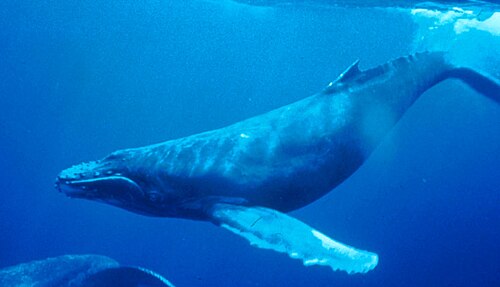
Humpback Whale
Megaptera novaeangliae

Common Dolphin
Delphinus delphis

Bottlenose Dolphin
Tursiops truncatus

Gray Whale
Eschrichtius robustus

Risso's Dolphin
Grampus griseus

Killer Whale
Orcinus orca

Northern Right Whale Dolphin
Lissodelphis borealis

Dall's Porpoise
Phocoenoides dalli

Sperm Whale
Physeter macrocephalus
📅 Monthly Probability
☀️ When They're Spotted
Most active during daytime hours (6am–6pm) · across all parks (global)
Global Distribution
Where this species is recorded worldwide. Restricted to human observations from 2019 onwards — the same kind of record and the same period the probabilities on this page are built from, so collar-tracking studies, camera-trap arrays and museum specimens are excluded. Around Santa Rosa that removes 5,924 GPS fixes from a handful of tagged jaguars.
where this species is recorded (GBIF density — it tracks where observers go, not how likely a sighting is) · parks where it occurs — tap a pin for the sighting probability there
Parks Where Found
| # | Park | Country | Probability |
|---|---|---|---|
| 1 | Kenai Fjords National Park | 🇺🇸 United States | |
| 2 | Bahía de Loreto National Park | 🇲🇽 Mexico | |
| 3 | Great Bear Rainforest | 🇨🇦 Canada | |
| 4 | Channel Islands National Park | 🇺🇸 United States | |
| 5 | Wrangell-St. Elias National Park | 🇺🇸 United States | |
| 6 | Katmai National Park | 🇺🇸 United States | |
| 7 | Cape Breton Highlands National Park | 🇨🇦 Canada | |
| 8 | Acadia National Park | 🇺🇸 United States | |
| 9 | Gros Morne National Park | 🇨🇦 Canada | |
| 10 | Wadden Sea National Park | 🇩🇪 Germany | |
| 11 | Galápagos Islands | 🇪🇨 Ecuador |
Quick answers
What are the chances of seeing a Fin Whale in Channel Islands National Park?
About 4% of wildlife watchers report a Fin Whale sighting in Channel Islands National Park, based on 8 days of visitor records from GBIF citizen-science data.
When is the best time to see Fin Whale in Channel Islands National Park?
June has the highest sighting rate for Fin Whale in Channel Islands National Park in our monthly data.