Semuliki National Park
🇺🇬 Uganda
🐦 Uganda's Best Piping Hornbills HabitatSemuliki National Park occupies a remote tropical savanna landscape in western Uganda, featuring flat plains and dense vegetation unlike typical East African grasslands. Visitors walk through thick woodland trails and grassy clearings framed by distant mountains.
0.845° N 30.095° E
Wildlife
⭐ Iconic Species
 ★
★ grey-mantled grey-cheeked mangabey
Lophocebus albigena
 ★
★ African Forest Elephant
Loxodonta cyclotis
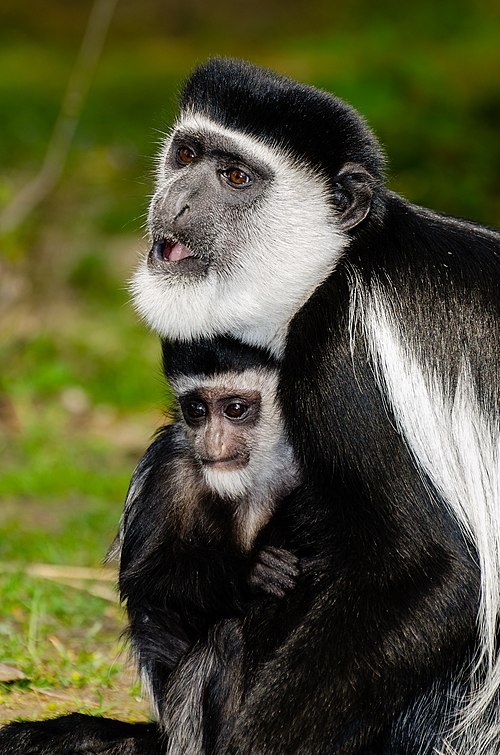 ★
★ Mantled Guereza
Colobus guereza
 ★
★ Dent’s Monkey
Cercopithecus denti
📊 Most Spotted

Piping Hornbill
Bycanistes fistulator

Palmnut Vulture
Gypohierax angolensis

Woodland Kingfisher
Halcyon senegalensis

Crested Malimbe
Malimbus malimbicus

Red-tailed Monkey
Cercopithecus ascanius

De Brazza’s Monkey
Cercopithecus neglectus

African Pied Hornbill
Lophoceros fasciatus

Red-tailed Greenbul
Criniger calurus

Western Nicator
Nicator chloris

Fraser's Rufous Thrush
Stizorhina fraseri
Xavier's Greenbul
Phyllastrephus xavieri

Black-casqued Hornbill
Ceratogymna atrata
⭐ Iconic Species
★ grey-mantled grey-cheeked mangabey
Lophocebus albigena
★ African Forest Elephant
Loxodonta cyclotis
★ Mantled Guereza
Colobus guereza
★ Dent’s Monkey
Cercopithecus denti
📊 Most Spotted
Red-tailed Monkey
Cercopithecus ascanius
De Brazza’s Monkey
Cercopithecus neglectus

Alexander's Bush Squirrel
Paraxerus alexandri

Olive Baboon
Papio anubis

Cyclops roundleaf bat
Doryrhina cyclops

Blue Monkey
Cercopithecus mitis

Derby's Flying Squirrel
Anomalurus derbianus

Red-legged Sun Squirrel
Heliosciurus rufobrachium

Mauritian Tomb Bat
Taphozous mauritianus

Boehm's Bush Squirrel
Paraxerus boehmi
📊 Most Spotted
Piping Hornbill
Bycanistes fistulator
Palmnut Vulture
Gypohierax angolensis
Woodland Kingfisher
Halcyon senegalensis
Crested Malimbe
Malimbus malimbicus
African Pied Hornbill
Lophoceros fasciatus
Red-tailed Greenbul
Criniger calurus
Western Nicator
Nicator chloris
Fraser's Rufous Thrush
Stizorhina fraseri
Xavier's Greenbul
Phyllastrephus xavieri
Black-casqued Hornbill
Ceratogymna atrata

Red-tailed Ant-Thrush
Neocossyphus rufus

Common Bulbul
Pycnonotus barbatus


Animal Events
Forest Elephant Migratory Season
African Forest Elephants move through Semuliki’s dense lowland forests, following seasonal food sources and water availability, offering rare opportunities for guided forest treks to observe their tracks, dung piles, and occasional sightings.
Albertine Rift Birdwatching Festival
The park hosts a dedicated festival celebrating its 300+ bird species, including the vibrant White-bellied Kingfisher and Black-headed Oriole, which congregate near Semuliki’s riverine habitats during peak breeding seasons.


Mangabey and Colobus Group Dynamics
Grey-mantled grey-cheeked mangabeys and Mantled Guerezas engage in coordinated group foraging and social interactions in the canopy, with mangabeys’ high-pitched calls and colobus’ leaping movements creating a dynamic primate spectacle for visitors.
Sighting Calendar
Chance of spotting each species, month by month
Sighting Zones
Warm areas are where all species together are recorded most, so they track where people go as much as where animals are. For one species, see the map on its own page.
Where Wildlife Score
How good is this park for seeing wildlife?Biodiversity
Very goodHow rich is the wildlife?
Sighting
Very goodHow likely to see animals?
Quick answers
What animals can you see in Semuliki National Park?
The most likely sightings are Piping Hornbill (seen by 70–80% of wildlife watchers), Palmnut Vulture (seen by 70–80% of wildlife watchers), grey-mantled grey-cheeked mangabey (seen by 70–80% of wildlife watchers), Dent’s Monkey (seen by 60–70% of wildlife watchers), Woodland Kingfisher (seen by 60–70% of wildlife watchers) — among 1487 recorded vertebrate species, based on citizen-science data from GBIF.
When is the best time to visit Semuliki National Park for wildlife?
July has the highest combined sighting rate for the park's top species in our month-by-month GBIF data. The full sighting calendar on this page shows each species' best months.
Can you see grey-mantled grey-cheeked mangabey in Semuliki National Park?
Yes — about 74% of wildlife watchers report a grey-mantled grey-cheeked mangabey sighting in Semuliki National Park, based on 12 days of visitor records from GBIF citizen-science data.
Can you see African Forest Elephant in Semuliki National Park?
Yes — about 21% of wildlife watchers report a African Forest Elephant sighting in Semuliki National Park, based on 1 days of visitor records from GBIF citizen-science data.
Can you see Mantled Guereza in Semuliki National Park?
Yes — about 43% of wildlife watchers report a Mantled Guereza sighting in Semuliki National Park, based on 12 days of visitor records from GBIF citizen-science data.
Can you see Dent’s Monkey in Semuliki National Park?
Yes — about 67% of wildlife watchers report a Dent’s Monkey sighting in Semuliki National Park, based on 9 days of visitor records from GBIF citizen-science data.


