Tapantí-Macizo de la Muerte National Park
🇨🇷 Costa Rica
🐦 Fiery-throated Hummingbirds in Rainy HighlandsOne of Costa Rica's least-visited national parks protects a vast expanse of cloud forest on the edge of the Talamanca Range. With over 400 bird species including the Resplendent Quetzal, 45 mammal species, and annual rainfall exceeding 7,000 mm, Tapantí is a paradise for birders and a sanctuary for some of Central America's most elusive wildlife.
9.688° N 83.742° W
Wildlife
⭐ Iconic Species
 ★
★ Resplendent Quetzal
Pharomachrus mocinno
 ★
★ Fiery-throated Hummingbird
Panterpe insignis
 ★
★ Talamanca Hummingbird
Eugenes spectabilis
 ★
★ Central American White-faced Capuchin
Cebus imitator
📊 Most Spotted

Rufous-collared Sparrow
Zonotrichia capensis

Clay-colored Thrush
Turdus grayi

Lesser Violetear
Colibri cyanotus

Volcano Hummingbird
Selasphorus flammula

Sooty-capped Bush-Tanager
Chlorospingus pileatus

Large-footed Finch
Pezopetes capitalis

Long-tailed Silky-flycatcher
Ptilogonys caudatus

Mountain Thrush
Turdus plebejus

White-throated Mountain-gem
Lampornis castaneoventris

Slaty Flowerpiercer
Diglossa plumbea

Blue-and-white Swallow
Notiochelidon cyanoleuca

Flame-colored Tanager
Piranga bidentata
⭐ Iconic Species
📊 Most Spotted

Red-tailed Squirrel
Sciurus granatensis

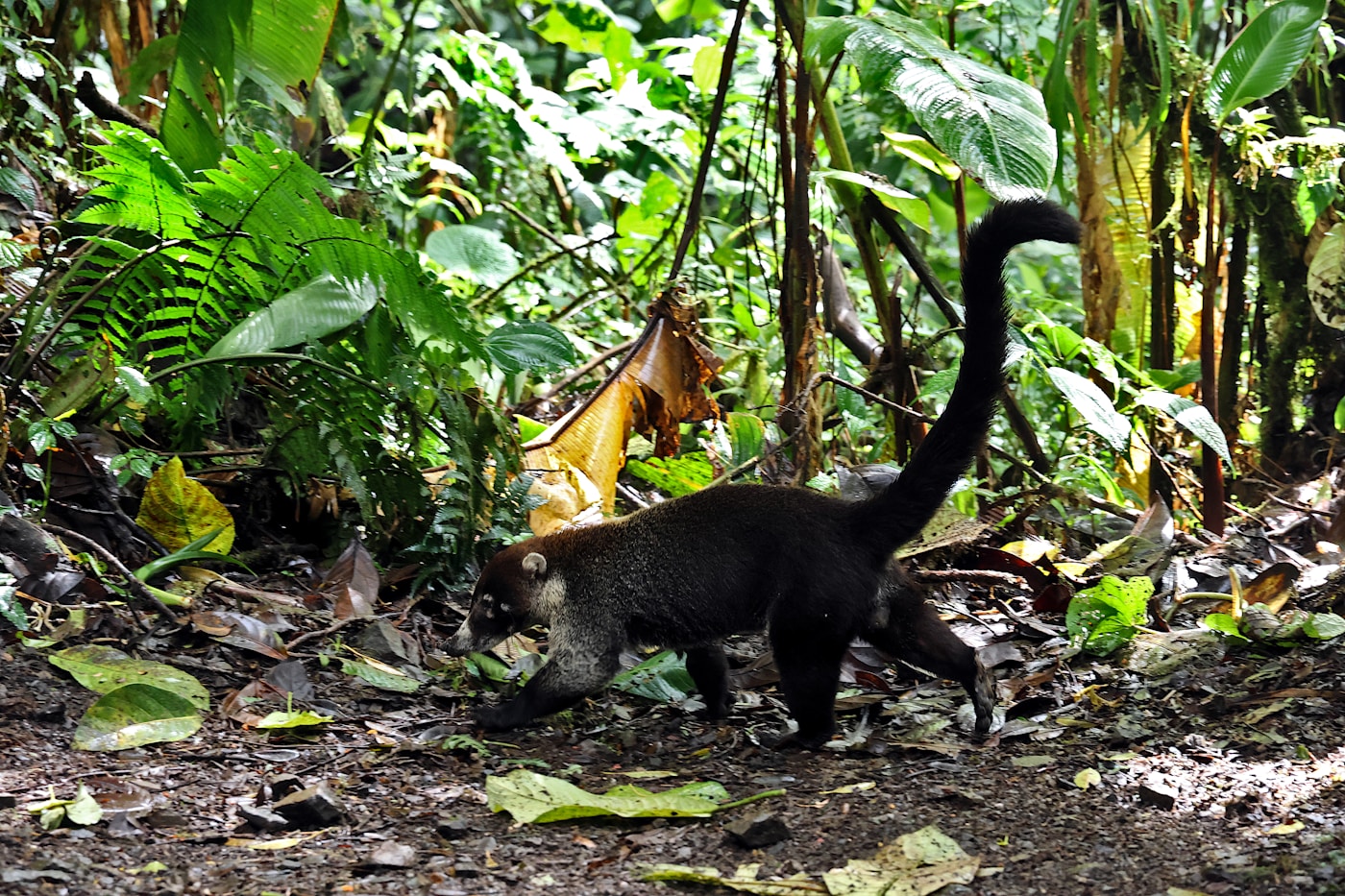
White-nosed Coati
Nasua narica

Central American Agouti
Dasyprocta punctata

Mantled Howler Monkey
Alouatta palliata

Baird's Tapir
Tapirella bairdii

Variegated Squirrel
Sciurus variegatoides

Mexican Hairy Dwarf Porcupine
Sphiggurus mexicanus

Brown-throated Sloth
Bradypus variegatus

Tayra
Eira barbara

Central American Dwarf Squirrel
Microsciurus alfari

Cacomistle
Bassariscus sumichrasti

Hoffmann's Two-toed Sloth
Choloepus hoffmanni
⭐ Iconic Species
★ Resplendent Quetzal
Pharomachrus mocinno
★ Fiery-throated Hummingbird
Panterpe insignis
★ Talamanca Hummingbird
Eugenes spectabilis
📊 Most Spotted
Rufous-collared Sparrow
Zonotrichia capensis
Clay-colored Thrush
Turdus grayi
Lesser Violetear
Colibri cyanotus
Volcano Hummingbird
Selasphorus flammula
Sooty-capped Bush-Tanager
Chlorospingus pileatus
Large-footed Finch
Pezopetes capitalis
Long-tailed Silky-flycatcher
Ptilogonys caudatus
Mountain Thrush
Turdus plebejus
White-throated Mountain-gem
Lampornis castaneoventris
Slaty Flowerpiercer
Diglossa plumbea
Blue-and-white Swallow
Notiochelidon cyanoleuca
Flame-colored Tanager
Piranga bidentata
📊 Most Spotted
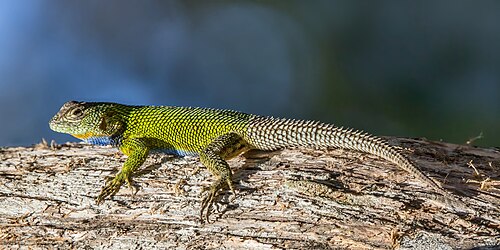
Emerald Swift
Sceloporus malachiticus

Montane Alligator Lizard
Abronia monticola
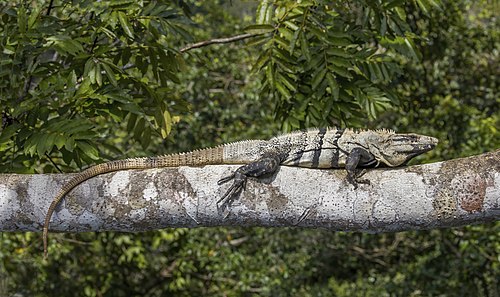
Black Spiny-tailed Iguana
Ctenosaura similis

Green Iguana
Iguana iguana
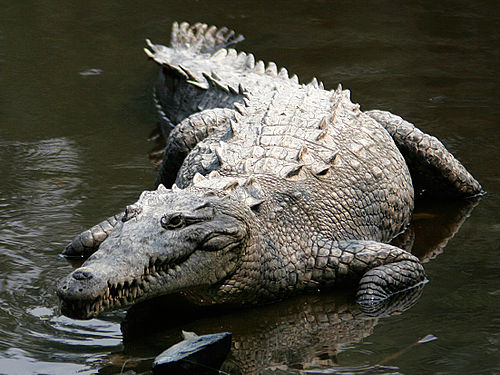
American Crocodile
Crocodylus acutus

Bighead Anole
Anolis capito

Border Anole
Anolis limifrons

Basiisk Verde
Basiliscus plumifrons

Humble Anole
Anolis humilis

Neotropical Green Anole
Anolis biporcatus

Middle American Ameiva
Holcosus festivus

Fer-de-lance
Bothrops asper
📊 Most Spotted

Warszewitsch's Frog
Lithobates warszewitschii

Strawberry Poison-dart Frog
Oophaga pumilio
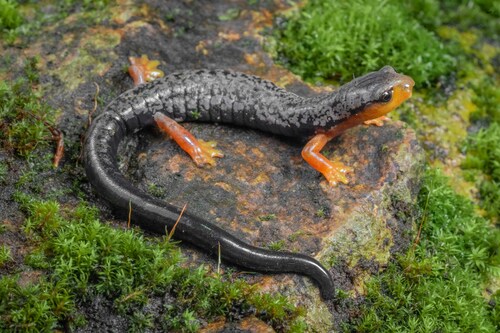
Red-legged Webfoot Salamander
Bolitoglossa pesrubra

Masked Tree Frog
Smilisca phaeota

Red-eyed Treefrog
Agalychnis callidryas

Giant Marine Toad
Rhinella horribilis

Wet Forest Toad
Incilius melanochlorus

Emerald Glass Frog
Espadarana prosoblepon

Green Climbing Toad
Incilius coniferus

Fitzinger's Robber Frog
Craugastor fitzingeri

Clay-colored Rain Frog
Pristimantis cerasinus

Red-webbed Tree Frog
Boana rufitela
Animal Events
Resplendent Quetzal Nesting
During breeding season the male Resplendent Quetzal grows metallic green tail streamers that trail nearly a meter behind him, flashing crimson and emerald as he darts between the canopy. Pairs turn loud and conspicuous while excavating tree cavities and feasting on wild avocados, making this the easiest time to catch the highlands' most dazzling bird.
Migratory Warbler Arrival
Tiny songbirds that bred far to the north pour into the cool highland forest to spend the winter here, swelling the park's warbler ranks. Wilson's Warbler flits through the undergrowth in flashes of yellow while the Black-throated Green Warbler works the mid-canopy, foraging restlessly among the mossy branches.


Highland Hummingbird Gathering
When the high-elevation flowers burst into bloom, Talamanca-endemic hummingbirds swarm the forest edges and gardens in a whirring rush of color. The Talamanca, Fiery-throated, and Volcano hummingbirds jostle at the same nectar sources, their throats glinting jewel-bright as they hover and spar.
Sighting Calendar
Chance of spotting each species, month by month
Sighting Zones
Warm areas are where all species together are recorded most, so they track where people go as much as where animals are. For one species, see the map on its own page.
Where Wildlife Score
How good is this park for seeing wildlife?Biodiversity
ExcellentHow rich is the wildlife?
Sighting
GoodHow likely to see animals?
Quick answers
What animals can you see in Tapantí-Macizo de la Muerte National Park?
The most likely sightings are Rufous-collared Sparrow (seen by 60–70% of wildlife watchers), Clay-colored Thrush (seen by 50–60% of wildlife watchers), Talamanca Hummingbird (seen by 50–60% of wildlife watchers), Lesser Violetear (seen by 50–60% of wildlife watchers), Volcano Hummingbird (seen by 50–60% of wildlife watchers) — among 1261 recorded vertebrate species, based on citizen-science data from GBIF.
When is the best time to visit Tapantí-Macizo de la Muerte National Park for wildlife?
March has the highest combined sighting rate for the park's top species in our month-by-month GBIF data. The full sighting calendar on this page shows each species' best months.
Can you see Resplendent Quetzal in Tapantí-Macizo de la Muerte National Park?
Yes — about 26% of wildlife watchers report a Resplendent Quetzal sighting in Tapantí-Macizo de la Muerte National Park, based on 2,144 days of visitor records from GBIF citizen-science data.
Can you see Fiery-throated Hummingbird in Tapantí-Macizo de la Muerte National Park?
Yes — about 48% of wildlife watchers report a Fiery-throated Hummingbird sighting in Tapantí-Macizo de la Muerte National Park, based on 3,893 days of visitor records from GBIF citizen-science data.
Can you see Talamanca Hummingbird in Tapantí-Macizo de la Muerte National Park?
Yes — about 54% of wildlife watchers report a Talamanca Hummingbird sighting in Tapantí-Macizo de la Muerte National Park, based on 4,417 days of visitor records from GBIF citizen-science data.
Can you see Central American White-faced Capuchin in Tapantí-Macizo de la Muerte National Park?
Yes — about 17% of wildlife watchers report a Central American White-faced Capuchin sighting in Tapantí-Macizo de la Muerte National Park, based on 44 days of visitor records from GBIF citizen-science data.