


Cuban Treefrog
Osteopilus septentrionalis
- KingdomAnimalia (Animals)
- PhylumChordata (Cordats)
- ClassAmphibia (Amfibis)
- OrderAnura (Anurs)
- FamilyHylidae (Hylid Tree Frogs)
- GenusOsteopilus (North Caribbean Treefrogs)
- SpeciesOsteopilus septentrionalis (Cuban Treefrog)
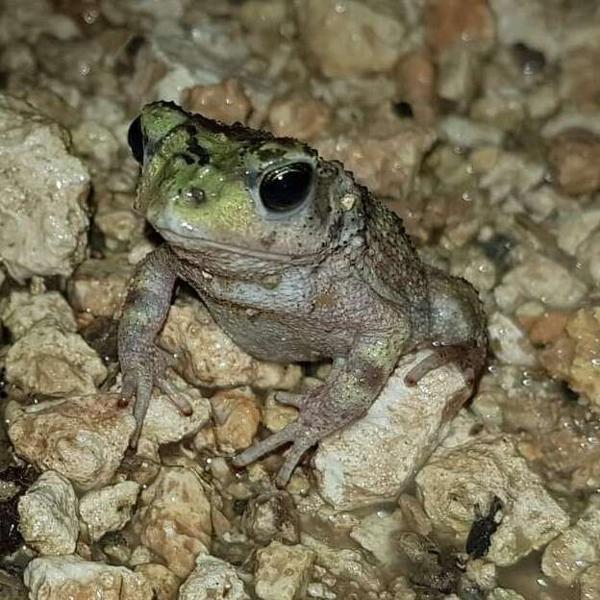
The Cuban tree frog (Osteopilus septentrionalis) is a large species of tree frog that is native to Cuba, the Bahamas, and the Cayman Islands; but has become invasive in several other places around the Americas. Its wide diet and ability to thrive in urban areas has made it a highly invasive species with established colonies in places such as Florida, the Hawaiian island of Oahu, and the Caribbean Islands. These tree frogs can vary in size from 2 to 5.5 inches (5 to 12.7 cm) in length. Due to their large size, Cuban tree frogs can eat a wide variety of things, particularly native tree frogs, and their removal has shown to result in an increase in the amount of native tree frogs in an area. The tadpoles of Cuban tree frogs also heavily compete with native frog tadpoles, which can cause negative effects in body mass, size at metamorphosis, and growth rates for the native tadpoles. Wikipedia →
40–50% of wildlife watchers report a Cuban Treefrog sighting in Ciénaga de Zapata, based on 22 days of visitor records from GBIF citizen-science data.



📅 Monthly Probability
☀️🌙 When They're Spotted
Active throughout day and night · across all parks (global)
Global Distribution
Where this species is recorded worldwide. Restricted to human observations from 2019 onwards — the same kind of record and the same period the probabilities on this page are built from, so collar-tracking studies, camera-trap arrays and museum specimens are excluded. Around Santa Rosa that removes 5,924 GPS fixes from a handful of tagged jaguars.
where this species is recorded (GBIF density — it tracks where observers go, not how likely a sighting is) · parks where it occurs — tap a pin for the sighting probability there
Parks Where Found
| # | Park | Country | Probability |
|---|---|---|---|
| 1 | Big Cypress National Preserve | 🇺🇸 United States | |
| 2 | Ciénaga de Zapata | 🇨🇺 Cuba | |
| 3 | Everglades National Park | 🇺🇸 United States | |
| 4 | Acadia National Park | 🇺🇸 United States |
Quick answers
What are the chances of seeing a Cuban Treefrog in Ciénaga de Zapata?
About 43% of wildlife watchers report a Cuban Treefrog sighting in Ciénaga de Zapata, based on 22 days of visitor records from GBIF citizen-science data.
When is the best time to see Cuban Treefrog in Ciénaga de Zapata?
August has the highest sighting rate for Cuban Treefrog in Ciénaga de Zapata in our monthly data.