


Red-and-green Macaw
Ara chloropterus
- KingdomAnimalia (Animals)
- PhylumChordata (Cordats)
- ClassAves (Aus)
- OrderPsittaciformes (Parrots)
- FamilyPsittacidae (New World and African Parrots)
- GenusAra
- SpeciesAra chloropterus (Red-and-green Macaw)
The red-and-green macaw (Ara chloropterus), also known as the green-winged macaw, is a large, mostly-red macaw of the genus Ara. It is popular in aviculture, and is the second most commonly kept macaw species after the blue-and-yellow macaw. However, they are not as common in captivity as the blue-and-yellow, and are much more expensive; prices are often double that of the blue-and-gold. This is the largest of the genus Ara, widespread in the forests and woodlands of northern and central South America. However, in common with other macaws, in recent years there has been a marked decline in its numbers due to habitat loss and illegal capture for the parrot trade. Wikipedia →
Closest Relatives at Parque Estadual Encontro das Águas

Chestnut-fronted Macaw
Ara severus
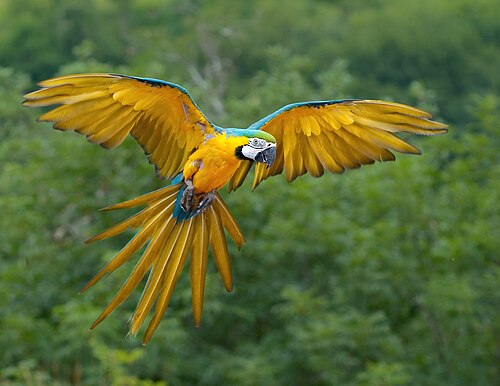
Blue-and-yellow Macaw
Ara ararauna

Yellow-chevroned Parakeet
Brotogeris chiriri

Monk Parakeet
Myiopsitta monachus

Blue-fronted Parrot
Amazona aestiva

Peach-fronted Parakeet
Aratinga aurea

Hyacinth Macaw
Anodorhynchus hyacinthinus

Blue-crowned Parakeet
Aratinga acuticaudata

Orange-winged Parrot
Amazona amazonica

White-eyed Parakeet
Aratinga leucophthalma

Yellow-collared Macaw
Primolius auricollis

Scaly-headed Parrot
Pionus maximiliani
📅 Monthly Probability
Fewer than 5 records of Red-and-green Macaw at Parque Estadual Encontro das Águas — not enough to chart months honestly.
☀️ When They're Spotted
Most active during daytime hours (6am–6pm) · across all parks (global)
Global Distribution
Where this species is recorded worldwide. Restricted to human observations from 2019 onwards — the same kind of record and the same period the probabilities on this page are built from, so collar-tracking studies, camera-trap arrays and museum specimens are excluded. Around Santa Rosa that removes 5,924 GPS fixes from a handful of tagged jaguars.
where this species is recorded (GBIF density — it tracks where observers go, not how likely a sighting is) · parks where it occurs — tap a pin for the sighting probability there
Parks Where Found
| # | Park | Country | Probability |
|---|---|---|---|
| 1 | Chapada dos Guimarães National Park | 🇧🇷 Brazil | |
| 2 | Madidi National Park | 🇧🇴 Bolivia | |
| 3 | Tambopata National Reserve | 🇵🇪 Peru | |
| 4 | Manu National Park | 🇵🇪 Peru | |
| 5 | Canaima National Park | 🇻🇪 Venezuela | |
| 6 | Iberá National Park | 🇦🇷 Argentina | |
| 7 | Darién National Park | 🇵🇦 Panama | |
| 8 | Anavilhanas National Park | 🇧🇷 Brazil | |
| 9 | Yasuní National Park | 🇪🇨 Ecuador | |
| 10 | Cuyabeno Wildlife Reserve | 🇪🇨 Ecuador | |
| 11 | Amacayacu National Natural Park | 🇨🇴 Colombia | |
| 12 | Cordillera Azul National Park | 🇵🇪 Peru | |
| 13 | Iguazú National Park | 🇦🇷 Argentina | |
| 14 | Noel Kempff Mercado National Park | 🇧🇴 Bolivia | |
| 15 | Iguaçu National Park | 🇧🇷 Brazil | |
| 16 | Emas National Park | 🇧🇷 Brazil | |
| 17 | Henri Pittier National Park | 🇻🇪 Venezuela | |
| 18 | Brownsberg Nature Park | 🇸🇷 Suriname | |
| 19 | Amboró National Park | 🇧🇴 Bolivia | |
| 20 | Tayrona National Natural Park | 🇨🇴 Colombia | |
| 21 | Parque Estadual Encontro das Águas | 🇧🇷 Brazil | |
| 22 | Sierra de la Macarena National Park | 🇨🇴 Colombia |