Hluhluwe-Imfolozi Park
🇿🇦 South Africa
🐕 Painted Hunting Dog Thrives in HluhluweHluhluwe-Imfolozi Park is a tropical savanna reserve tucked into the rolling hills of South Africa's KwaZulu-Natal province. This protected area features dense acacia thickets, open grasslands, and winding river valleys that visitors navigate along dirt tracks.
-28.311° S 31.880° E
Wildlife
⭐ Iconic Species
 ★
★ White Rhinoceros
Ceratotherium simum
 ★
★ Lion
Panthera leo
 ★
★ Painted Hunting Dog
Lycaon pictus
📊 Most Spotted

Common Bulbul
Pycnonotus barbatus

Fork-tailed Drongo
Dicrurus adsimilis

Red-shouldered Glossy-starling
Lamprotornis nitens

White-backed Vulture
Gyps africanus

Emerald-spotted Wood-Dove
Turtur chalcospilos

African Buffalo
Syncerus caffer

Red-billed Oxpecker
Buphagus erythrorhynchus

Common Warthog
Phacochoerus africanus

Nyala
Tragelaphus angasii

African Bush Elephant
Loxodonta africana

Plains Zebra
Equus quagga

Impala
Aepyceros melampus
⭐ Iconic Species
★ White Rhinoceros
Ceratotherium simum
★ Lion
Panthera leo
★ Painted Hunting Dog
Lycaon pictus
📊 Most Spotted
African Buffalo
Syncerus caffer
Common Warthog
Phacochoerus africanus
Nyala
Tragelaphus angasii
African Bush Elephant
Loxodonta africana
Plains Zebra
Equus quagga
Impala
Aepyceros melampus

Southern Giraffe
Giraffa giraffa

Chacma Baboon
Papio ursinus
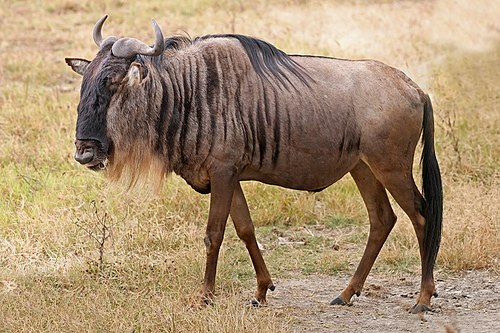
Blue Wildebeest
Connochaetes taurinus

Vervet Monkey
Chlorocebus pygerythrus

Greater Kudu
Tragelaphus strepsiceros

Cheetah
Acinonyx jubatus
📊 Most Spotted
Common Bulbul
Pycnonotus barbatus
Fork-tailed Drongo
Dicrurus adsimilis
Red-shouldered Glossy-starling
Lamprotornis nitens
White-backed Vulture
Gyps africanus
Emerald-spotted Wood-Dove
Turtur chalcospilos
Red-billed Oxpecker
Buphagus erythrorhynchus

Cape Turtle Dove
Streptopelia capicola

Speckled Mousebird
Colius striatus

Southern Fiscal
Lanius collaris

Hadada
Bostrychia hagedash

Yellow-fronted Canary
Crithagra mozambica

White-browed Coucal
Centropus superciliosus
📊 Most Spotted

Leopard Tortoise
Stigmochelys pardalis

Cape Terrapin
Pelomedusa galeata

Nile Monitor
Varanus niloticus

Nile Crocodile
Crocodylus niloticus

African Striped Skink
Trachylepis striata

Southern Tree Agama
Acanthocercus atricollis

Tropical House Gecko
Hemidactylus mabouia
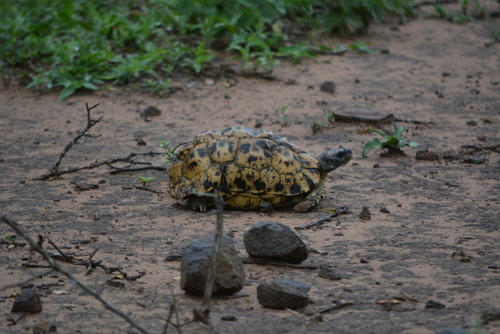
Eastern Hinged-Back Tortoise
Kinixys zombensis

Cape Dwarf Gecko
Lygodactylus capensis

Rock Monitor
Varanus albigularis

Flap-necked Chameleon
Chamaeleo dilepis

Rainbow Skink
Trachylepis margaritifera
📊 Most Spotted

Grey Foam-nest Treefrog
Chiromantis xerampelina

African Split-skin Toad
Schismaderma carens

Red-Banded Rubber Frog
Phrynomantis bifasciatus

Senegal Kassina
Kassina senegalensis

Anchieta's Ridged Frog
Ptychadena anchietae

Natal Puddle Frog
Phrynobatrachus natalensis

African Clawed Frog
Xenopus laevis

Mozambique Forest Tree Frog
Leptopelis mossambicus

African Common Toad
Sclerophrys gutturalis

Shovel-nosed Frog
Hemisus marmoratus

Painted Reed Frog
Hyperolius marmoratus

Natal sand frog
Tomopterna natalensis
Animal Events
Rains & Amphibian Chorus
The arrival of summer transforms the park into a lush paradise, triggering dramatic breeding choruses where the Grey Foam-nest Treefrog fills the humid nights, while the Southern African Python becomes increasingly active near water sources.

Migratory Arrival & Game Viewing
As temperatures rise ahead of the rains, migratory birds flood the region while resident wildlife converges on dwindling waterholes. The White-backed Vulture actively nests and soars overhead, accompanied by the swift arrival of the Black Kite.

Dry Wildlife Concentration
The dry winter months cause vegetation to thin out significantly, offering supreme visibility. Herds of African Buffalo and other large mammals concentrate densely around the remaining perennial rivers and watering holes.
Sighting Calendar
Chance of spotting each species, month by month
Sighting Zones
Warm areas are where all species together are recorded most, so they track where people go as much as where animals are. For one species, see the map on its own page.
Where Wildlife Score
How good is this park for seeing wildlife?Biodiversity
Very goodHow rich is the wildlife?
Sighting
ExcellentHow likely to see animals?
Quick answers
What animals can you see in Hluhluwe-Imfolozi Park?
The most likely sightings are Common Bulbul (seen by 70–80% of wildlife watchers), Fork-tailed Drongo (seen by 70–80% of wildlife watchers), Red-shouldered Glossy-starling (seen by 60–70% of wildlife watchers), White-backed Vulture (seen by 60–70% of wildlife watchers), Emerald-spotted Wood-Dove (seen by 60–70% of wildlife watchers) — among 980 recorded vertebrate species, based on citizen-science data from GBIF.
When is the best time to visit Hluhluwe-Imfolozi Park for wildlife?
April has the highest combined sighting rate for the park's top species in our month-by-month GBIF data. The full sighting calendar on this page shows each species' best months.
Can you see White Rhinoceros in Hluhluwe-Imfolozi Park?
Yes — about 53% of wildlife watchers report a White Rhinoceros sighting in Hluhluwe-Imfolozi Park, based on 130 days of visitor records from GBIF citizen-science data.
Can you see Lion in Hluhluwe-Imfolozi Park?
Yes — about 37% of wildlife watchers report a Lion sighting in Hluhluwe-Imfolozi Park, based on 64 days of visitor records from GBIF citizen-science data.
Can you see Painted Hunting Dog in Hluhluwe-Imfolozi Park?
Yes — about 19% of wildlife watchers report a Painted Hunting Dog sighting in Hluhluwe-Imfolozi Park, based on 21 days of visitor records from GBIF citizen-science data.


