


Nyala
Tragelaphus angasii
- KingdomAnimalia (Animals)
- PhylumChordata (Cordats)
- ClassMammalia (Mamífers)
- OrderArtiodactyla (Artiodàctils)
- FamilyBovidae (Bòvids)
- GenusTragelaphus (Spiral-horned Antelopes)
- SpeciesTragelaphus angasii (Nyala)
The lowland nyala or simply nyala (Tragelaphus angasii) is a spiral-horned artiodactyl antelope native to Southern Africa. The species is part of the family Bovidae and the genus Tragelaphus (formerly placed in the genus Nyala). It was first described in 1849 by George French Angas and exhibits the highest sexual dimorphism among the spiral-horned antelopes. It is not to be confused with the endangered mountain nyala living in the Bale region of Ethiopia. The nyala's range encompasses much of Southern Africa. As its population is relatively stable, it has been listed as of least concern by the International Union for Conservation of Nature. Wikipedia →
60–70% of wildlife watchers report a Nyala sighting in Hluhluwe-Imfolozi Park, based on 173 days of visitor records from GBIF citizen-science data.
Closest Relatives at Hluhluwe-Imfolozi Park

Greater Kudu
Tragelaphus strepsiceros

Northern Bushbuck
Tragelaphus scriptus

African Buffalo
Syncerus caffer

Impala
Aepyceros melampus
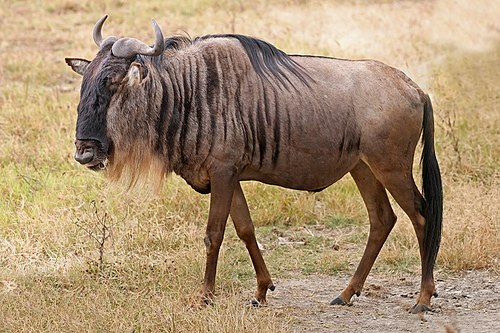
Blue Wildebeest
Connochaetes taurinus

Waterbuck
Kobus ellipsiprymnus

Natal Duiker
Cephalophus natalensis

Bush Duiker
Sylvicapra grimmia

Bontebok/Blesbok
Damaliscus pygargus

Common Warthog
Phacochoerus africanus

Southern Giraffe
Giraffa giraffa

Bushpig
Potamochoerus larvatus
📅 Monthly Probability
☀️ When They're Spotted
Most active during daytime hours (6am–6pm) · across all parks (global)
Global Distribution
Where this species is recorded worldwide. Restricted to human observations from 2019 onwards — the same kind of record and the same period the probabilities on this page are built from, so collar-tracking studies, camera-trap arrays and museum specimens are excluded. Around Santa Rosa that removes 5,924 GPS fixes from a handful of tagged jaguars.
where this species is recorded (GBIF density — it tracks where observers go, not how likely a sighting is) · parks where it occurs — tap a pin for the sighting probability there
Parks Where Found
| # | Park | Country | Probability |
|---|---|---|---|
| 1 | Hluhluwe-Imfolozi Park | 🇿🇦 South Africa | |
| 2 | Gonarezhou National Park | 🇿🇼 Zimbabwe | |
| 3 | Gorongosa National Park | 🇲🇿 Mozambique | |
| 4 | Kruger National Park | 🇿🇦 South Africa | |
| 5 | iSimangaliso Wetland Park | 🇿🇦 South Africa | |
| 6 | Addo Elephant National Park | 🇿🇦 South Africa | |
| 7 | Mana Pools National Park | 🇿🇼 Zimbabwe | |
| 8 | Lower Zambezi National Park | 🇿🇲 Zambia | |
| 9 | South Luangwa National Park | 🇿🇲 Zambia | |
| 10 | Pilanesberg National Park | 🇿🇦 South Africa | |
| 11 | Garden Route National Park | 🇿🇦 South Africa |
Quick answers
What are the chances of seeing a Nyala in Hluhluwe-Imfolozi Park?
About 60% of wildlife watchers report a Nyala sighting in Hluhluwe-Imfolozi Park, based on 173 days of visitor records from GBIF citizen-science data.
When is the best time to see Nyala in Hluhluwe-Imfolozi Park?
January has the highest sighting rate for Nyala in Hluhluwe-Imfolozi Park in our monthly data.