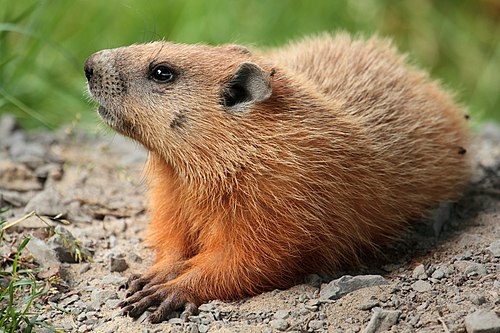


Woodchuck
Marmota monax
- KingdomAnimalia (Animals)
- PhylumChordata (Cordats)
- ClassMammalia (Mamífers)
- OrderRodentia (Rosegadors)
- FamilySciuridae (Squirrels)
- GenusMarmota (Marmots)
- SpeciesMarmota monax (Woodchuck)
The groundhog (Marmota monax), also known as the woodchuck, is a rodent of the family Sciuridae, belonging to the group of large ground squirrels known as marmots. A lowland creature of North America, it is found through much of the Eastern United States, across Canada and into Alaska. It was given its scientific name as Mus monax by Carl Linnaeus in 1758, based on a description of the animal by George Edwards, published in 1743. The groundhog, being a lowland animal, is exceptional among marmots. Other marmots, such as the yellow-bellied and hoary marmots, live in rocky and mountainous areas. Groundhogs are considered one of the most solitary of marmot species. Wikipedia →
5–10% of wildlife watchers report a Woodchuck sighting in Jasper National Park, based on 8 days of visitor records from GBIF citizen-science data.
Closest Relatives at Jasper National Park

Hoary Marmot
Marmota caligata

Yellow-bellied Marmot
Marmota flaviventris

American Red Squirrel
Tamiasciurus hudsonicus
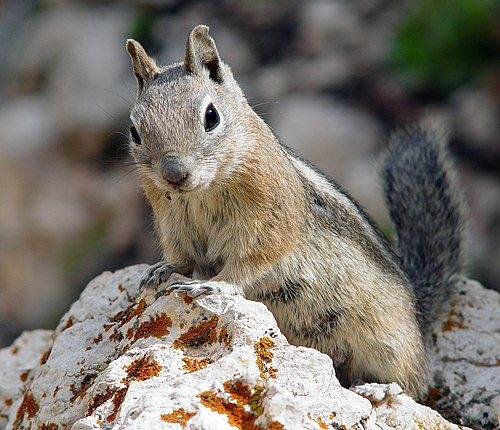
Golden-mantled Ground Squirrel
Callospermophilus lateralis

Columbian Ground Squirrel
Urocitellus columbianus

Least Chipmunk
Tamias minimus

Yellow-pine Chipmunk
Tamias amoenus

American Beaver
Castor canadensis

Muskrat
Ondatra zibethicus
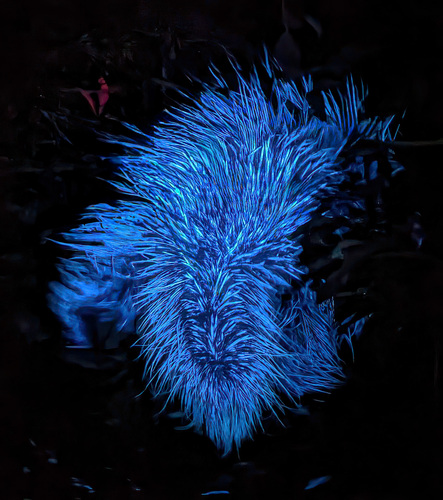
Quiller
Erethizon dorsatus

Deer Mouse
Peromyscus maniculatus

Gapperrotelmaus
Myodes gapperi
📅 Monthly Probability
☀️ When They're Spotted
Most active during daytime hours (6am–6pm) · across all parks (global)
Global Distribution
Where this species is recorded worldwide. Restricted to human observations from 2019 onwards — the same kind of record and the same period the probabilities on this page are built from, so collar-tracking studies, camera-trap arrays and museum specimens are excluded. Around Santa Rosa that removes 5,924 GPS fixes from a handful of tagged jaguars.
where this species is recorded (GBIF density — it tracks where observers go, not how likely a sighting is) · parks where it occurs — tap a pin for the sighting probability there
Parks Where Found
| # | Park | Country | Probability |
|---|---|---|---|
| 1 | Great Smoky Mountains National Park | 🇺🇸 United States | |
| 2 | Shenandoah National Park | 🇺🇸 United States | |
| 3 | Riding Mountain National Park | 🇨🇦 Canada | |
| 4 | Acadia National Park | 🇺🇸 United States | |
| 5 | Jasper National Park | 🇨🇦 Canada | |
| 6 | Great Bear Rainforest | 🇨🇦 Canada | |
| 7 | Wood Buffalo National Park | 🇨🇦 Canada | |
| 8 | Voyageurs National Park | 🇺🇸 United States | |
| 9 | Isle Royale National Park | 🇺🇸 United States | |
| 10 | Point Pelee National Park | 🇨🇦 Canada | |
| 11 | Banff National Park | 🇨🇦 Canada |
Quick answers
What are the chances of seeing a Woodchuck in Jasper National Park?
About 5% of wildlife watchers report a Woodchuck sighting in Jasper National Park, based on 8 days of visitor records from GBIF citizen-science data.
When is the best time to see Woodchuck in Jasper National Park?
May has the highest sighting rate for Woodchuck in Jasper National Park in our monthly data.