Great Smoky Mountains National Park
🇺🇸 United States
🐻 Black Bears and Elk in CataloocheeGreat Smoky Mountains National Park is a temperate forest in the southern Appalachian range of the United States. It is known for rolling ridges cloaked in hardwood and spruce‑fir stands, mist that often hangs over the valleys, and a network of shaded trails that weave through old‑growth woods.
35.570° N 83.628° W
Wildlife
⭐ Iconic Species
 ★
★ American Black Bear
Ursus americanus
 ★
★ Elk
Cervus elaphus
 ★
★ Red-cheeked Salamander
Plethodon jordani
 ★
★ White-tailed Deer
Odocoileus virginianus
📊 Most Spotted

American Crow
Corvus brachyrhynchos

Northern Cardinal
Cardinalis cardinalis

Carolina Wren
Thryothorus ludovicianus

Carolina Chickadee
Poecile carolinensis

American Robin
Turdus migratorius

Tufted Titmouse
Baeolophus bicolor

Blue Jay
Cyanocitta cristata

Song Sparrow
Melospiza melodia

Mourning Dove
Zenaida macroura

Blue Ridge Two-lined Salamander
Eurycea wilderae

American Goldfinch
Spinus tristis

Red-bellied Woodpecker
Melanerpes carolinus
⭐ Iconic Species
★ American Black Bear
Ursus americanus
★ Elk
Cervus elaphus
★ White-tailed Deer
Odocoileus virginianus
📊 Most Spotted

Eastern Gray Squirrel
Sciurus carolinensis

American Red Squirrel
Tamiasciurus hudsonicus
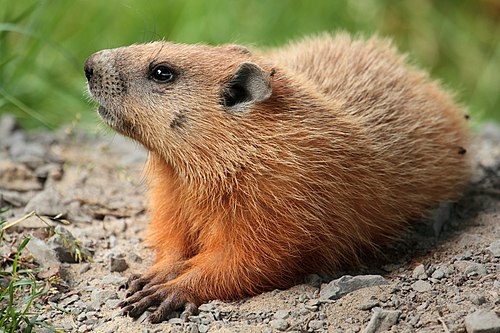
Woodchuck
Marmota monax

Coyote
Canis latrans

Eastern Cottontail
Sylvilagus floridanus

Eastern Chipmunk
Tamias striatus

Common Raccoon
Procyon lotor

Northern River Otter
Lontra canadensis

American Beaver
Castor canadensis

Virginia Opossum
Didelphis virginiana
Striped Skunk
Mephitis mephitis

Red Fox
Vulpes vulpes
📊 Most Spotted
American Crow
Corvus brachyrhynchos
Northern Cardinal
Cardinalis cardinalis
Carolina Wren
Thryothorus ludovicianus
Carolina Chickadee
Poecile carolinensis
American Robin
Turdus migratorius
Tufted Titmouse
Baeolophus bicolor
Blue Jay
Cyanocitta cristata
Song Sparrow
Melospiza melodia
Mourning Dove
Zenaida macroura
American Goldfinch
Spinus tristis
Red-bellied Woodpecker
Melanerpes carolinus
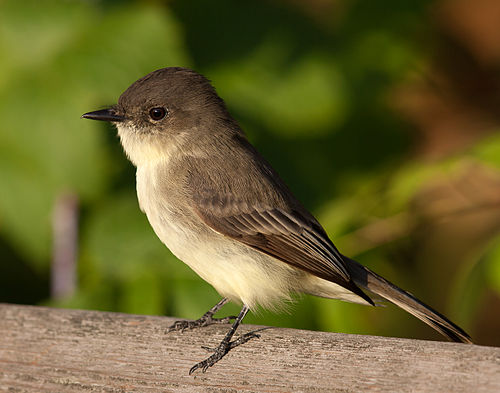
Eastern Phoebe
Sayornis phoebe
📊 Most Spotted

Common Watersnake
Nerodia sipedon

Eastern Rat Snake
Pantherophis alleghaniensis

Common Garter Snake
Thamnophis sirtalis

Common Box Turtle
Terrapene carolina

Eastern Fence Lizard
Sceloporus undulatus

Common Five-lined Skink
Plestiodon fasciatus

Ringneck Snake
Diadophis punctatus

Eastern Copperhead
Agkistrodon contortrix

Timber Rattlesnake
Crotalus horridus

Eastern Worm Snake
Carphophis amoenus

Pond Slider
Trachemys scripta

Snapping Turtle
Chelydra serpentina
⭐ Iconic Species
📊 Most Spotted
Blue Ridge Two-lined Salamander
Eurycea wilderae

Spring Salamander
Gyrinophilus porphyriticus

Seal Salamander
Desmognathus monticola

Imitator Salamander
Desmognathus imitator

American Toad
Anaxyrus americanus

Southern Red-backed Salamander
Plethodon serratus

Red Salamander
Pseudotriton ruber

Pygmy Salamander
Desmognathus wrighti
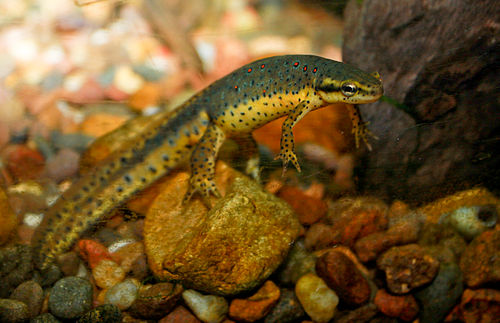
Eastern Newt
Notophthalmus viridescens
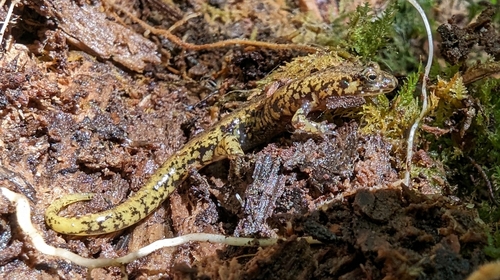
Cherokee Mountain Dusky Salamander
Desmognathus adatsihi

Northern Slimy Salamander
Plethodon glutinosus

Southern Gray-cheeked Salamander
Plethodon metcalfi
Animal Events
Elk Rut in Cataloochee
Bull elk bugle and spar over harems in Cataloochee Valley during the autumn breeding season (rut), peaking .
Black Bear Summer Season
Black bears are at their most visible in summer, feeding heavily on berries and moving with cubs through Cades Cove and forest edges — matching the species' sighting peak.
Salamander Season
In the 'Salamander Capital of the World', spring rains bring the park's 30 salamander species out in force along streams and wet trails, from the endemic red-cheeked salamander to the giant hellbender.

Sighting Calendar
Chance of spotting each species, month by month
Sighting Zones
Warm areas are where all species together are recorded most, so they track where people go as much as where animals are. For one species, see the map on its own page.
Where Wildlife Score
How good is this park for seeing wildlife?Biodiversity
Very goodHow rich is the wildlife?
Sighting
GoodHow likely to see animals?
Quick answers
What animals can you see in Great Smoky Mountains National Park?
The most likely sightings are American Black Bear (seen by 70–80% of wildlife watchers), American Crow (seen by 70–80% of wildlife watchers), Northern Cardinal (seen by 70–80% of wildlife watchers), Carolina Wren (seen by 70–80% of wildlife watchers), Elk (seen by 70–80% of wildlife watchers) — among 543 recorded vertebrate species, based on citizen-science data from GBIF.
When is the best time to visit Great Smoky Mountains National Park for wildlife?
November has the highest combined sighting rate for the park's top species in our month-by-month GBIF data. The full sighting calendar on this page shows each species' best months.
Can you see American Black Bear in Great Smoky Mountains National Park?
Yes — about 77% of wildlife watchers report a American Black Bear sighting in Great Smoky Mountains National Park, based on 1,741 days of visitor records from GBIF citizen-science data.
Can you see Elk in Great Smoky Mountains National Park?
Yes — about 72% of wildlife watchers report a Elk sighting in Great Smoky Mountains National Park, based on 1,388 days of visitor records from GBIF citizen-science data.
Can you see Red-cheeked Salamander in Great Smoky Mountains National Park?
Yes — about 47% of wildlife watchers report a Red-cheeked Salamander sighting in Great Smoky Mountains National Park, based on 515 days of visitor records from GBIF citizen-science data.
Can you see White-tailed Deer in Great Smoky Mountains National Park?
Yes — about 52% of wildlife watchers report a White-tailed Deer sighting in Great Smoky Mountains National Park, based on 647 days of visitor records from GBIF citizen-science data.


