


Double-banded Courser
Rhinoptilus africanus
- KingdomAnimalia (Animals)
- PhylumChordata (Cordats)
- ClassAves (Aus)
- OrderCharadriiformes (Caradriformes)
- FamilyGlareolidae (Pratincoles and Coursers)
- GenusRhinoptilus (Short-billed Coursers)
- SpeciesRhinoptilus africanus (Double-banded Courser)
The double-banded courser (Smutsornis africanus), also known as the two-banded courser, is a species of bird in the family Glareolidae. It was formerly placed in the genus Rhinoptilus but is now the only species placed in the genus Smutsornis. Wikipedia →
20–30% of wildlife watchers report a Double-banded Courser sighting in Tarangire National Park, based on 305 days of visitor records from GBIF citizen-science data.
Closest Relatives at Tarangire National Park

Three-banded Courser
Rhinoptilus cinctus

Bronze-winged Courser
Rhinoptilus chalcopterus

Collared Pratincole
Glareola pratincola

Temminck's Courser
Cursorius temminckii

Blacksmith Lapwing
Vanellus armatus

Crowned Lapwing
Vanellus coronatus

African Jacana
Actophilornis africanus

Wood Sandpiper
Tringa glareola

Common Greenshank
Tringa nebularia

Water Thick-knee
Burhinus vermiculatus
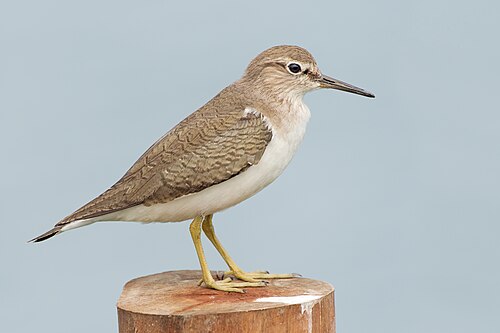
Common Sandpiper
Actitis hypoleucos

Black-winged Stilt
Himantopus himantopus
📅 Monthly Probability
☀️ When They're Spotted
Most active during daytime hours (6am–6pm) · across all parks (global)
Global Distribution
Where this species is recorded worldwide. Restricted to human observations from 2019 onwards — the same kind of record and the same period the probabilities on this page are built from, so collar-tracking studies, camera-trap arrays and museum specimens are excluded. Around Santa Rosa that removes 5,924 GPS fixes from a handful of tagged jaguars.
where this species is recorded (GBIF density — it tracks where observers go, not how likely a sighting is) · parks where it occurs — tap a pin for the sighting probability there
Parks Where Found
| # | Park | Country | Probability |
|---|---|---|---|
| 1 | Amboseli National Park | 🇰🇪 Kenya | |
| 2 | Etosha National Park | 🇳🇦 Namibia | |
| 3 | Tarangire National Park | 🇹🇿 Tanzania | |
| 4 | Serengeti National Park | 🇹🇿 Tanzania | |
| 5 | Ngorongoro Conservation Area | 🇹🇿 Tanzania | |
| 6 | Lake Manyara National Park | 🇹🇿 Tanzania | |
| 7 | Tsavo West National Park | 🇰🇪 Kenya | |
| 8 | Masai Mara National Reserve | 🇰🇪 Kenya | |
| 9 | Chobe National Park | 🇧🇼 Botswana | |
| 10 | Namib-Naukluft National Park | 🇳🇦 Namibia | |
| 11 | Tsavo East National Park | 🇰🇪 Kenya | |
| 12 | Kgalagadi Transfrontier Park | 🇿🇦 South Africa | |
| 13 | Ruaha National Park | 🇹🇿 Tanzania | |
| 14 | Addo Elephant National Park | 🇿🇦 South Africa | |
| 15 | Mkomazi National Park | 🇹🇿 Tanzania | |
| 16 | Moremi Game Reserve | 🇧🇼 Botswana | |
| 17 | Lake Nakuru National Park | 🇰🇪 Kenya |
Quick answers
What are the chances of seeing a Double-banded Courser in Tarangire National Park?
About 23% of wildlife watchers report a Double-banded Courser sighting in Tarangire National Park, based on 305 days of visitor records from GBIF citizen-science data.
When is the best time to see Double-banded Courser in Tarangire National Park?
April has the highest sighting rate for Double-banded Courser in Tarangire National Park in our monthly data.