Uluru-Kata Tjuta National Park
🇦🇺 Australia
🦎 Thorny Devils on Red SandUluru-Kata Tjuta National Park is a desert and dry scrub reserve situated in the red center of Australia. This protected expanse is defined by ancient sandstone monoliths and towering domes rising sharply from flat, arid plains, setting it apart from standard coastal or woodland reserves.
-25.341° S 130.742° E
Wildlife
⭐ Iconic Species
 ★
★ Long-nosed Water Dragon
Gowidon longirostris
 ★
★ Dromedary Camel
Camelus dromedarius
 ★
★ Gould's Goanna
Varanus gouldii
📊 Most Spotted

Willie Wagtail
Rhipidura leucophrys

White-plumed Honeyeater
Ptilotula penicillata

Zebra Finch
Taeniopygia guttata

Singing Honeyeater
Gavicalis virescens

Crested Pigeon
Ocyphaps lophotes

Spiny-cheeked Honeyeater
Acanthagenys rufogularis

Yellow-throated Miner
Manorina flavigula

Central Netted Ground-dragon
Ctenophorus nuchalis

Black-faced Woodswallow
Artamus cinereus

Australian Kestrel
Falco cenchroides

Gray Shrikethrush
Colluricincla harmonica

Budgerigar
Melopsittacus undulatus
⭐ Iconic Species
📊 Most Spotted

Spinifex Hopping Mouse
Notomys alexis

Hairy-footed Dunnart
Sminthopsis hirtipes

Desert Mouse
Pseudomys desertor

Finlayson's Cave Bat
Vespadelus finlaysoni

Wongai Ningaui
Ningaui ridei

Stripe-faced Dunnart
Sminthopsis macroura

Brush-tailed Mulgara
Dasycercus blythi

Fat-tailed False Antechinus
Pseudantechinus macdonnellensis

Red Fox
Vulpes vulpes

Sandy Inland Mouse
Pseudomys hermannsburgensis
📊 Most Spotted
Willie Wagtail
Rhipidura leucophrys
White-plumed Honeyeater
Ptilotula penicillata
Zebra Finch
Taeniopygia guttata
Singing Honeyeater
Gavicalis virescens
Crested Pigeon
Ocyphaps lophotes
Spiny-cheeked Honeyeater
Acanthagenys rufogularis
Yellow-throated Miner
Manorina flavigula
Black-faced Woodswallow
Artamus cinereus
Australian Kestrel
Falco cenchroides
Gray Shrikethrush
Colluricincla harmonica
Budgerigar
Melopsittacus undulatus

Purple-backed Fairywren
Malurus assimilis
⭐ Iconic Species
📊 Most Spotted
Central Netted Ground-dragon
Ctenophorus nuchalis

Thorny Devil
Moloch horridus

Smooth Knob-tail
Nephrurus laevissimus

Central Australian Earless Dragon
Tympanocryptis centralis

Northern Spiny-tailed Gecko
Strophurus ciliaris
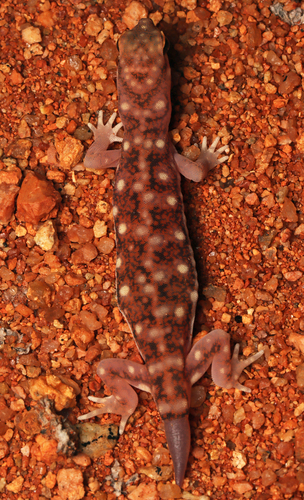
Beaked Gecko
Rhynchoedura ornata

Common Knob-tailed Lizard
Nephrurus levis

Black-headed Scaly Foot
Pygopus nigriceps

Military Dragon
Ctenophorus isolepis

Perentie
Varanus giganteus

Leopard Ctenotus
Ctenotus pantherinus

Desert Fat-tailed Gecko
Diplodactylus laevis


Animal Events
Water Dragon Basking at Kuniya Walk
Long-nosed Water Dragons congregate at seasonal waterholes to bask and hunt, especially near Kuniya Walk where rock pools retain moisture.
Camel Herds at Sunrise Viewing Areas
Dromedary Camels gather near sunrise viewing areas, often grazing on sparse vegetation around Uluru’s base before tourists arrive.
Goanna Foraging After Rain
Gould’s Goannas emerge to forage actively after seasonal rains, digging for insects and small vertebrates in the softened soil.
Sighting Calendar
Chance of spotting each species, month by month
Sighting Zones
Warm areas are where all species together are recorded most, so they track where people go as much as where animals are. For one species, see the map on its own page.
Where Wildlife Score
How good is this park for seeing wildlife?Biodiversity
GoodHow rich is the wildlife?
Sighting
GoodHow likely to see animals?
Quick answers
What animals can you see in Uluru-Kata Tjuta National Park?
The most likely sightings are Willie Wagtail (seen by 80–90% of wildlife watchers), White-plumed Honeyeater (seen by 80–90% of wildlife watchers), Zebra Finch (seen by 70–80% of wildlife watchers), Singing Honeyeater (seen by 70–80% of wildlife watchers), Crested Pigeon (seen by 70–80% of wildlife watchers) — among 546 recorded vertebrate species, based on citizen-science data from GBIF.
When is the best time to visit Uluru-Kata Tjuta National Park for wildlife?
December has the highest combined sighting rate for the park's top species in our month-by-month GBIF data. The full sighting calendar on this page shows each species' best months.
Can you see Long-nosed Water Dragon in Uluru-Kata Tjuta National Park?
Yes — about 67% of wildlife watchers report a Long-nosed Water Dragon sighting in Uluru-Kata Tjuta National Park, based on 112 days of visitor records from GBIF citizen-science data.
Can you see Dromedary Camel in Uluru-Kata Tjuta National Park?
Yes — about 32% of wildlife watchers report a Dromedary Camel sighting in Uluru-Kata Tjuta National Park, based on 24 days of visitor records from GBIF citizen-science data.
Can you see Gould's Goanna in Uluru-Kata Tjuta National Park?
Yes — about 48% of wildlife watchers report a Gould's Goanna sighting in Uluru-Kata Tjuta National Park, based on 53 days of visitor records from GBIF citizen-science data.
Explore Other Parks
 📍 1022 km 🦘 Watch Yellow-footed Rock-wallabies Forage
 Flinders Ranges National Park
 📍 1264 km 🐊 Watch Freshwater Crocodiles Basking Dryly
 Nitmiluk National Park
 📍 1347 km 🐊 Saltwater Crocodile's Ancient River Realm
 Kakadu National Park
 📍 1354 km 🦎 Mertens's Water Monitor's Secret Pools