


Black Guillemot
Cepphus grylle
- KingdomAnimalia (Animals)
- PhylumChordata (Cordats)
- ClassAves (Aus)
- OrderCharadriiformes (Caradriformes)
- FamilyAlcidae (Auks, Murres, and Puffins)
- GenusCepphus (True Guillemots)
- SpeciesCepphus grylle (Black Guillemot)
The black guillemot or tystie (Cepphus grylle) is a medium-sized seabird of the Alcidae family, native throughout northern Atlantic coasts and eastern North American coasts. It is resident in much of its range, but large populations from the high arctic migrate southwards in winter. The bird can be seen in and around its breeding habitat of rocky shores, cliffs and islands in single or smalls groups of pairs. They feed mainly by diving towards the sea floor feeding on fish, crustaceans or other benthic invertebrates. They are listed on the IUCN red list as a species of least concern. Both sexes have very similar appearances with black plumage and a large white patch on the upper side of their wings in summer. Wikipedia →
<5% of wildlife watchers report a Black Guillemot sighting in Wadden Sea National Park, based on 336 days of visitor records from GBIF citizen-science data.
Closest Relatives at Wadden Sea National Park

Common Murre
Uria aalge

Razorbill
Alca torda

Dovekie
Alle alle

Atlantic Puffin
Fratercula arctica
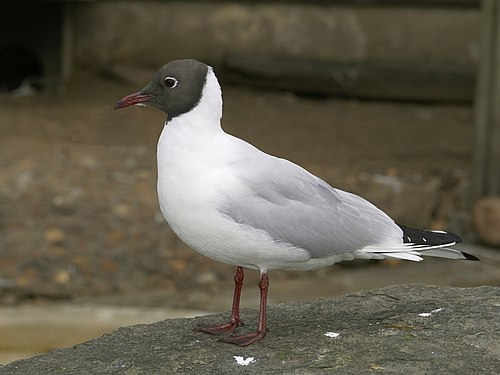
Black-headed Gull
Chroicocephalus ridibundus

European Herring Gull
Larus argentatus

European Oystercatcher
Haematopus ostralegus

Northern Lapwing
Vanellus vanellus

Common Gull
Larus canus

Common Redshank
Tringa totanus

Lesser Black-backed Gull
Larus fuscus

Eurasian Curlew
Numenius arquata
📅 Monthly Probability
☀️ When They're Spotted
Most active during daytime hours (6am–6pm) · across all parks (global)
Global Distribution
Where this species is recorded worldwide. Restricted to human observations from 2019 onwards — the same kind of record and the same period the probabilities on this page are built from, so collar-tracking studies, camera-trap arrays and museum specimens are excluded. Around Santa Rosa that removes 5,924 GPS fixes from a handful of tagged jaguars.
where this species is recorded (GBIF density — it tracks where observers go, not how likely a sighting is) · parks where it occurs — tap a pin for the sighting probability there
Parks Where Found
| # | Park | Country | Probability |
|---|---|---|---|
| 1 | Acadia National Park | 🇺🇸 United States | |
| 2 | Vatnajokull National Park | 🇮🇸 Iceland | |
| 3 | Cape Breton Highlands National Park | 🇨🇦 Canada | |
| 4 | Gros Morne National Park | 🇨🇦 Canada | |
| 5 | Wadden Sea National Park | 🇩🇪 Germany | |
| 6 | Snowdonia National Park | 🇬🇧 United Kingdom | |
| 7 | Cairngorms National Park | 🇬🇧 United Kingdom |
Quick answers
What are the chances of seeing a Black Guillemot in Wadden Sea National Park?
About 3% of wildlife watchers report a Black Guillemot sighting in Wadden Sea National Park, based on 336 days of visitor records from GBIF citizen-science data.
When is the best time to see Black Guillemot in Wadden Sea National Park?
October has the highest sighting rate for Black Guillemot in Wadden Sea National Park in our monthly data.