


Indian Thick-knee
Burhinus indicus
- KingdomAnimalia (Animals)
- PhylumChordata (Cordats)
- ClassAves (Aus)
- OrderCharadriiformes (Caradriformes)
- FamilyBurhinidae (Stone-curlews and Thick-knees)
- GenusBurhinus (Typical Stone-curlews)
- SpeciesBurhinus indicus (Indian Thick-knee)
The Indian stone-curlew or Indian thick-knee (Burhinus indicus) is a species of bird in the family Burhinidae. It was formerly included as a subspecies of the Eurasian stone-curlew. This species is found in the plains of South and South-eastern Asia. They have large eyes and are brown with streaks and pale marks making it hard to spot against the background of soils and rocks. Mostly active in the dark, they produce calls similar to the true curlews, giving them their names. Wikipedia →
5–10% of wildlife watchers report a Indian Thick-knee sighting in Wilpattu National Park, based on 32 days of visitor records from GBIF citizen-science data.
Closest Relatives at Wilpattu National Park

Great Thick-knee
Esacus recurvirostris

Red-wattled Lapwing
Vanellus indicus

Black-winged Stilt
Himantopus himantopus

Whiskered Tern
Chlidonias hybrida

Wood Sandpiper
Tringa glareola

Pacific Golden-Plover
Pluvialis fulva
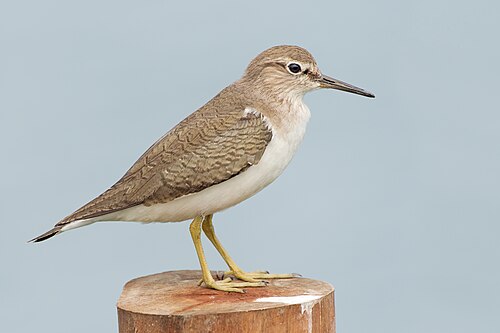
Common Sandpiper
Actitis hypoleucos

Marsh Sandpiper
Tringa stagnatilis

Pheasant-tailed Jacana
Hydrophasianus chirurgus

Pin-tailed Snipe
Gallinago stenura

Gull-billed Tern
Gelochelidon nilotica

Common Redshank
Tringa totanus
📅 Monthly Probability
🌅 When They're Spotted
Most active at dawn and dusk · across all parks (global)
Global Distribution
Where this species is recorded worldwide. Restricted to human observations from 2019 onwards — the same kind of record and the same period the probabilities on this page are built from, so collar-tracking studies, camera-trap arrays and museum specimens are excluded. Around Santa Rosa that removes 5,924 GPS fixes from a handful of tagged jaguars.
where this species is recorded (GBIF density — it tracks where observers go, not how likely a sighting is) · parks where it occurs — tap a pin for the sighting probability there
Parks Where Found
| # | Park | Country | Probability |
|---|---|---|---|
| 1 | Ranthambore National Park | 🇮🇳 India | |
| 2 | Bandhavgarh National Park | 🇮🇳 India | |
| 3 | Kanha National Park | 🇮🇳 India | |
| 4 | Yala National Park | 🇱🇰 Sri Lanka | |
| 5 | Keoladeo National Park | 🇮🇳 India | |
| 6 | Chitwan National Park | 🇳🇵 Nepal | |
| 7 | Kaeng Krachan National Park | 🇹🇭 Thailand | |
| 8 | Wilpattu National Park | 🇱🇰 Sri Lanka | |
| 9 | Minneriya National Park | 🇱🇰 Sri Lanka | |
| 10 | Satpura National Park | 🇮🇳 India | |
| 11 | Jim Corbett National Park | 🇮🇳 India | |
| 12 | Royal Bardia National Park | 🇳🇵 Nepal | |
| 13 | Doi Inthanon National Park | 🇹🇭 Thailand | |
| 14 | Kaziranga National Park | 🇮🇳 India | |
| 15 | Khao Yai National Park | 🇹🇭 Thailand |
Quick answers
What are the chances of seeing a Indian Thick-knee in Wilpattu National Park?
About 7% of wildlife watchers report a Indian Thick-knee sighting in Wilpattu National Park, based on 32 days of visitor records from GBIF citizen-science data.
When is the best time to see Indian Thick-knee in Wilpattu National Park?
February has the highest sighting rate for Indian Thick-knee in Wilpattu National Park in our monthly data.