


Mutilating Gecko
Gehyra mutilata
- KingdomAnimalia (Animals)
- PhylumChordata (Cordats)
- ClassSquamata
- FamilyGekkonidae (Gecònids)
- GenusGehyra (Dtellas)
- SpeciesGehyra mutilata (Mutilating Gecko)
Gehyra mutilata, also known commonly as the common four-clawed gecko, Pacific gecko, stump-toed gecko, sugar gecko in Indonesia, tender-skinned house gecko, and butiki in Filipino, is a species of lizard in the family Gekkonidae. The species is native to Southeast Asia. It has made its way to several areas of the world including Sri Lanka, Indochina, and many of the Pacific Islands. Compared to the common house gecko (Hemidactylus frenatus), the appearance of G. mutilata is somewhat plump, with delicate skin. The skin is usually colored a soft purplish/pinkish gray, with golden spots on younger specimens; these spots eventually fade with age. Wikipedia →
10–20% of wildlife watchers report a Mutilating Gecko sighting in Danum Valley Conservation Area, based on 5 days of visitor records from GBIF citizen-science data.
Closest Relatives at Danum Valley Conservation Area

Flat-tailed House Gecko
Hemidactylus platyurus

Spotted House Gecko
Gekko monarchus

White-banded Narrow-disked Gecko
Gekko albofasciolatus

Common House Gecko
Hemidactylus frenatus

Horsfield's Flying Gecko
Gekko horsfieldii

Frilled Gecko
Hemidactylus craspedotus

Common Dwarf Gecko
Hemiphyllodactylus typus

Gliding gecko
Gekko kuhli
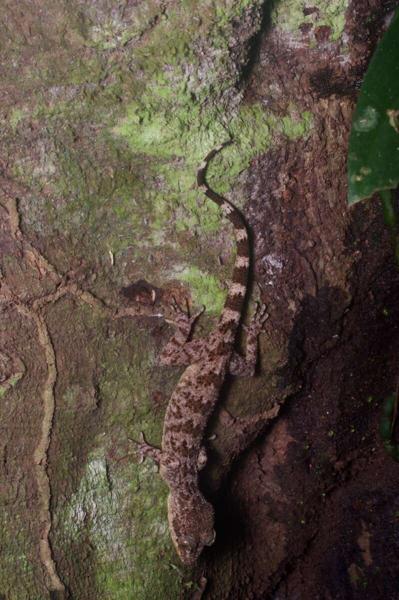
Sabah Bow-fingered Gecko
Cyrtodactylus ingeri
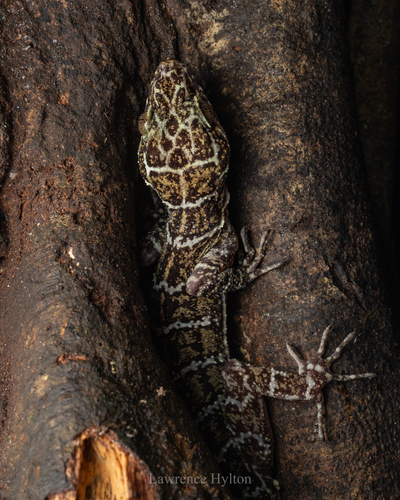
Borneo Bow-fingered Gecko
Cyrtodactylus malayanus
📅 Monthly Probability
🌙 When They're Spotted
Most active during nighttime hours (6pm–6am) · across all parks (global)
Global Distribution
Where this species is recorded worldwide. Restricted to human observations from 2019 onwards — the same kind of record and the same period the probabilities on this page are built from, so collar-tracking studies, camera-trap arrays and museum specimens are excluded. Around Santa Rosa that removes 5,924 GPS fixes from a handful of tagged jaguars.
where this species is recorded (GBIF density — it tracks where observers go, not how likely a sighting is) · parks where it occurs — tap a pin for the sighting probability there
Parks Where Found
| # | Park | Country | Probability |
|---|---|---|---|
| 1 | Ranomafana National Park | 🇲🇬 Madagascar | |
| 2 | Sinharaja Forest Reserve | 🇱🇰 Sri Lanka | |
| 3 | Khao Luang National Park | 🇹🇭 Thailand | |
| 4 | Cat Tien National Park | 🇻🇳 Vietnam | |
| 5 | Kinabatangan Wildlife Sanctuary | 🇲🇾 Malaysia | |
| 6 | Danum Valley Conservation Area | 🇲🇾 Malaysia | |
| 7 | Khao Sok National Park | 🇹🇭 Thailand | |
| 8 | Yala National Park | 🇱🇰 Sri Lanka | |
| 9 | Kinabalu Park | 🇲🇾 Malaysia | |
| 10 | Kaeng Krachan National Park | 🇹🇭 Thailand | |
| 11 | Khao Yai National Park | 🇹🇭 Thailand | |
| 12 | Periyar National Park | 🇮🇳 India | |
| 13 | Kerinci Seblat National Park | 🇮🇩 Indonesia | |
| 14 | Lorentz National Park | 🇮🇩 Indonesia | |
| 15 | Bali Barat National Park | 🇮🇩 Indonesia | |
| 16 | Doi Inthanon National Park | 🇹🇭 Thailand | |
| 17 | Cañón del Sumidero National Park | 🇲🇽 Mexico |
Quick answers
What are the chances of seeing a Mutilating Gecko in Danum Valley Conservation Area?
About 13% of wildlife watchers report a Mutilating Gecko sighting in Danum Valley Conservation Area, based on 5 days of visitor records from GBIF citizen-science data.
When is the best time to see Mutilating Gecko in Danum Valley Conservation Area?
February has the highest sighting rate for Mutilating Gecko in Danum Valley Conservation Area in our monthly data.