


Western Toad
Anaxyrus boreas
- KingdomAnimalia (Animals)
- PhylumChordata (Cordats)
- ClassAmphibia (Amfibis)
- OrderAnura (Anurs)
- FamilyBufonidae (Bufònids)
- GenusAnaxyrus (North American Toads)
- SpeciesAnaxyrus boreas (Western Toad)
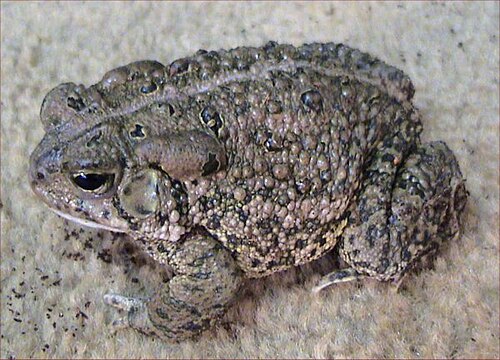
The western toad (Anaxyrus boreas) is a large toad species, between 5.6 and 13 cm (2.2 and 5.1 in) long, native to western North America. A. boreas is frequently encountered during the wet season on roads, or near water at other times. It can jump a considerable distance for a toad. Breeding occurs between March and July in mountainous areas, and as early as January in lower-elevation regions. The female lays up to 17,000 eggs stuck together in strings that adhere to vegetation and other objects along water edges. Wikipedia →
30–40% of wildlife watchers report a Western Toad sighting in Death Valley National Park, based on 92 days of visitor records from GBIF citizen-science data.




📅 Monthly Probability
☀️🌙 When They're Spotted
Active throughout day and night · across all parks (global)
Global Distribution
Where this species is recorded worldwide. Restricted to human observations from 2019 onwards — the same kind of record and the same period the probabilities on this page are built from, so collar-tracking studies, camera-trap arrays and museum specimens are excluded. Around Santa Rosa that removes 5,924 GPS fixes from a handful of tagged jaguars.
where this species is recorded (GBIF density — it tracks where observers go, not how likely a sighting is) · parks where it occurs — tap a pin for the sighting probability there
Parks Where Found
| # | Park | Country | Probability |
|---|---|---|---|
| 1 | Great Bear Rainforest | 🇨🇦 Canada | |
| 2 | Redwood National Park | 🇺🇸 United States | |
| 3 | Elk Island National Park | 🇨🇦 Canada | |
| 4 | Glacier National Park | 🇺🇸 United States | |
| 5 | Pacific Rim National Park Reserve | 🇨🇦 Canada | |
| 6 | Death Valley National Park | 🇺🇸 United States | |
| 7 | Jasper National Park | 🇨🇦 Canada | |
| 8 | Banff National Park | 🇨🇦 Canada | |
| 9 | Olympic National Park | 🇺🇸 United States | |
| 10 | Sequoia and Kings Canyon National Parks | 🇺🇸 United States | |
| 11 | Grand Teton National Park | 🇺🇸 United States | |
| 12 | Yellowstone National Park | 🇺🇸 United States | |
| 13 | Wrangell-St. Elias National Park | 🇺🇸 United States | |
| 14 | Yosemite National Park | 🇺🇸 United States | |
| 15 | Channel Islands National Park | 🇺🇸 United States | |
| 16 | Rocky Mountain National Park | 🇺🇸 United States | |
| 17 | Joshua Tree National Park | 🇺🇸 United States |
Quick answers
What are the chances of seeing a Western Toad in Death Valley National Park?
About 33% of wildlife watchers report a Western Toad sighting in Death Valley National Park, based on 92 days of visitor records from GBIF citizen-science data.
When is the best time to see Western Toad in Death Valley National Park?
May has the highest sighting rate for Western Toad in Death Valley National Park in our monthly data.