


Eastern Striped Skink
Ctenotus robustus
- KingdomAnimalia (Animals)
- PhylumChordata (Cordats)
- ClassSquamata
- FamilyScincidae (Escíncid)
- GenusCtenotus (Ctenotus Skinks)
- SpeciesCtenotus robustus (Eastern Striped Skink)
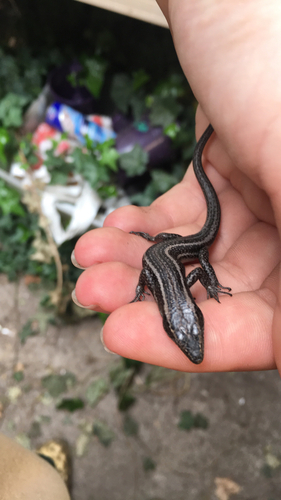
Ctenotus robustus, the eastern striped skink, is a species of skink found in a wide variety of habitats around Australia. They are long-tailed, fast moving skinks that are quite large, growing to a maximum length of about 30 cm (including the tail which can make up around 2/3 of its length). This skink is mostly brown with a white-edged black stripe running down the length of its back and tail with broad brown stripes along the side of the body with rows of white spots. The sides become lighter, turning into an off-white colour towards the underside of the skink, running from the groin to the chin. The striped skink (Ctenotus robustus) is similar in appearance to the spotted-back skink (Ctenotus uber orientalis) with the main identifying difference being the solid stripe running down the back of C. robustus whereas C. uber orientalis has a row of dots. The eastern striped skink is a wary diurnal skink that typically inhabits mostly open areas with the option of shelter in grass, low shrubs or rocks, and will burrow under rocks or logs when seeking shelter. Wikipedia →
Closest Relatives at Great Otway National Park

Cool-temperate Water Skink
Eulamprus tympanum

Pale-flecked Garden Sunskink
Lampropholis guichenoti

Blotched Bluetongue
Tiliqua nigrolutea

McCoy's Skink
Anepischetosia maccoyi

Common Bluetongue
Tiliqua scincoides

Southern Weasel Skink
Saproscincus mustelinus

White's Rock-skink
Liopholis whitii

Entrecasteaux's Skink
Pseudemoia entrecasteauxii
Trunk-climbing Cool-skink
Pseudemoia spenceri

Southern Forest Coolskink
Carinascincus coventryi

Eastern Three-lined Skink
Acritoscincus duperreyi

Metallic Coolskink
Carinascincus metallicus
📅 Monthly Probability
Fewer than 5 records of Eastern Striped Skink at Great Otway National Park — not enough to chart months honestly.
☀️ When They're Spotted
Most active during daytime hours (6am–6pm) · across all parks (global)
Global Distribution
Where this species is recorded worldwide. Restricted to human observations from 2019 onwards — the same kind of record and the same period the probabilities on this page are built from, so collar-tracking studies, camera-trap arrays and museum specimens are excluded. Around Santa Rosa that removes 5,924 GPS fixes from a handful of tagged jaguars.
where this species is recorded (GBIF density — it tracks where observers go, not how likely a sighting is) · parks where it occurs — tap a pin for the sighting probability there
Parks Where Found
| # | Park | Country | Probability |
|---|---|---|---|
| 1 | Flinders Ranges National Park | 🇦🇺 Australia | |
| 2 | Grampians National Park | 🇦🇺 Australia | |
| 3 | Kosciuszko National Park | 🇦🇺 Australia | |
| 4 | Noosa National Park | 🇦🇺 Australia | |
| 5 | Great Otway National Park | 🇦🇺 Australia | |
| 6 | Lamington National Park | 🇦🇺 Australia | |
| 7 | Blue Mountains National Park | 🇦🇺 Australia |