


Pacific-slope Flycatcher
Empidonax difficilis
- KingdomAnimalia (Animals)
- PhylumChordata (Cordats)
- ClassAves (Aus)
- OrderPasseriformes
- FamilyTyrannidae (Tirànids)
- GenusEmpidonax (Empidonax Flycatchers)
- SpeciesEmpidonax difficilis (Pacific-slope Flycatcher)
The western flycatcher (Empidonax difficilis) is a small insectivorous bird in the family Tyrannidae. It is native to western North America, where it breeds in the Rocky Mountains and Pacific Coast forests and mountain ranges from California to Alaska and south to central Mexico; northern populations migrate south to Mexico for the winter. Wikipedia →
<5% of wildlife watchers report a Pacific-slope Flycatcher sighting in Jasper National Park, based on 37 days of visitor records from GBIF citizen-science data.
Closest Relatives at Jasper National Park

Hammond's Flycatcher
Empidonax hammondii

Least Flycatcher
Empidonax minimus

Alder Flycatcher
Empidonax alnorum

Willow Flycatcher
Empidonax traillii

Yellow-bellied Flycatcher
Empidonax flaviventris

Dusky Flycatcher
Empidonax oberholseri

Western Wood-Pewee
Contopus sordidulus

Eastern Kingbird
Tyrannus tyrannus

Olive-sided Flycatcher
Contopus cooperi

Western Kingbird
Tyrannus verticalis

Say's Phoebe
Sayornis saya
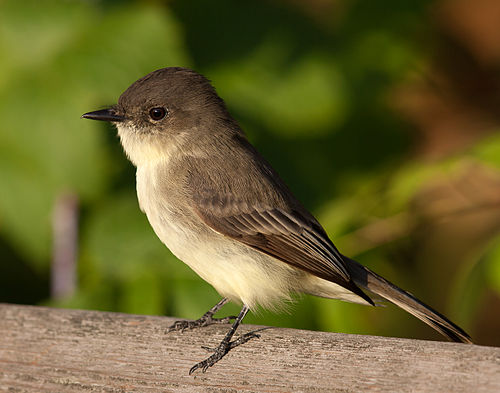
Eastern Phoebe
Sayornis phoebe
📅 Monthly Probability
☀️ When They're Spotted
Most active during daytime hours (6am–6pm) · across all parks (global)
Global Distribution
Where this species is recorded worldwide. Restricted to human observations from 2019 onwards — the same kind of record and the same period the probabilities on this page are built from, so collar-tracking studies, camera-trap arrays and museum specimens are excluded. Around Santa Rosa that removes 5,924 GPS fixes from a handful of tagged jaguars.
where this species is recorded (GBIF density — it tracks where observers go, not how likely a sighting is) · parks where it occurs — tap a pin for the sighting probability there
Parks Where Found
Quick answers
What are the chances of seeing a Pacific-slope Flycatcher in Jasper National Park?
About 3% of wildlife watchers report a Pacific-slope Flycatcher sighting in Jasper National Park, based on 37 days of visitor records from GBIF citizen-science data.
When is the best time to see Pacific-slope Flycatcher in Jasper National Park?
June has the highest sighting rate for Pacific-slope Flycatcher in Jasper National Park in our monthly data.