


Deer Mouse
Peromyscus maniculatus
- KingdomAnimalia (Animals)
- PhylumChordata (Cordats)
- ClassMammalia (Mamífers)
- OrderRodentia (Rosegadors)
- FamilyCricetidae (Hamsters, Voles, Lemmings, and Allies)
- GenusPeromyscus (North American Deer Mice)
- SpeciesPeromyscus maniculatus (Deer Mouse)
The eastern deer mouse (Peromyscus maniculatus) is a rodent native to eastern North America. It is a species of the genus Peromyscus, a closely related group of New World mice often called "deermice". When formerly grouped with the western deermouse (P. sonoriensis), it was once referred to as the North American deermouse, a species that is no longer recognized. It is fairly widespread across most of North America east of the Mississippi River, with the major exception being the lowland Southeastern United States. Like certain other Peromyscus species, it can be a vector and carrier of emerging infectious diseases such as hantaviruses and Lyme disease. It is closely related to Peromyscus leucopus, the white-footed mouse. Wikipedia →
Closest Relatives at Rocky Mountain National Park

Muskrat
Ondatra zibethicus

Meadow Vole
Microtus pennsylvanicus

Gapperrotelmaus
Myodes gapperi

Bushy-tailed Wood Rat
Neotoma cinerea
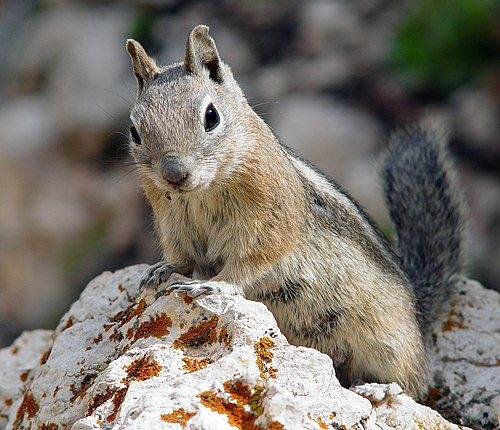
Golden-mantled Ground Squirrel
Callospermophilus lateralis

Yellow-bellied Marmot
Marmota flaviventris

Wyoming Ground Squirrel
Urocitellus elegans

American Red Squirrel
Tamiasciurus hudsonicus

Least Chipmunk
Tamias minimus

Abert's Squirrel
Sciurus aberti

Colorado Chipmunk
Tamias quadrivittatus

Uinta Chipmunk
Tamias umbrinus
📅 Monthly Probability
Fewer than 5 records of Deer Mouse at Rocky Mountain National Park — not enough to chart months honestly.
☀️ When They're Spotted
Most active during daytime hours (6am–6pm) · across all parks (global)
Global Distribution
Where this species is recorded worldwide. Restricted to human observations from 2019 onwards — the same kind of record and the same period the probabilities on this page are built from, so collar-tracking studies, camera-trap arrays and museum specimens are excluded. Around Santa Rosa that removes 5,924 GPS fixes from a handful of tagged jaguars.
where this species is recorded (GBIF density — it tracks where observers go, not how likely a sighting is) · parks where it occurs — tap a pin for the sighting probability there