


Short-toed Treecreeper
Certhia brachydactyla
- KingdomAnimalia (Animals)
- PhylumChordata (Cordats)
- ClassAves (Aus)
- OrderPasseriformes
- FamilyCerthiidae (Treecreepers)
- GenusCerthia (Typical Treecreepers)
- SpeciesCerthia brachydactyla (Short-toed Treecreeper)
The short-toed treecreeper (Certhia brachydactyla) is a small passerine bird found in woodlands through much of the warmer regions of Europe and into north Africa. It has a generally more southerly distribution than the other European treecreeper species, the common treecreeper, with which it is easily confused where they both occur. The short-toed treecreeper tends to prefer deciduous trees and lower altitudes than its relative in these overlap areas. Although mainly sedentary, vagrants have occurred outside the breeding range. The short-toed treecreeper is one of a group of four very similar Holarctic treecreepers, including the closely related North American brown creepers, and has five subspecies differing in appearance and song. Like other treecreepers, the short-toed is inconspicuously plumaged brown above and whitish below, and has a curved bill and stiff tail feathers. Wikipedia →
Closest Relatives at Białowieża National Park

Treecreeper
Certhia familiaris

Chaffinch
Fringilla coelebs

Great Tit
Parus major

Eurasian Blackbird
Turdus merula

Common Chiffchaff
Phylloscopus collybita

European Robin
Erithacus rubecula

Yellowhammer
Emberiza citrinella

Blackcap
Sylvia atricapilla

European Starling
Sturnus vulgaris

Song Thrush
Turdus philomelos
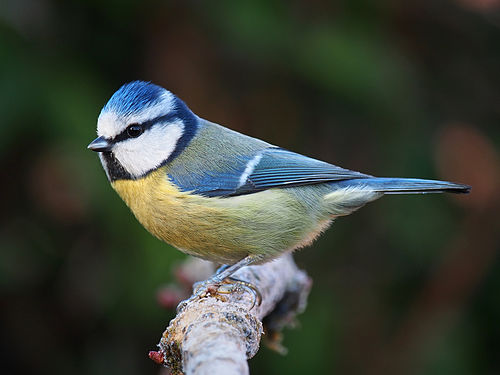
Blue Tit
Cyanistes caeruleus

Eurasian Jay
Garrulus glandarius
📅 Monthly Probability
Fewer than 5 records of Short-toed Treecreeper at Białowieża National Park — not enough to chart months honestly.
☀️ When They're Spotted
Most active during daytime hours (6am–6pm) · across all parks (global)
Global Distribution
Where this species is recorded worldwide. Restricted to human observations from 2019 onwards — the same kind of record and the same period the probabilities on this page are built from, so collar-tracking studies, camera-trap arrays and museum specimens are excluded. Around Santa Rosa that removes 5,924 GPS fixes from a handful of tagged jaguars.
where this species is recorded (GBIF density — it tracks where observers go, not how likely a sighting is) · parks where it occurs — tap a pin for the sighting probability there
Parks Where Found
| # | Park | Country | Probability |
|---|---|---|---|
| 1 | Sierra de Guadarrama National Park | 🇪🇸 Spain | |
| 2 | Aigüestortes National Park | 🇪🇸 Spain | |
| 3 | Pyrénées National Park | 🇫🇷 France | |
| 4 | Ordesa y Monte Perdido National Park | 🇪🇸 Spain | |
| 5 | Monfragüe National Park | 🇪🇸 Spain | |
| 6 | Cévennes National Park | 🇫🇷 France | |
| 7 | Doñana National Park | 🇪🇸 Spain | |
| 8 | Picos de Europa National Park | 🇪🇸 Spain | |
| 9 | Sierra Nevada National Park | 🇪🇸 Spain | |
| 10 | Kiskunság National Park | 🇭🇺 Hungary | |
| 11 | Wadden Sea National Park | 🇩🇪 Germany | |
| 12 | Bavarian Forest National Park | 🇩🇪 Germany | |
| 13 | Mercantour National Park | 🇫🇷 France | |
| 14 | Triglav National Park | 🇸🇮 Slovenia | |
| 15 | Fertő-Hanság National Park | 🇭🇺 Hungary | |
| 16 | Tatra National Park | 🇸🇰 Slovakia | |
| 17 | Hortobágy National Park | 🇭🇺 Hungary | |
| 18 | Białowieża National Park | 🇵🇱 Poland |