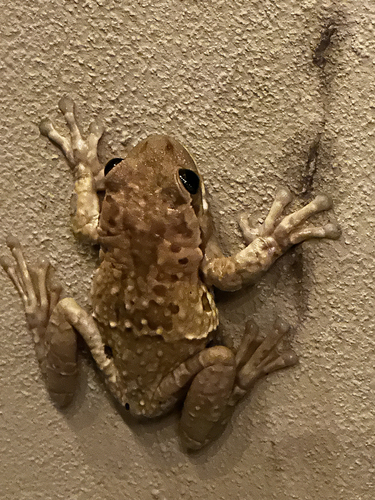
Milk Frog
Trachycephalus macrotis
- KingdomAnimalia (Animals)
- PhylumChordata (Cordats)
- ClassAmphibia (Amfibis)
- OrderAnura (Anurs)
- FamilyHylidae (Hylid Tree Frogs)
- GenusTrachycephalus (Golden-eyed Tree Frogs)
- SpeciesTrachycephalus macrotis (Milk Frog)
Trachycephalus macrotis, also known as the Amazonian milk frog and known in Spanish as rana lechera de Pastaza, is a frog in the family Hylidae. It is endemic to Peru and Ecuador. It has been observed between 225 and 925 m above sea level. Wikipedia →
Closest Relatives at Braulio Carrillo National Park

Red-webbed Tree Frog
Boana rufitela

Masked Tree Frog
Smilisca phaeota

Sipurio Snouted Treefrog
Scinax elaeochroa

Harlequin Treefrog
Dendropsophus ebraccatus

Eastern Masked Tree Frog
Smilisca manisorum

Boulenger's Snouted Tree Frog
Scinax boulengeri

Coronated Tree Frog
Triprion spinosus

Drab Tree Frog
Smilisca sordida

San Carlos Treefrog
Dendropsophus phlebodes

Meadow Tree Frog
Isthmohyla pseudopuma
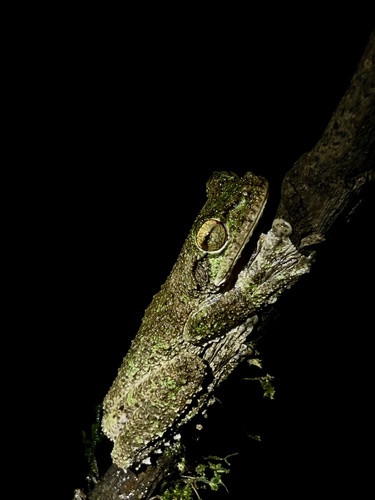
Shaman Fringe-limbed Tree Frog
Ecnomiohyla sukia

Cross-banded Tree Frog
Smilisca puma
📅 Monthly Probability
Fewer than 5 records of Milk Frog at Braulio Carrillo National Park — not enough to chart months honestly.
🌅 When They're Spotted
Most active at dawn and dusk · across all parks (global)
Global Distribution
Where this species is recorded worldwide. Restricted to human observations from 2019 onwards — the same kind of record and the same period the probabilities on this page are built from, so collar-tracking studies, camera-trap arrays and museum specimens are excluded. Around Santa Rosa that removes 5,924 GPS fixes from a handful of tagged jaguars.
where this species is recorded (GBIF density — it tracks where observers go, not how likely a sighting is) · parks where it occurs — tap a pin for the sighting probability there