


Honey Badger
Mellivora capensis
- KingdomAnimalia (Animals)
- PhylumChordata (Cordats)
- ClassMammalia (Mamífers)
- OrderCarnivora (Carnívors)
- FamilyMustelidae (Mustelids)
- GenusMellivora (Ratels)
- SpeciesMellivora capensis (Honey Badger)
The honey badger (Mellivora capensis), also known as the ratel ( or ), is a mammal widely distributed across Africa, Southwest Asia, and the Indian subcontinent. It is the sole living representative of the Mellivorinae subfamily of the Mustelidae. It has a fairly long body, with a distinctly thick-set and broad back, and remarkably loose skin, allowing the badger to turn and twist freely within it. The largest terrestrial mustelid in Africa, the honey badger measures 55 to 77 cm (22 to 30 in) long and weighs up to 16 kg (35 lb). Sexual dimorphism has been recorded in this species, with males being larger and heavier than females. It has two pairs of mammae, and an eversible anal pouch. Wikipedia →
10–20% of wildlife watchers report a Honey Badger sighting in Chobe National Park, based on 12 days of visitor records from GBIF citizen-science data.
Closest Relatives at Chobe National Park

Spotted-necked Otter
Hydrictis maculicollis

Lion
Panthera leo

Banded Mongoose
Mungos mungo

Leopard
Panthera pardus

Painted Hunting Dog
Lycaon pictus

Slender Mongoose
Galerella sanguinea
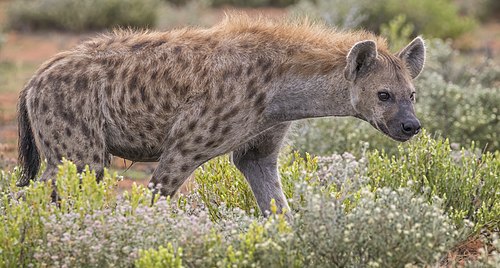
Spotted Hyena
Crocuta crocuta

Common Dwarf Mongoose
Helogale parvula

Cheetah
Acinonyx jubatus

Yellow Mongoose
Cynictis penicillata

Serval
Leptailurus serval

Northern Small-spotted Genet
Genetta genetta
📅 Monthly Probability
🌅 When They're Spotted
Most active at dawn and dusk · across all parks (global)
Global Distribution
Where this species is recorded worldwide. Restricted to human observations from 2019 onwards — the same kind of record and the same period the probabilities on this page are built from, so collar-tracking studies, camera-trap arrays and museum specimens are excluded. Around Santa Rosa that removes 5,924 GPS fixes from a handful of tagged jaguars.
where this species is recorded (GBIF density — it tracks where observers go, not how likely a sighting is) · parks where it occurs — tap a pin for the sighting probability there
Parks Where Found
Quick answers
What are the chances of seeing a Honey Badger in Chobe National Park?
About 11% of wildlife watchers report a Honey Badger sighting in Chobe National Park, based on 12 days of visitor records from GBIF citizen-science data.
When is the best time to see Honey Badger in Chobe National Park?
May has the highest sighting rate for Honey Badger in Chobe National Park in our monthly data.