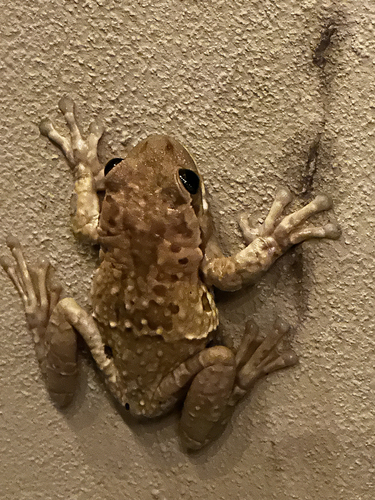
Milk Frog
Trachycephalus macrotis
- KingdomAnimalia (Animals)
- PhylumChordata (Cordats)
- ClassAmphibia (Amfibis)
- OrderAnura (Anurs)
- FamilyHylidae (Hylid Tree Frogs)
- GenusTrachycephalus (Golden-eyed Tree Frogs)
- SpeciesTrachycephalus macrotis (Milk Frog)
Trachycephalus macrotis, also known as the Amazonian milk frog and known in Spanish as rana lechera de Pastaza, is a frog in the family Hylidae. It is endemic to Peru and Ecuador. It has been observed between 225 and 925 m above sea level. Wikipedia →
Closest Relatives at Parque Natural Metropolitano

Rosenberg's Gladiator Frog
Boana rosenbergi
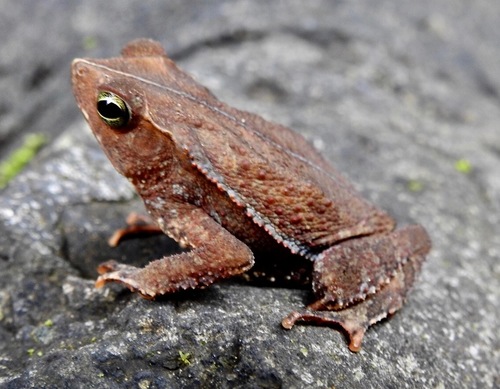
Forest Toad
Rhinella alata

Guayaquil Dwarf Frog
Engystomops pustulosus

Giant Marine Toad
Rhinella horribilis

Green and Black Dart-poison Frog
Dendrobates auratus

Red-eyed Treefrog
Agalychnis callidryas

Smoky Jungle Frog
Leptodactylus pentadactylus

Rainforest Rocket Frog
Silverstoneia flotator

Savage's Thin-toed Frog
Leptodactylus savagei

Turbo White-lipped Frog
Leptodactylus poecilochilus

Mexican White-lipped Frog
Leptodactylus fragilis

Fitzinger's Robber Frog
Craugastor fitzingeri
📅 Monthly Probability
Fewer than 5 records of Milk Frog at Parque Natural Metropolitano — not enough to chart months honestly.
🌅 When They're Spotted
Most active at dawn and dusk · across all parks (global)
Global Distribution
Where this species is recorded worldwide. Restricted to human observations from 2019 onwards — the same kind of record and the same period the probabilities on this page are built from, so collar-tracking studies, camera-trap arrays and museum specimens are excluded. Around Santa Rosa that removes 5,924 GPS fixes from a handful of tagged jaguars.
where this species is recorded (GBIF density — it tracks where observers go, not how likely a sighting is) · parks where it occurs — tap a pin for the sighting probability there