


European Mole
Talpa europaea
- KingdomAnimalia (Animals)
- PhylumChordata (Cordats)
- ClassMammalia (Mamífers)
- OrderSoricomorpha
- FamilyTalpidae (Moles and Desmans)
- GenusTalpa (Eurasian Moles)
- SpeciesTalpa europaea (European Mole)
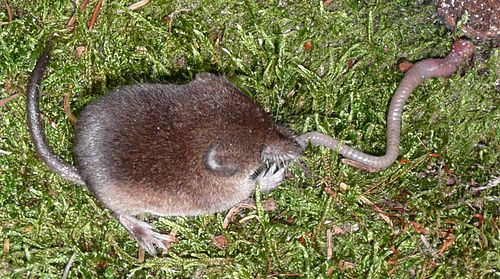
The European mole (Talpa europaea) is a mammal of the order Eulipotyphla. It is also known as the common mole and the northern mole. This mole lives in a tunnel system, which it constantly extends. It uses these tunnels to hunt its prey. Under normal conditions, the displaced earth is pushed to the surface, resulting in the characteristic molehills. It is an omnivore that feeds mainly on earthworms, but also on insects, centipedes and mammals such as rodents and other moles. Wikipedia →
10–20% of wildlife watchers report a European Mole sighting in Snowdonia National Park, based on 25 days of visitor records from GBIF citizen-science data.
Closest Relatives at Snowdonia National Park


📅 Monthly Probability
☀️ When They're Spotted
Most active during daytime hours (6am–6pm) · across all parks (global)
Global Distribution
Where this species is recorded worldwide. Restricted to human observations from 2019 onwards — the same kind of record and the same period the probabilities on this page are built from, so collar-tracking studies, camera-trap arrays and museum specimens are excluded. Around Santa Rosa that removes 5,924 GPS fixes from a handful of tagged jaguars.
where this species is recorded (GBIF density — it tracks where observers go, not how likely a sighting is) · parks where it occurs — tap a pin for the sighting probability there
Parks Where Found
| # | Park | Country | Probability |
|---|---|---|---|
| 1 | Białowieża National Park | 🇵🇱 Poland | |
| 2 | Kiskunság National Park | 🇭🇺 Hungary | |
| 3 | Hortobágy National Park | 🇭🇺 Hungary | |
| 4 | Biebrza National Park | 🇵🇱 Poland | |
| 5 | Tatra National Park | 🇸🇰 Slovakia | |
| 6 | Bavarian Forest National Park | 🇩🇪 Germany | |
| 7 | Cairngorms National Park | 🇬🇧 United Kingdom | |
| 8 | Snowdonia National Park | 🇬🇧 United Kingdom | |
| 9 | Fertő-Hanság National Park | 🇭🇺 Hungary | |
| 10 | Triglav National Park | 🇸🇮 Slovenia | |
| 11 | Wadden Sea National Park | 🇩🇪 Germany | |
| 12 | Mercantour National Park | 🇫🇷 France | |
| 13 | Gauja National Park | 🇱🇻 Latvia | |
| 14 | Cévennes National Park | 🇫🇷 France |
Quick answers
What are the chances of seeing a European Mole in Snowdonia National Park?
About 19% of wildlife watchers report a European Mole sighting in Snowdonia National Park, based on 25 days of visitor records from GBIF citizen-science data.
When is the best time to see European Mole in Snowdonia National Park?
May has the highest sighting rate for European Mole in Snowdonia National Park in our monthly data.