


Yellow-legged Gull
Larus michahellis
- KingdomAnimalia (Animals)
- PhylumChordata (Cordats)
- ClassAves (Aus)
- OrderCharadriiformes (Caradriformes)
- FamilyLaridae (Gulls, Terns, and Skimmers)
- GenusLarus (Large White-headed Gulls)
- SpeciesLarus michahellis (Yellow-legged Gull)
The yellow-legged gull or western yellow-legged gull (Larus michahellis) is a large gull found in Europe, the Middle East and North Africa, which has only recently achieved wide recognition as a distinct species. It was formerly treated as a subspecies of either the Caspian gull L. cachinnans, or more broadly as a subspecies of the herring gull L. argentatus. The genus name is from Latin Larus which appears to have referred to a gull or other large seabird, and the species name honours the German zoologist Karl Michahelles. Wikipedia →
20–30% of wildlife watchers report a Yellow-legged Gull sighting in Hortobágy National Park, based on 99 days of visitor records from GBIF citizen-science data.
Closest Relatives at Hortobágy National Park

Caspian Gull
Larus cachinnans

Common Gull
Larus canus

Lesser Black-backed Gull
Larus fuscus

European Herring Gull
Larus argentatus
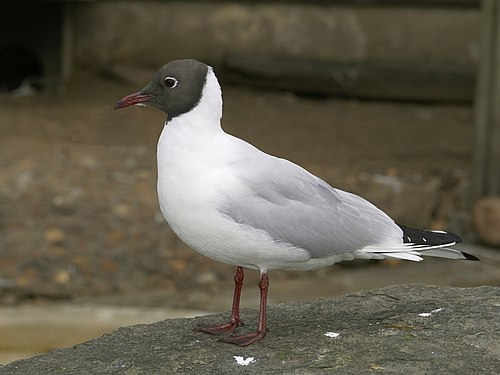
Black-headed Gull
Chroicocephalus ridibundus

Whiskered Tern
Chlidonias hybrida

Common Tern
Sterna hirundo

Black Tern
Chlidonias niger

White-winged Tern
Chlidonias leucopterus

Little Gull
Hydrocoloeus minutus

Caspian Tern
Hydroprogne caspia

Mediterranean Gull
Ichthyaetus melanocephalus
📅 Monthly Probability
☀️ When They're Spotted
Most active during daytime hours (6am–6pm) · across all parks (global)
Global Distribution
Where this species is recorded worldwide. Restricted to human observations from 2019 onwards — the same kind of record and the same period the probabilities on this page are built from, so collar-tracking studies, camera-trap arrays and museum specimens are excluded. Around Santa Rosa that removes 5,924 GPS fixes from a handful of tagged jaguars.
where this species is recorded (GBIF density — it tracks where observers go, not how likely a sighting is) · parks where it occurs — tap a pin for the sighting probability there
Parks Where Found
| # | Park | Country | Probability |
|---|---|---|---|
| 1 | Fertő-Hanság National Park | 🇭🇺 Hungary | |
| 2 | Doñana National Park | 🇪🇸 Spain | |
| 3 | Hortobágy National Park | 🇭🇺 Hungary | |
| 4 | Triglav National Park | 🇸🇮 Slovenia | |
| 5 | Bavarian Forest National Park | 🇩🇪 Germany | |
| 6 | Kiskunság National Park | 🇭🇺 Hungary | |
| 7 | Cévennes National Park | 🇫🇷 France | |
| 8 | Pyrénées National Park | 🇫🇷 France | |
| 9 | Sierra de Guadarrama National Park | 🇪🇸 Spain | |
| 10 | Wadden Sea National Park | 🇩🇪 Germany | |
| 11 | Monfragüe National Park | 🇪🇸 Spain | |
| 12 | Mercantour National Park | 🇫🇷 France | |
| 13 | Aigüestortes National Park | 🇪🇸 Spain | |
| 14 | Biebrza National Park | 🇵🇱 Poland | |
| 15 | Picos de Europa National Park | 🇪🇸 Spain | |
| 16 | Snowdonia National Park | 🇬🇧 United Kingdom | |
| 17 | Sierra Nevada National Park | 🇪🇸 Spain |
Quick answers
What are the chances of seeing a Yellow-legged Gull in Hortobágy National Park?
About 20% of wildlife watchers report a Yellow-legged Gull sighting in Hortobágy National Park, based on 99 days of visitor records from GBIF citizen-science data.
When is the best time to see Yellow-legged Gull in Hortobágy National Park?
August has the highest sighting rate for Yellow-legged Gull in Hortobágy National Park in our monthly data.