


Harlequin Treefrog
Dendropsophus ebraccatus
- KingdomAnimalia (Animals)
- PhylumChordata (Cordats)
- ClassAmphibia (Amfibis)
- OrderAnura (Anurs)
- FamilyHylidae (Hylid Tree Frogs)
- GenusDendropsophus (Yellow Tree Frogs)
- SpeciesDendropsophus ebraccatus (Harlequin Treefrog)
Dendropsophus ebraccatus, also known as the hourglass treefrog, referring to the golden-brown hourglass shape seen surrounded by skin yellow on its back. Their underbellies are yellow. Their arms and lower legs usually display bold patterns while their upper legs or thighs are light yellow giving them the appearance of wearing no pants. The species name "ebraccata" translates to "without trousers" in Latin. The hourglass treefrog is throughout Mexico from southern Veracruz and northern Oaxaca, slightly more southern in Chiapas, Tabasco, and the Yucatán Peninsula. The hourglass treefrog also presides south of Mexico in the northern Guatemala and Belize areas. Wikipedia →
Closest Relatives at Montes Azules Biosphere Reserve

Yellow Treefrog
Dendropsophus microcephalus

Mexican Smilisca
Smilisca baudinii

Stauffer's Tree Frog
Scinax staufferi

Painted Tree Frog
Tlalocohyla picta

Mahogany Tree Frog
Tlalocohyla loquax

Central American Gulf Coast Toad
Incilius valliceps

Giant Marine Toad
Rhinella horribilis

Browns' Frog
Lithobates brownorum

Vaillant's Frog
Lithobates vaillanti

Common Leaf-Litter Frog
Craugastor loki
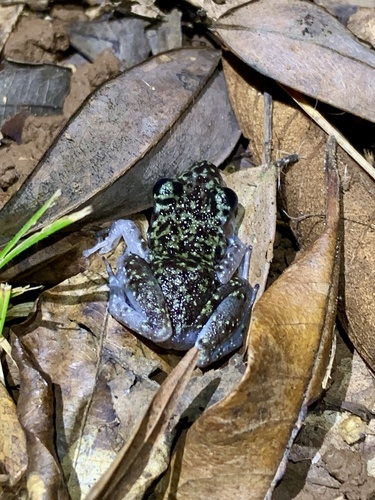
Leprus Chirping Frog
Eleutherodactylus leprus

Alfred's Rainfrog
Craugastor alfredi
📅 Monthly Probability
Fewer than 5 records of Harlequin Treefrog at Montes Azules Biosphere Reserve — not enough to chart months honestly.
🌙 When They're Spotted
Most active during nighttime hours (6pm–6am) · across all parks (global)
Global Distribution
Where this species is recorded worldwide. Restricted to human observations from 2019 onwards — the same kind of record and the same period the probabilities on this page are built from, so collar-tracking studies, camera-trap arrays and museum specimens are excluded. Around Santa Rosa that removes 5,924 GPS fixes from a handful of tagged jaguars.
where this species is recorded (GBIF density — it tracks where observers go, not how likely a sighting is) · parks where it occurs — tap a pin for the sighting probability there