


Brown Thrasher
Toxostoma rufum
- KingdomAnimalia (Animals)
- PhylumChordata (Cordats)
- ClassAves (Aus)
- OrderPasseriformes
- FamilyMimidae (Mímids)
- GenusToxostoma (Typical Thrashers)
- SpeciesToxostoma rufum (Brown Thrasher)
The brown thrasher (Toxostoma rufum), sometimes erroneously called the brown thrush or fox-coloured thrush, is a bird in the family Mimidae, which also includes the New World catbirds and mockingbirds. The brown thrasher is abundant throughout the eastern and central United States and southern and central Canada, and it is the only thrasher to live primarily east of the Rockies and central Texas. It is the state bird of Georgia. As a member of the genus Toxostoma, the bird is relatively large-sized among the other thrashers. It has brown upper parts with a white under part with dark streaks. Because of this, it is often confused with the smaller wood thrush (Hylocichla mustelina), among other species. Wikipedia →
Closest Relatives at Voyageurs National Park
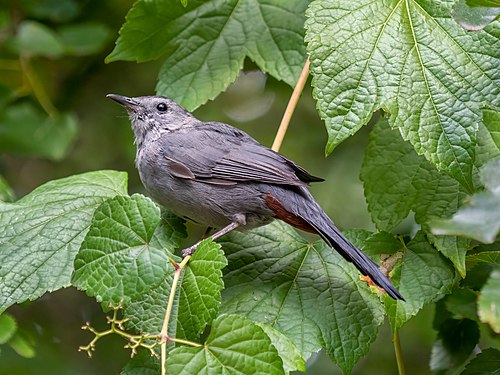
Gray Catbird
Dumetella carolinensis

Blue Jay
Cyanocitta cristata

Yellow-rumped Warbler
Setophaga coronata

American Crow
Corvus brachyrhynchos

Black-capped Chickadee
Poecile atricapillus

Red-eyed Vireo
Vireo olivaceus

White-throated Sparrow
Zonotrichia albicollis

American Robin
Turdus migratorius

Song Sparrow
Melospiza melodia

Red-breasted Nuthatch
Sitta canadensis

Black-and-white Warbler
Mniotilta varia

Nashville Warbler
Leiothlypis ruficapilla
📅 Monthly Probability
Fewer than 5 records of Brown Thrasher at Voyageurs National Park — not enough to chart months honestly.
☀️ When They're Spotted
Most active during daytime hours (6am–6pm) · across all parks (global)
Global Distribution
Where this species is recorded worldwide. Restricted to human observations from 2019 onwards — the same kind of record and the same period the probabilities on this page are built from, so collar-tracking studies, camera-trap arrays and museum specimens are excluded. Around Santa Rosa that removes 5,924 GPS fixes from a handful of tagged jaguars.
where this species is recorded (GBIF density — it tracks where observers go, not how likely a sighting is) · parks where it occurs — tap a pin for the sighting probability there
Parks Where Found
| # | Park | Country | Probability |
|---|---|---|---|
| 1 | Badlands National Park | 🇺🇸 United States | |
| 2 | Great Smoky Mountains National Park | 🇺🇸 United States | |
| 3 | Shenandoah National Park | 🇺🇸 United States | |
| 4 | Point Pelee National Park | 🇨🇦 Canada | |
| 5 | Congaree National Park | 🇺🇸 United States | |
| 6 | Everglades National Park | 🇺🇸 United States | |
| 7 | Big Bend National Park | 🇺🇸 United States | |
| 8 | Riding Mountain National Park | 🇨🇦 Canada | |
| 9 | Big Cypress National Preserve | 🇺🇸 United States | |
| 10 | Guadalupe Mountains National Park | 🇺🇸 United States | |
| 11 | Acadia National Park | 🇺🇸 United States | |
| 12 | Death Valley National Park | 🇺🇸 United States | |
| 13 | Rocky Mountain National Park | 🇺🇸 United States | |
| 14 | Voyageurs National Park | 🇺🇸 United States | |
| 15 | Joshua Tree National Park | 🇺🇸 United States | |
| 16 | Channel Islands National Park | 🇺🇸 United States |