


Rufous Woodpecker
Micropternus brachyurus
- KingdomAnimalia (Animals)
- PhylumChordata (Cordats)
- ClassAves (Aus)
- OrderPiciformes (Woodpeckers and Allies)
- FamilyPicidae (Woodpeckers)
- GenusMicropternus
- SpeciesMicropternus brachyurus (Rufous Woodpecker)
The rufous woodpecker (Micropternus brachyurus) is a medium-sized brown woodpecker native to South and Southeast Asia. It is short-billed, foraging in pairs on small insects, particularly ants and termites, in scrub, evergreen, and deciduous forests and is noted for building its nest within the carton nests of arboreal ants in the genus Crematogaster. It was for sometime placed in the otherwise Neotropical genus Celeus but this has been shown to be a case of evolutionary convergence and molecular phylogenetic studies support its placement in the monotypic genus Micropternus. Wikipedia →
Closest Relatives at Ba Be National Park

Grey-capped Woodpecker
Yungipicus canicapillus

Greater Flameback
Chrysocolaptes guttacristatus

White-bellied Woodpecker
Dryocopus javensis

Bay Woodpecker
Blythipicus pyrrhotis

Grey-headed Woodpecker
Picus canus

Greater Yellownape
Chrysophlegma flavinucha

Common Flameback
Dinopium javanense

Laced Woodpecker
Picus vittatus

Speckled Piculet
Picumnus innominatus
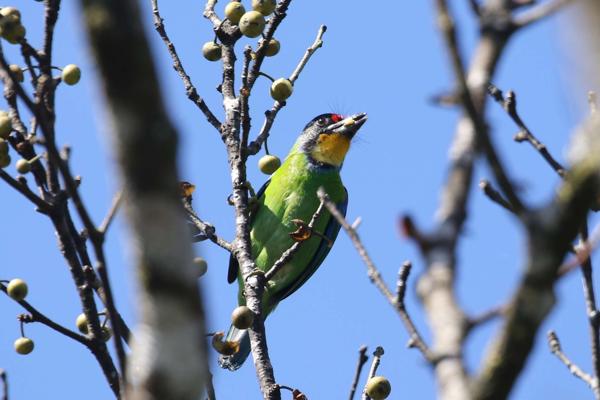
Golden-throated Barbet (Violet-eared)
Psilopogon auricularis
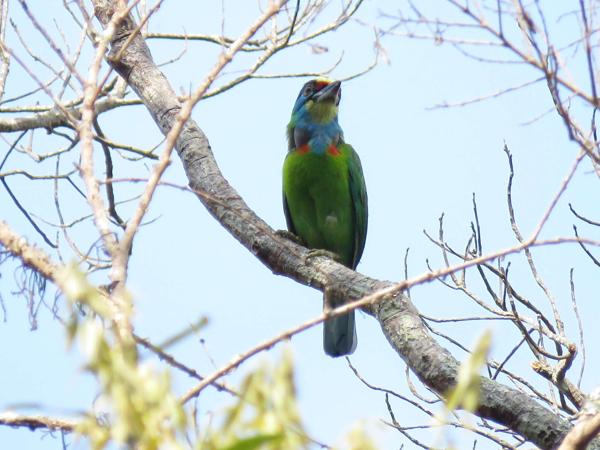
Indochinese Barbet
Psilopogon annamensis

Red-vented Barbet
Psilopogon lagrandieri
📅 Monthly Probability
Fewer than 5 records of Rufous Woodpecker at Ba Be National Park — not enough to chart months honestly.
🌅 When They're Spotted
Most active at dawn and dusk · across all parks (global)
Global Distribution
Where this species is recorded worldwide. Restricted to human observations from 2019 onwards — the same kind of record and the same period the probabilities on this page are built from, so collar-tracking studies, camera-trap arrays and museum specimens are excluded. Around Santa Rosa that removes 5,924 GPS fixes from a handful of tagged jaguars.
where this species is recorded (GBIF density — it tracks where observers go, not how likely a sighting is) · parks where it occurs — tap a pin for the sighting probability there