


Leopard
Panthera pardus
- KingdomAnimalia (Animals)
- PhylumChordata (Cordats)
- ClassMammalia (Mamífers)
- OrderCarnivora (Carnívors)
- FamilyFelidae (Felids)
- GenusPanthera (Roaring Cats)
- SpeciesPanthera pardus (Leopard)
The leopard (Panthera pardus) is one of the five extant cat species in the genus Panthera. It has a pale yellowish to dark golden fur with dark spots grouped in rosettes. Its body is slender and muscular, reaching a length of 92–183 cm (36–72 in) with a 66–102 cm (26–40 in) long tail and a shoulder height of 60–70 cm (24–28 in). Males typically weigh 30.9–72 kg (68–159 lb), and females 20.5–43 kg (45–95 lb). The leopard was first described in 1758, and several subspecies were proposed in the 19th and 20th centuries. Today, eight subspecies are recognised in its wide range in Africa and Asia. Wikipedia →
20–30% of wildlife watchers report a Leopard sighting in Etosha National Park, based on 53 days of visitor records from GBIF citizen-science data.
Closest Relatives at Etosha National Park

Lion
Panthera leo

Cheetah
Acinonyx jubatus

African Wildcat
Felis lybica

Caracal
Caracal caracal
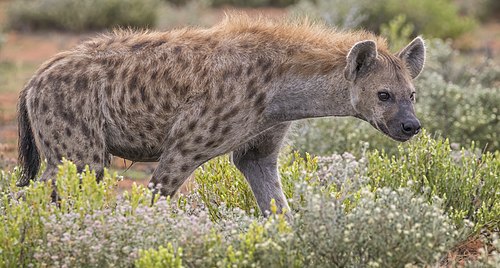
Spotted Hyena
Crocuta crocuta

Banded Mongoose
Mungos mungo

Yellow Mongoose
Cynictis penicillata

Honey Badger
Mellivora capensis

Slender Mongoose
Galerella sanguinea

Cape Fox
Vulpes chama

Bat-eared Fox
Otocyon megalotis

Brown Hyaena
Hyaena brunnea
📅 Monthly Probability
☀️ When They're Spotted
Most active during daytime hours (6am–6pm) · across all parks (global)
Global Distribution
Where this species is recorded worldwide. Restricted to human observations from 2019 onwards — the same kind of record and the same period the probabilities on this page are built from, so collar-tracking studies, camera-trap arrays and museum specimens are excluded. Around Santa Rosa that removes 5,924 GPS fixes from a handful of tagged jaguars.
where this species is recorded (GBIF density — it tracks where observers go, not how likely a sighting is) · parks where it occurs — tap a pin for the sighting probability there
Parks Where Found
Quick answers
What are the chances of seeing a Leopard in Etosha National Park?
About 26% of wildlife watchers report a Leopard sighting in Etosha National Park, based on 53 days of visitor records from GBIF citizen-science data.
When is the best time to see Leopard in Etosha National Park?
May has the highest sighting rate for Leopard in Etosha National Park in our monthly data.