


Black-capped Chickadee
Poecile atricapillus
- KingdomAnimalia (Animals)
- PhylumChordata (Cordats)
- ClassAves (Aus)
- OrderPasseriformes
- FamilyParidae (Mallerengues)
- GenusPoecile (Chickadees and Allies)
- SpeciesPoecile atricapillus (Black-capped Chickadee)
The black-capped chickadee (Poecile atricapillus) is a small, nonmigratory, North American passerine bird that lives in deciduous and mixed forests. It is a member of the Paridae family, also known as tits. It has a distinct black cap on its head, a black bib underneath, and white cheeks. It has a white belly, buff sides, and grey wings, back, and tail. The bird is well known for its vocalizations, including its fee-bee song and its chick-a-dee-dee-dee call, from which it derives its name. The black-capped chickadee is widely distributed throughout North America, ranging from the northern United States to southern Canada and all the way up to Alaska and Yukon. Wikipedia →
<5% of wildlife watchers report a Black-capped Chickadee sighting in Great Smoky Mountains National Park, based on 284 days of visitor records from GBIF citizen-science data.
Closest Relatives at Great Smoky Mountains National Park

Carolina Chickadee
Poecile carolinensis

Tufted Titmouse
Baeolophus bicolor

American Crow
Corvus brachyrhynchos

Northern Cardinal
Cardinalis cardinalis

Carolina Wren
Thryothorus ludovicianus

American Robin
Turdus migratorius

Blue Jay
Cyanocitta cristata

Song Sparrow
Melospiza melodia

American Goldfinch
Spinus tristis
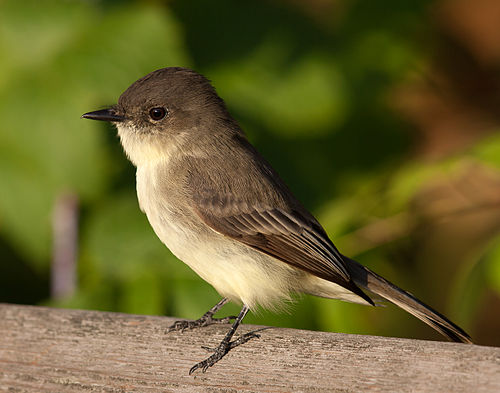
Eastern Phoebe
Sayornis phoebe

Eastern Bluebird
Sialia sialis

Eastern Towhee
Pipilo erythrophthalmus
📅 Monthly Probability
☀️ When They're Spotted
Most active during daytime hours (6am–6pm) · across all parks (global)
Global Distribution
Where this species is recorded worldwide. Restricted to human observations from 2019 onwards — the same kind of record and the same period the probabilities on this page are built from, so collar-tracking studies, camera-trap arrays and museum specimens are excluded. Around Santa Rosa that removes 5,924 GPS fixes from a handful of tagged jaguars.
where this species is recorded (GBIF density — it tracks where observers go, not how likely a sighting is) · parks where it occurs — tap a pin for the sighting probability there
Parks Where Found
Quick answers
What are the chances of seeing a Black-capped Chickadee in Great Smoky Mountains National Park?
About 4% of wildlife watchers report a Black-capped Chickadee sighting in Great Smoky Mountains National Park, based on 284 days of visitor records from GBIF citizen-science data.
When is the best time to see Black-capped Chickadee in Great Smoky Mountains National Park?
June has the highest sighting rate for Black-capped Chickadee in Great Smoky Mountains National Park in our monthly data.