


White-headed Vulture
Trigonoceps occipitalis
- KingdomAnimalia (Animals)
- PhylumChordata (Cordats)
- ClassAves (Aus)
- OrderAccipitriformes
- FamilyAccipitridae (Accipítrids)
- GenusTrigonoceps
- SpeciesTrigonoceps occipitalis (White-headed Vulture)
The white-headed vulture (Trigonoceps occipitalis) is an Old World vulture endemic to Africa. Populations have been declining steeply in recent years due to habitat degradation and poisoning of vultures at carcasses. An extinct relative was also present in the Indonesian island of Flores during the Late Pleistocene, indicating that the genus was more widespread in the past. Wikipedia →
Closest Relatives at Kgalagadi Transfrontier Park

Pale Chanting Goshawk
Melierax canorus

Tawny Eagle
Aquila rapax

White-backed Vulture
Gyps africanus

Martial Eagle
Polemaetus bellicosus

Gabar Goshawk
Micronisus gabar

Bateleur
Terathopius ecaudatus

Black-breasted Snake Eagle
Circaetus pectoralis
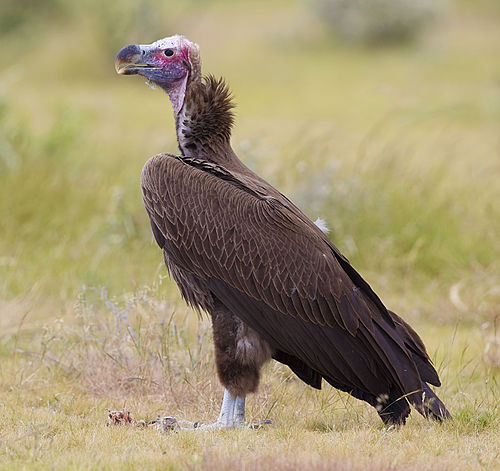
Lappet-faced Vulture
Torgos tracheliotos

Black Kite
Milvus migrans

Black-winged Kite
Elanus caeruleus

Brown Snake Eagle
Circaetus cinereus

Pale Harrier
Circus macrourus
📅 Monthly Probability
Fewer than 5 records of White-headed Vulture at Kgalagadi Transfrontier Park — not enough to chart months honestly.
☀️ When They're Spotted
Most active during daytime hours (6am–6pm) · across all parks (global)
Global Distribution
Where this species is recorded worldwide. Restricted to human observations from 2019 onwards — the same kind of record and the same period the probabilities on this page are built from, so collar-tracking studies, camera-trap arrays and museum specimens are excluded. Around Santa Rosa that removes 5,924 GPS fixes from a handful of tagged jaguars.
where this species is recorded (GBIF density — it tracks where observers go, not how likely a sighting is) · parks where it occurs — tap a pin for the sighting probability there