


Augur Buzzard
Buteo augur
- KingdomAnimalia (Animals)
- PhylumChordata (Cordats)
- ClassAves (Aus)
- OrderAccipitriformes
- FamilyAccipitridae (Accipítrids)
- GenusButeo (Buteos)
- SpeciesButeo augur (Augur Buzzard)
The augur buzzard (Buteo augur) is a fairly large African bird of prey. This species is distinct in typical adult plumage for its blackish back, whitish underside and orange-red tail, while juvenile augur buzzards are generally rather brown in colour; however a dark morph is known, which causes the bird's entire body to become darker. This member of the Buteo genus is distributed in several parts of the central and southern Africa, normally being found from Ethiopia to southern Angola and central Namibia. It is resident and non-migratory throughout its range. This is a species of mountains (most typically at about 2,000 m (6,600 ft) altitude, but up to 5,000 m (16,000 ft)), and adjacent savannah and grassland. It is a typical buteonine raptor, being a generalist predator which tends to prefer small mammals supplemented by reptiles and birds among various prey items. Wikipedia →
Closest Relatives at Lower Zambezi National Park

Common Buzzard
Buteo buteo

African Fish-Eagle
Haliaeetus vocifer

Bateleur
Terathopius ecaudatus

White-backed Vulture
Gyps africanus

African Harrier-Hawk
Polyboroides typus

Hooded Vulture
Necrosyrtes monachus

Black Kite
Milvus migrans

Martial Eagle
Polemaetus bellicosus

Brown Snake Eagle
Circaetus cinereus
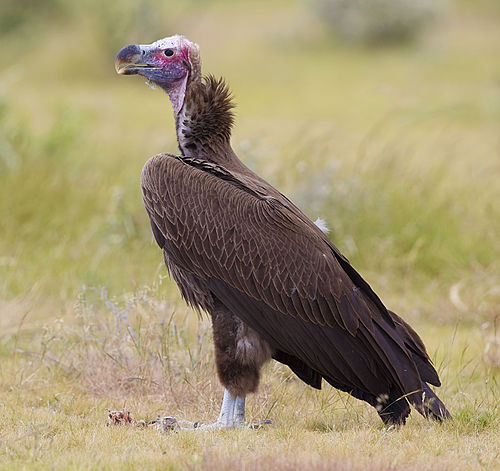
Lappet-faced Vulture
Torgos tracheliotos

White-headed Vulture
Trigonoceps occipitalis

Fasciated Snake Eagle
Circaetus fasciolatus
📅 Monthly Probability
Fewer than 5 records of Augur Buzzard at Lower Zambezi National Park — not enough to chart months honestly.
☀️ When They're Spotted
Most active during daytime hours (6am–6pm) · across all parks (global)
Global Distribution
Where this species is recorded worldwide. Restricted to human observations from 2019 onwards — the same kind of record and the same period the probabilities on this page are built from, so collar-tracking studies, camera-trap arrays and museum specimens are excluded. Around Santa Rosa that removes 5,924 GPS fixes from a handful of tagged jaguars.
where this species is recorded (GBIF density — it tracks where observers go, not how likely a sighting is) · parks where it occurs — tap a pin for the sighting probability there