


Bateleur
Terathopius ecaudatus
- KingdomAnimalia (Animals)
- PhylumChordata (Cordats)
- ClassAves (Aus)
- OrderAccipitriformes
- FamilyAccipitridae (Accipítrids)
- GenusTerathopius
- SpeciesTerathopius ecaudatus (Bateleur)
The bateleur (; Terathopius ecaudatus), also known as the bateleur eagle, is a medium-sized eagle in the family Accipitridae. It is often considered a relative of the snake eagles and, like them, it is classified within the subfamily Circaetinae. It is the only member of the genus Terathopius and may be the origin of the "Zimbabwe Bird", the national emblem of Zimbabwe. Adult bateleurs are generally black in colour with a chestnut colour on the mantle as well as on the rump and tail. Adults also have gray patches about the leading edges of the wings (extending to the secondaries in females) with bright red on their cere and their feet. Adults also show white greater coverts, contrasting with black remiges in males, gray patches on the underwing primaries and black wingtips. Wikipedia →
50–60% of wildlife watchers report a Bateleur sighting in Ruaha National Park, based on 145 days of visitor records from GBIF citizen-science data.
Closest Relatives at Ruaha National Park

African Fish-Eagle
Haliaeetus vocifer

Tawny Eagle
Aquila rapax

White-backed Vulture
Gyps africanus

Eastern Chanting-Goshawk
Melierax poliopterus

Black-winged Kite
Elanus caeruleus

African Hawk-Eagle
Aquila spilogaster

Martial Eagle
Polemaetus bellicosus

Brown Snake Eagle
Circaetus cinereus

African Harrier-Hawk
Polyboroides typus

Hooded Vulture
Necrosyrtes monachus
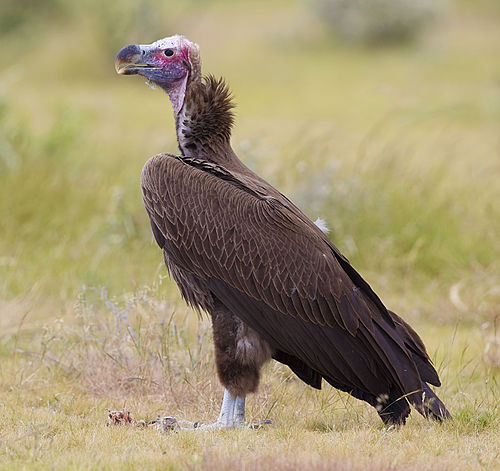
Lappet-faced Vulture
Torgos tracheliotos

Black-breasted Snake Eagle
Circaetus pectoralis
📅 Monthly Probability
☀️ When They're Spotted
Most active during daytime hours (6am–6pm) · across all parks (global)
Global Distribution
Where this species is recorded worldwide. Restricted to human observations from 2019 onwards — the same kind of record and the same period the probabilities on this page are built from, so collar-tracking studies, camera-trap arrays and museum specimens are excluded. Around Santa Rosa that removes 5,924 GPS fixes from a handful of tagged jaguars.
where this species is recorded (GBIF density — it tracks where observers go, not how likely a sighting is) · parks where it occurs — tap a pin for the sighting probability there
Parks Where Found
Quick answers
What are the chances of seeing a Bateleur in Ruaha National Park?
About 53% of wildlife watchers report a Bateleur sighting in Ruaha National Park, based on 145 days of visitor records from GBIF citizen-science data.
When is the best time to see Bateleur in Ruaha National Park?
June has the highest sighting rate for Bateleur in Ruaha National Park in our monthly data.