


Red-eyed Treefrog
Agalychnis callidryas
- KingdomAnimalia (Animals)
- PhylumChordata (Cordats)
- ClassAmphibia (Amfibis)
- OrderAnura (Anurs)
- FamilyPhyllomedusidae (Leaf Frogs)
- GenusAgalychnis (Leaf Frogs)
- SpeciesAgalychnis callidryas (Red-eyed Treefrog)
The red-eyed tree frog or red-eyed leaf frog (Agalychnis callidryas) is a species of tree frog in the subfamily Phyllomedusinae native to forests of Central America and northwestern South America. One of the most recognizable frog species, A. callidryas is known for its vibrant coloration, having a bright green body with blue and yellow stripes on the side, a white underside, bright red- to orange-colored feet, and its namesake bright red eyes. Despite these bright colors, the red-eyed tree frog is not poisonous like many other brightly colored amphibians; rather, the colors likely provide camouflage against the greenery of the surrounding jungle, and may also serve to provoke the startle reflex to dissuade predators and allow the frog time to escape. Like all the species in its genus, A. callidryas is arboreal, possessing long limbs and webbed toes, and is nocturnal, when it mostly hunts for insects. The males of this species are smaller than the females, and they display non-random mating patterns which suggest female choice for specific types of male. They mate and reproduce near ponds, and are therefore found in humid lowlands, especially tropical forests. Wikipedia →
40–50% of wildlife watchers report a Red-eyed Treefrog sighting in Manuel Antonio National Park, based on 113 days of visitor records from GBIF citizen-science data.
Closest Relatives at Manuel Antonio National Park

Gliding Leaf Frog
Agalychnis spurrelli

Rosenberg's Gladiator Frog
Boana rosenbergi

Masked Tree Frog
Smilisca phaeota

Savage's Thin-toed Frog
Leptodactylus savagei
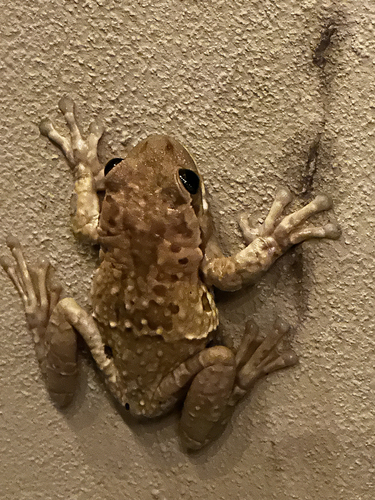
Milk Frog
Trachycephalus macrotis

Green and Black Dart-poison Frog
Dendrobates auratus

Giant Marine Toad
Rhinella horribilis

Harlequin Treefrog
Dendropsophus ebraccatus

Fitzinger's Robber Frog
Craugastor fitzingeri

Boulenger's Snouted Tree Frog
Scinax boulengeri

Rainforest Toad
Incilius aucoinae

Tink Frog
Diasporus diastema
📅 Monthly Probability
🌙 When They're Spotted
Most active during nighttime hours (6pm–6am) · across all parks (global)
Global Distribution
Where this species is recorded worldwide. Restricted to human observations from 2019 onwards — the same kind of record and the same period the probabilities on this page are built from, so collar-tracking studies, camera-trap arrays and museum specimens are excluded. Around Santa Rosa that removes 5,924 GPS fixes from a handful of tagged jaguars.
where this species is recorded (GBIF density — it tracks where observers go, not how likely a sighting is) · parks where it occurs — tap a pin for the sighting probability there
Parks Where Found
Quick answers
What are the chances of seeing a Red-eyed Treefrog in Manuel Antonio National Park?
About 42% of wildlife watchers report a Red-eyed Treefrog sighting in Manuel Antonio National Park, based on 113 days of visitor records from GBIF citizen-science data.
When is the best time to see Red-eyed Treefrog in Manuel Antonio National Park?
June has the highest sighting rate for Red-eyed Treefrog in Manuel Antonio National Park in our monthly data.