


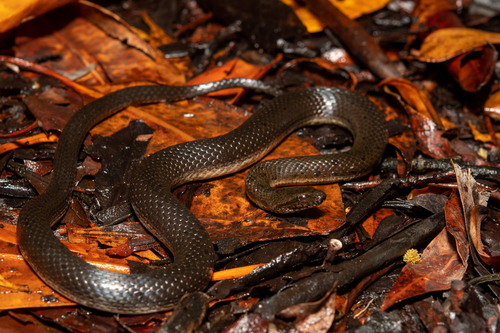
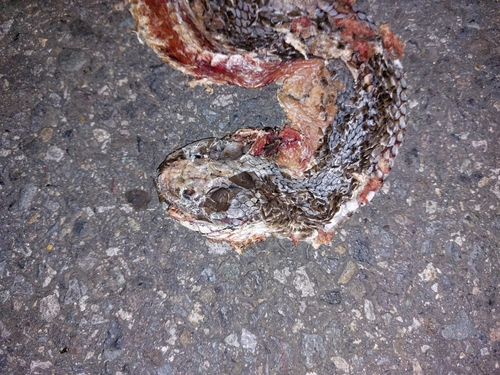
Puffing Snake
Phrynonax poecilonotus
- KingdomAnimalia (Animals)
- PhylumChordata (Cordats)
- ClassSquamata
- FamilyColubridae (Colúbrids)
- GenusPhrynonax
- SpeciesPhrynonax poecilonotus (Puffing Snake)
Phrynonax poecilonotus is a species of nonvenomous snake in the family Colubridae. The species is endemic to the New World. Wikipedia →
5–10% of wildlife watchers report a Puffing Snake sighting in Montes Azules Biosphere Reserve, based on 6 days of visitor records from GBIF citizen-science data.
Closest Relatives at Montes Azules Biosphere Reserve

Red Coffee Snake
Ninia sebae

Blunthead Tree Snake
Imantodes cenchoa

Northern Cat-eyed Snake
Leptodeira septentrionalis

Speckled Racer
Drymobius margaritiferus

Mexican Parrot Snake
Leptophis mexicanus

Chicken Snake
Spilotes pullatus
Orangebelly Swamp Snake
Tretanorhinus nigroluteus

Black-striped Snake
Coniophanes imperialis

Central American Milksnake
Lampropeltis abnorma

False Fer-de-lance
Xenodon rabdocephalus

Dryad Snake
Mastigodryas melanolomus
Neotropical Whip Snake
Masticophis mentovarius
📅 Monthly Probability
☀️ When They're Spotted
Most active during daytime hours (6am–6pm) · across all parks (global)
Global Distribution
Where this species is recorded worldwide. Restricted to human observations from 2019 onwards — the same kind of record and the same period the probabilities on this page are built from, so collar-tracking studies, camera-trap arrays and museum specimens are excluded. Around Santa Rosa that removes 5,924 GPS fixes from a handful of tagged jaguars.
where this species is recorded (GBIF density — it tracks where observers go, not how likely a sighting is) · parks where it occurs — tap a pin for the sighting probability there
Parks Where Found
Quick answers
What are the chances of seeing a Puffing Snake in Montes Azules Biosphere Reserve?
About 8% of wildlife watchers report a Puffing Snake sighting in Montes Azules Biosphere Reserve, based on 6 days of visitor records from GBIF citizen-science data.
When is the best time to see Puffing Snake in Montes Azules Biosphere Reserve?
June has the highest sighting rate for Puffing Snake in Montes Azules Biosphere Reserve in our monthly data.