


Arctic Tern
Sterna paradisaea
- KingdomAnimalia (Animals)
- PhylumChordata (Cordats)
- ClassAves (Aus)
- OrderCharadriiformes (Caradriformes)
- FamilyLaridae (Gulls, Terns, and Skimmers)
- GenusSterna (Typical Terns)
- SpeciesSterna paradisaea (Arctic Tern)
The Arctic tern (Sterna paradisaea) is a tern in the family Laridae. This bird has a circumpolar breeding distribution covering the Arctic and subarctic regions of Europe (as far south as Brittany), Asia, and North America (as far south as Massachusetts). The species is strongly migratory, seeing two summers each year as it migrates along a convoluted route from its northern breeding grounds to the Antarctic coast for the southern summer and back again about six months later. Recent studies have shown average annual round-trip lengths of about 70,900 km (38,300 nmi) for birds nesting in Iceland and Greenland, and about 48,700 km (26,300 nmi) for birds nesting in the Netherlands, while an individual from the Farne Islands in Northumberland with a light level geolocator tag covered a staggering 96,000 km (52,000 nmi) in ten months from the end of one breeding season to the start of the next. These are by far the longest migrations known in the animal kingdom. Arctic terns are medium-sized birds. Wikipedia →
<5% of wildlife watchers report a Arctic Tern sighting in Snowdonia National Park, based on 7 days of visitor records from GBIF citizen-science data.
Closest Relatives at Snowdonia National Park

Common Tern
Sterna hirundo

European Herring Gull
Larus argentatus
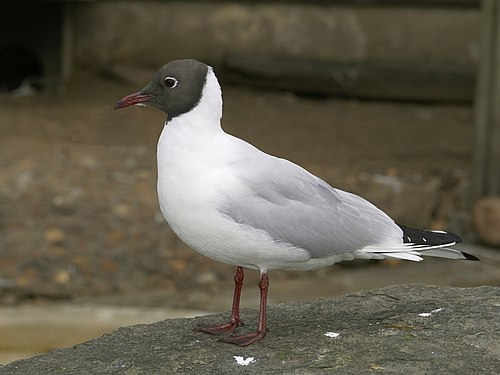
Black-headed Gull
Chroicocephalus ridibundus

Lesser Black-backed Gull
Larus fuscus

Great Black-backed Gull
Larus marinus

Common Gull
Larus canus

Iceland Gull
Larus glaucoides

Sandwich Tern
Thalasseus sandvicensis

Mediterranean Gull
Ichthyaetus melanocephalus

Black-legged Kittiwake
Rissa tridactyla

Little Tern
Sternula albifrons

Little Gull
Hydrocoloeus minutus
📅 Monthly Probability
☀️ When They're Spotted
Most active during daytime hours (6am–6pm) · across all parks (global)
Global Distribution
Where this species is recorded worldwide. Restricted to human observations from 2019 onwards — the same kind of record and the same period the probabilities on this page are built from, so collar-tracking studies, camera-trap arrays and museum specimens are excluded. Around Santa Rosa that removes 5,924 GPS fixes from a handful of tagged jaguars.
where this species is recorded (GBIF density — it tracks where observers go, not how likely a sighting is) · parks where it occurs — tap a pin for the sighting probability there
Parks Where Found
Quick answers
What are the chances of seeing a Arctic Tern in Snowdonia National Park?
About 0% of wildlife watchers report a Arctic Tern sighting in Snowdonia National Park, based on 7 days of visitor records from GBIF citizen-science data.
When is the best time to see Arctic Tern in Snowdonia National Park?
October has the highest sighting rate for Arctic Tern in Snowdonia National Park in our monthly data.