


Neotropical Green Anole
Anolis biporcatus
- KingdomAnimalia (Animals)
- PhylumChordata (Cordats)
- ClassSquamata
- FamilyDactyloidae
- GenusAnolis (Anoles)
- SpeciesAnolis biporcatus (Neotropical Green Anole)
Anolis biporcatus, also known as the neotropical green anole or giant green anole, is a species of anole. It is found in forests, both disturbed and undisturbed, in Mexico, Central America, Colombia and Venezuela. More southern populations, in southwestern Colombia and western Ecuador, were recognized as a separate species, A. parvauritus, in 2017.As suggested by its common names, the neotropical green or giant green anole is mostly green in color and relatively large, among the largest anoles in the mainland of the Americas. Males have a snout–vent length of about 7.0–10.3 cm (2.8–4.1 in) and the females, which grow slightly larger, about 7.0–10.8 cm (2.8–4.3 in). In general, there is little sexual dimorphism in this species. The tail is roughly double the length of the snout-to-vent. Wikipedia →
Closest Relatives at Chagres National Park

Panama City Anole
Anolis apletophallus

Brown Anole
Anolis sagrei

Grass Anole
Anolis auratus

Bridled Anole
Anolis frenatus

Humble Anole
Anolis humilis

Dappled Anole
Anolis poecilopus
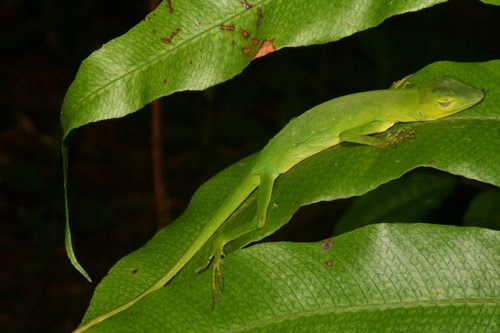
Nurra Anole
Anolis maia

Garland Anole
Anolis vittigerus

Border Anole
Anolis limifrons

Stripefoot Anole
Anolis lineatopus

Bighead Anole
Anolis capito
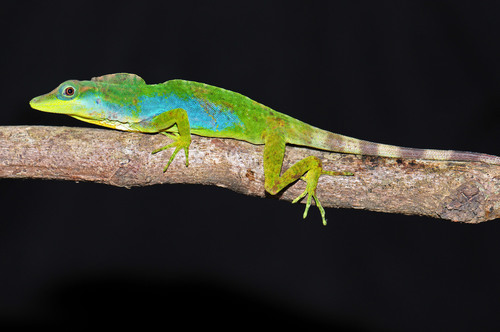
Kuna Yala Anole
Anolis kunayalae
📅 Monthly Probability
Fewer than 5 records of Neotropical Green Anole at Chagres National Park — not enough to chart months honestly.
☀️🌙 When They're Spotted
Active throughout day and night · across all parks (global)
Global Distribution
Where this species is recorded worldwide. Restricted to human observations from 2019 onwards — the same kind of record and the same period the probabilities on this page are built from, so collar-tracking studies, camera-trap arrays and museum specimens are excluded. Around Santa Rosa that removes 5,924 GPS fixes from a handful of tagged jaguars.
where this species is recorded (GBIF density — it tracks where observers go, not how likely a sighting is) · parks where it occurs — tap a pin for the sighting probability there