


Rose-ringed Parakeet
Psittacula krameri
- KingdomAnimalia (Animals)
- PhylumChordata (Cordats)
- ClassAves (Aus)
- OrderPsittaciformes (Parrots)
- FamilyPsittacidae (New World and African Parrots)
- GenusPsittacula (Old World Parakeets)
- SpeciesPsittacula krameri (Rose-ringed Parakeet)
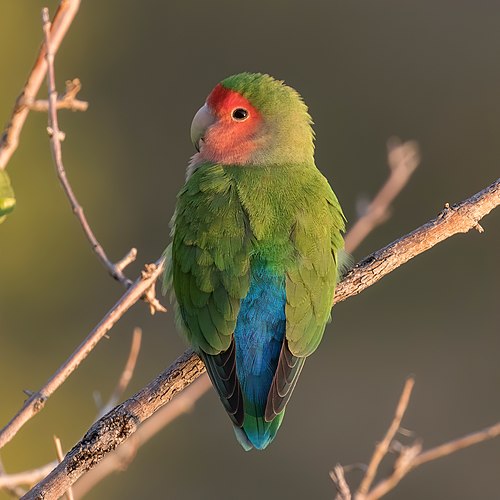
The rose-ringed parakeet (Psittacula krameri), also known as the ring-necked parakeet, or colloquially as the Indian Ringneck, is a medium-sized parrot in the genus Psittacula, of the family Psittaculidae. It has a disjunct native range in tropical northern Africa and the Indian subcontinent, and is now introduced into many other parts of the world where populations have established themselves having been bred for the exotic pet trade and then escaped. The species is listed as least concern by the International Union for Conservation of Nature (IUCN) because its population appears to be increasing, but its popularity as a pet and unpopularity with farmers have reduced its numbers in some parts of its native range. One of the few parrot species that have successfully adapted to living in disturbed habitats, it has withstood the onslaught of urbanisation and deforestation. As a popular pet species, escaped birds have colonised a number of cities around the world, including populations in northern and western Europe. They can live in a variety of climates outside their native range, and are able to survive low winter temperatures in northern Europe. Wikipedia →
Closest Relatives at Pyrénées National Park


📅 Monthly Probability
Fewer than 5 records of Rose-ringed Parakeet at Pyrénées National Park — not enough to chart months honestly.
☀️ When They're Spotted
Most active during daytime hours (6am–6pm) · across all parks (global)
Global Distribution
Where this species is recorded worldwide. Restricted to human observations from 2019 onwards — the same kind of record and the same period the probabilities on this page are built from, so collar-tracking studies, camera-trap arrays and museum specimens are excluded. Around Santa Rosa that removes 5,924 GPS fixes from a handful of tagged jaguars.
where this species is recorded (GBIF density — it tracks where observers go, not how likely a sighting is) · parks where it occurs — tap a pin for the sighting probability there