


Mexican Smilisca
Smilisca baudinii
- KingdomAnimalia (Animals)
- PhylumChordata (Cordats)
- ClassAmphibia (Amfibis)
- OrderAnura (Anurs)
- FamilyHylidae (Hylid Tree Frogs)
- GenusSmilisca (Cross-banded Tree Frogs)
- SpeciesSmilisca baudinii (Mexican Smilisca)
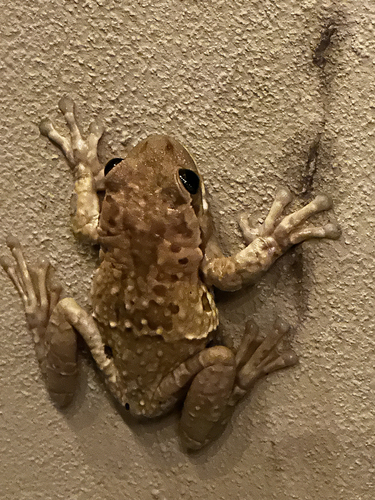
The common Mexican tree frog (Smilisca baudinii) is a nocturnal species of tree frog whose native range extends from the Sonoran Desert and the Lower Rio Grande Valley of Texas south to Costa Rica. Common names include Mexican tree frog, Baudin's tree frog and Van Vliet's frog. They are usually found within lightly forested areas near permanent sources of water. Wikipedia →
40–50% of wildlife watchers report a Mexican Smilisca sighting in Santa Rosa National Park, based on 56 days of visitor records from GBIF citizen-science data.
Closest Relatives at Santa Rosa National Park
Milk Frog
Trachycephalus macrotis

Stauffer's Tree Frog
Scinax staufferi

Yellow Treefrog
Dendropsophus microcephalus

Boulenger's Snouted Tree Frog
Scinax boulengeri

Harlequin Treefrog
Dendropsophus ebraccatus

Sheep Frog
Hypopachus variolosus

Giant Marine Toad
Rhinella horribilis

Guayaquil Dwarf Frog
Engystomops pustulosus

Yellow Toad
Incilius luetkenii

Forrer's Grass Frog
Lithobates forreri

Turbo White-lipped Frog
Leptodactylus poecilochilus

Dry Forest Toad
Incilius coccifer
📅 Monthly Probability
☀️🌙 When They're Spotted
Active throughout day and night · across all parks (global)
Global Distribution
Where this species is recorded worldwide. Restricted to human observations from 2019 onwards — the same kind of record and the same period the probabilities on this page are built from, so collar-tracking studies, camera-trap arrays and museum specimens are excluded. Around Santa Rosa that removes 5,924 GPS fixes from a handful of tagged jaguars.
where this species is recorded (GBIF density — it tracks where observers go, not how likely a sighting is) · parks where it occurs — tap a pin for the sighting probability there
Parks Where Found
Quick answers
What are the chances of seeing a Mexican Smilisca in Santa Rosa National Park?
About 48% of wildlife watchers report a Mexican Smilisca sighting in Santa Rosa National Park, based on 56 days of visitor records from GBIF citizen-science data.
When is the best time to see Mexican Smilisca in Santa Rosa National Park?
June has the highest sighting rate for Mexican Smilisca in Santa Rosa National Park in our monthly data.