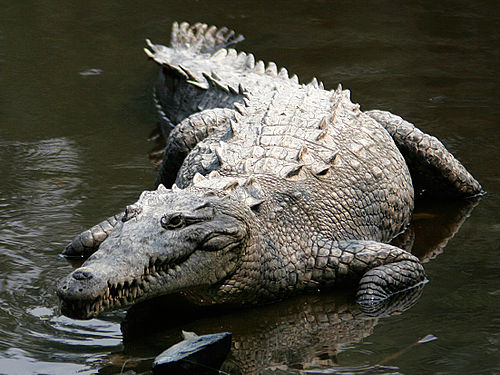


American Crocodile
Crocodylus acutus
- KingdomAnimalia (Animals)
- PhylumChordata (Cordats)
- ClassCrocodylia
- FamilyCrocodylidae (Crocodiles)
- GenusCrocodylus (Typical Crocodiles)
- SpeciesCrocodylus acutus (American Crocodile)
The American crocodile (Crocodylus acutus) is a species of crocodilian found in the Neotropics. It is the most widespread of the four extant species of crocodiles from the Americas, with populations present from South Florida, the Caribbean islands of Cuba, Jamaica, and Hispaniola, and the coasts of Mexico to as far south as Peru, Ecuador, Colombia, and Venezuela. The habitat of the American crocodile consists largely of coastal areas. It is also found in river systems, but tends to prefer salinity, resulting in the species congregating in brackish lakes, mangrove swamps, lagoons, cays, and small islands. Other crocodiles also have tolerance to saltwater due to salt glands underneath the tongue, but the American crocodile is the only species other than the saltwater crocodile to commonly live and thrive in saltwater. They can be found on beaches and small island formations without any freshwater source, such as many cays and islets across the Caribbean. Wikipedia →
5–10% of wildlife watchers report a American Crocodile sighting in Cahuita National Park, based on 5 days of visitor records from GBIF citizen-science data.
📅 Monthly Probability
☀️ When They're Spotted
Most active during daytime hours (6am–6pm) · across all parks (global)
Global Distribution
Where this species is recorded worldwide. Restricted to human observations from 2019 onwards — the same kind of record and the same period the probabilities on this page are built from, so collar-tracking studies, camera-trap arrays and museum specimens are excluded. Around Santa Rosa that removes 5,924 GPS fixes from a handful of tagged jaguars.
where this species is recorded (GBIF density — it tracks where observers go, not how likely a sighting is) · parks where it occurs — tap a pin for the sighting probability there
Parks Where Found
Quick answers
What are the chances of seeing a American Crocodile in Cahuita National Park?
About 6% of wildlife watchers report a American Crocodile sighting in Cahuita National Park, based on 5 days of visitor records from GBIF citizen-science data.
When is the best time to see American Crocodile in Cahuita National Park?
July has the highest sighting rate for American Crocodile in Cahuita National Park in our monthly data.