


American Robin
Turdus migratorius
- KingdomAnimalia (Animals)
- PhylumChordata (Cordats)
- ClassAves (Aus)
- OrderPasseriformes
- FamilyTurdidae (Túrdids)
- GenusTurdus (Typical Thrushes)
- SpeciesTurdus migratorius (American Robin)
The American robin (Turdus migratorius) is a migratory bird of the true thrush genus and Turdidae, the wider thrush family. It is named after the European robin because of its reddish-orange breast, though the two species are not closely related, with the European robin belonging to the Old World flycatcher family. The American robin is widely distributed throughout North America, wintering from southern Canada to central Mexico and along the Pacific coast. According to the Partners in Flight database (2019), the American robin is the most abundant landbird in North America (with 370 million individuals), ahead of red-winged blackbirds, introduced European starlings, mourning doves and house finches. It has seven subspecies. The species is active mostly during the day and assembles in large flocks at night. Wikipedia →
5–10% of wildlife watchers report a American Robin sighting in Big Bend National Park, based on 292 days of visitor records from GBIF citizen-science data.
Closest Relatives at Big Bend National Park

Hermit Thrush
Catharus guttatus

Townsend's Solitaire
Myadestes townsendi
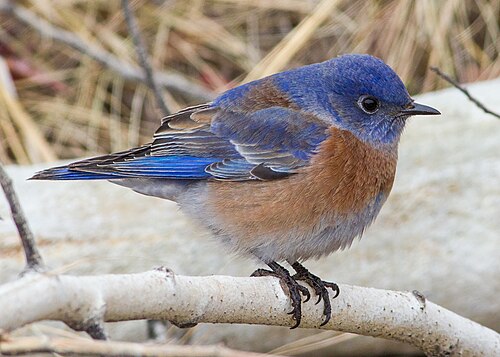
Western Bluebird
Sialia mexicana

Eastern Bluebird
Sialia sialis

Swainson's Thrush
Catharus ustulatus

Mountain Bluebird
Sialia currucoides

Northern Mockingbird
Mimus polyglottos

Common Raven
Corvus corax

House Finch
Haemorhous mexicanus

Cactus Wren
Campylorhynchus brunneicapillus

Pyrrhuloxia
Cardinalis sinuatus

Yellow-rumped Warbler
Setophaga coronata
📅 Monthly Probability
☀️ When They're Spotted
Most active during daytime hours (6am–6pm) · across all parks (global)
Global Distribution
Where this species is recorded worldwide. Restricted to human observations from 2019 onwards — the same kind of record and the same period the probabilities on this page are built from, so collar-tracking studies, camera-trap arrays and museum specimens are excluded. Around Santa Rosa that removes 5,924 GPS fixes from a handful of tagged jaguars.
where this species is recorded (GBIF density — it tracks where observers go, not how likely a sighting is) · parks where it occurs — tap a pin for the sighting probability there
Parks Where Found
Quick answers
What are the chances of seeing a American Robin in Big Bend National Park?
About 7% of wildlife watchers report a American Robin sighting in Big Bend National Park, based on 292 days of visitor records from GBIF citizen-science data.
When is the best time to see American Robin in Big Bend National Park?
January has the highest sighting rate for American Robin in Big Bend National Park in our monthly data.