


Mangrove Swallow
Tachycineta albilinea
- KingdomAnimalia (Animals)
- PhylumChordata (Cordats)
- ClassAves (Aus)
- OrderPasseriformes
- FamilyHirundinidae (Swallows and Martins)
- GenusTachycineta (Tachycineta Swallows)
- SpeciesTachycineta albilinea (Mangrove Swallow)
The mangrove swallow (Tachycineta albilinea) is a passerine bird in the swallow family that breeds in coastal regions from Mexico through Central America to Panama. It has blue-green upperparts, blackish flight feathers, a white rump, a black tail, and white underparts. It can be identified by the supraloral white streak, the white line near its eye, which only occurs in two other species of Tachycineta: the violet-green swallow and the white-rumped swallow. The sexes, although similar in plumage, differ slightly in size. The juveniles have grey-brown upperparts and white-washed underparts. This swallow's song is generally described as a soft trilling, with a rolled jeerrt call, and a sharp alarm note. Wikipedia →
<5% of wildlife watchers report a Mangrove Swallow sighting in Cockscomb Basin Wildlife Sanctuary, based on 12 days of visitor records from GBIF citizen-science data.
Closest Relatives at Cockscomb Basin Wildlife Sanctuary

Tree Swallow
Tachycineta bicolor

Northern Rough-winged Swallow
Stelgidopteryx serripennis

Gray-breasted Martin
Progne chalybea

Barn Swallow
Hirundo rustica

Cliff Swallow
Petrochelidon pyrrhonota

Spot-breasted Wren
Pheugopedius maculipectus

Great Kiskadee
Pitangus sulphuratus

Social Flycatcher
Myiozetetes similis

White-collared Manakin
Manacus candei

Melodious Blackbird
Dives dives
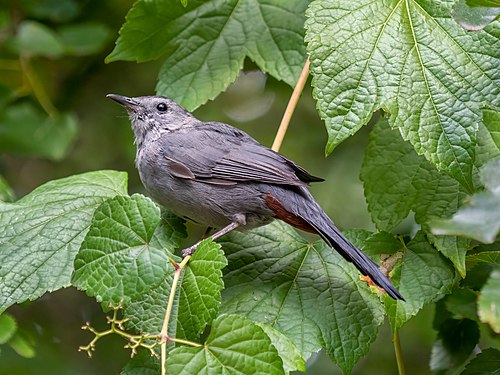
Gray Catbird
Dumetella carolinensis

White-breasted Wood-Wren
Henicorhina leucosticta
📅 Monthly Probability
☀️ When They're Spotted
Most active during daytime hours (6am–6pm) · across all parks (global)
Global Distribution
Where this species is recorded worldwide. Restricted to human observations from 2019 onwards — the same kind of record and the same period the probabilities on this page are built from, so collar-tracking studies, camera-trap arrays and museum specimens are excluded. Around Santa Rosa that removes 5,924 GPS fixes from a handful of tagged jaguars.
where this species is recorded (GBIF density — it tracks where observers go, not how likely a sighting is) · parks where it occurs — tap a pin for the sighting probability there
Parks Where Found
Quick answers
What are the chances of seeing a Mangrove Swallow in Cockscomb Basin Wildlife Sanctuary?
About 1% of wildlife watchers report a Mangrove Swallow sighting in Cockscomb Basin Wildlife Sanctuary, based on 12 days of visitor records from GBIF citizen-science data.
When is the best time to see Mangrove Swallow in Cockscomb Basin Wildlife Sanctuary?
May has the highest sighting rate for Mangrove Swallow in Cockscomb Basin Wildlife Sanctuary in our monthly data.