


Curlew Sandpiper
Calidris ferruginea
- KingdomAnimalia (Animals)
- PhylumChordata (Cordats)
- ClassAves (Aus)
- OrderCharadriiformes (Caradriformes)
- FamilyScolopacidae (Sandpipers and Allies)
- GenusCalidris (Calidris Sandpipers)
- SpeciesCalidris ferruginea (Curlew Sandpiper)
The curlew sandpiper (Calidris ferruginea) is a small wader. It is a long-distance migrant, breeding in the bogs and coastal lowlands of the Siberian Arctic, arriving there in June and staying until August or September. After the breeding season, it migrates south to spend the winter in Africa and along the coasts of Oceania and southern Eurasia, occupying tidal mudflats and saltpans. It has three main plumages that change with maturity and season. The non-breeding plumage shows brown-greyish upperparts and white underparts. The breeding plumage is much more striking, with the entire front tinted a deep rusty colour, more intensely so in males. Wikipedia →
<5% of wildlife watchers report a Curlew Sandpiper sighting in Garden Route National Park, based on 5 days of visitor records from GBIF citizen-science data.
Closest Relatives at Garden Route National Park

Pectoral Sandpiper
Calidris melanotos

Little Stint
Calidris minuta

Ruff
Calidris pugnax

Sanderling
Calidris alba

Red Knot
Calidris canutus

Common Greenshank
Tringa nebularia

Whimbrel
Numenius phaeopus
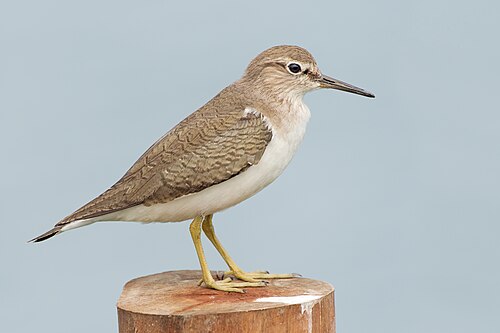
Common Sandpiper
Actitis hypoleucos

Marsh Sandpiper
Tringa stagnatilis

Bar-tailed Godwit
Limosa lapponica

Wood Sandpiper
Tringa glareola

Eurasian Curlew
Numenius arquata
📅 Monthly Probability
☀️ When They're Spotted
Most active during daytime hours (6am–6pm) · across all parks (global)
Global Distribution
Where this species is recorded worldwide. Restricted to human observations from 2019 onwards — the same kind of record and the same period the probabilities on this page are built from, so collar-tracking studies, camera-trap arrays and museum specimens are excluded. Around Santa Rosa that removes 5,924 GPS fixes from a handful of tagged jaguars.
where this species is recorded (GBIF density — it tracks where observers go, not how likely a sighting is) · parks where it occurs — tap a pin for the sighting probability there
Parks Where Found
Quick answers
What are the chances of seeing a Curlew Sandpiper in Garden Route National Park?
About 1% of wildlife watchers report a Curlew Sandpiper sighting in Garden Route National Park, based on 5 days of visitor records from GBIF citizen-science data.
When is the best time to see Curlew Sandpiper in Garden Route National Park?
December has the highest sighting rate for Curlew Sandpiper in Garden Route National Park in our monthly data.