


Chimney Swift
Chaetura pelagica
- KingdomAnimalia (Animals)
- PhylumChordata (Cordats)
- ClassAves (Aus)
- OrderApodiformes (Swifts and Hummingbirds)
- FamilyApodidae (Swifts)
- GenusChaetura (Chaetura Swifts)
- SpeciesChaetura pelagica (Chimney Swift)
The chimney swift (Chaetura pelagica) is a bird belonging to the swift family Apodidae. A member of the genus Chaetura, it is closely related to both Vaux's swift and Chapman's swift; in the past, the three were sometimes considered to be conspecific. It has no subspecies. The chimney swift is a medium-sized, sooty gray bird with very long, slender wings and very short legs. Like all swifts, it is incapable of perching on flat surfaces, and can only perch on vertical surfaces. Many fly around all day and only come down at night when roosting. Wikipedia →
Closest Relatives at Cumbres de Monterrey National Park

White-throated Swift
Aeronautes saxatalis

Broad-billed Hummingbird
Cynanthus latirostris

Blue-throated Hummingbird
Lampornis clemenciae

Buff-bellied Hummingbird
Amazilia yucatanensis
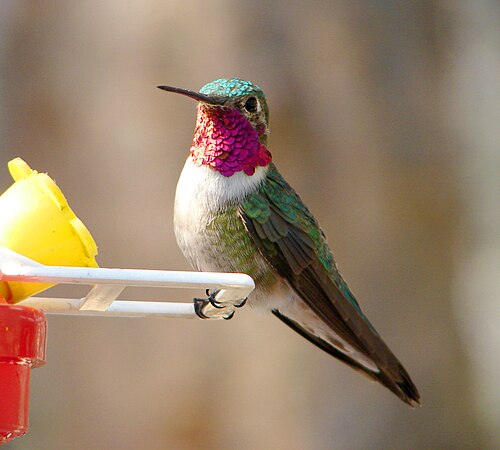
Broad-tailed Hummingbird
Selasphorus platycercus

Calliope Hummingbird
Selasphorus calliope

Ruby-throated Hummingbird
Archilochus colubris

Black-chinned Hummingbird
Archilochus alexandri

Violet-crowned Hummingbird
Leucolia violiceps

Lucifer Hummingbird
Calothorax lucifer

Rivoli's Hummingbird
Eugenes fulgens

White-eared Hummingbird
Basilinna leucotis
📅 Monthly Probability
Fewer than 5 records of Chimney Swift at Cumbres de Monterrey National Park — not enough to chart months honestly.
☀️ When They're Spotted
Most active during daytime hours (6am–6pm) · across all parks (global)
Global Distribution
Where this species is recorded worldwide. Restricted to human observations from 2019 onwards — the same kind of record and the same period the probabilities on this page are built from, so collar-tracking studies, camera-trap arrays and museum specimens are excluded. Around Santa Rosa that removes 5,924 GPS fixes from a handful of tagged jaguars.
where this species is recorded (GBIF density — it tracks where observers go, not how likely a sighting is) · parks where it occurs — tap a pin for the sighting probability there